
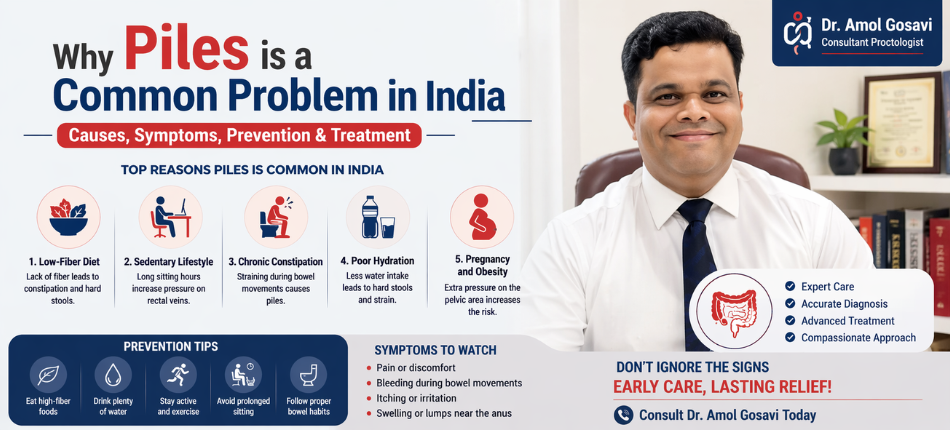
Why Piles is a Common Problem in India – Dr. Amol Gosavi | Best Laser Surgeon in Thane
Introduction
Piles, also known as hemorrhoids, have become one of the most common health issues in India. Affecting people of all age groups, this condition is often ignored due to hesitation or lack of awareness. According to experts like Dr.Amol Gosavi, lifestyle habits, diet patterns, and stress are major contributors to the rising cases of piles in India.
Learn why piles is common in India. Discover causes, symptoms, and prevention tips with expert guidance from Dramolgosavi.
What are Piles?
Piles are swollen veins in the lower rectum or anus that can cause discomfort, pain, itching, and bleeding. They can be internal (inside the rectum) or external (under the skin around the anus).
Why Piles is So Common in India
1. Low-Fiber Diet
A diet low in fiber is one of the primary causes of piles. Fiber helps in softening the stool and promoting smooth bowel movements. When people consume more processed, refined, or junk foods instead of fruits, vegetables, and whole grains, it leads to hard stools and constipation. This increases pressure on the rectal veins during bowel movements, eventually causing piles.
2. Sedentary Lifestyle
A sedentary lifestyle, especially among individuals who sit for long hours at work or avoid physical activity, can significantly increase the risk of piles. Lack of movement slows down digestion and leads to poor bowel function. Prolonged sitting also puts pressure on the lower rectal area, which can cause swelling of veins and result in hemorrhoids over time.
3. Chronic Constipation
Chronic constipation is one of the most common reasons for piles. When bowel movements are infrequent or difficult, people tend to strain excessively while passing stool. This repeated straining increases pressure on the veins in the rectum and anus, leading to inflammation and swelling. Over time, this condition can develop into painful piles if not managed properly.
4. Poor Hydration
Not drinking enough water can lead to dehydration, which makes the stool hard and difficult to pass. Proper hydration is essential for maintaining smooth digestion and preventing constipation. When the body lacks sufficient fluids, it increases the need to strain during bowel movements, putting extra stress on rectal veins and contributing to the development of piles.
5. Pregnancy and Obesity
Pregnancy and obesity both increase pressure on the abdominal and pelvic regions. In pregnant women, the growing uterus puts pressure on the veins, while hormonal changes can also affect bowel movements. Similarly, excess body weight in obese individuals adds strain on the lower body, including the rectal veins. This increased pressure can lead to swelling and the formation of piles.
Common Symptoms of Piles
- Pain or discomfort during bowel movements
- Bleeding from the rectum
- Itching or irritation around the anus
- Swelling or lumps near the anal region
Prevention Tips
Preventing piles largely depends on maintaining a healthy lifestyle and good bowel habits. Including fiber-rich foods like fruits, vegetables, and whole grains in your diet helps soften stools and prevents constipation. Drinking plenty of water throughout the day keeps digestion smooth and reduces strain during bowel movements. Regular exercise improves overall digestive health and prevents a sedentary lifestyle. Additionally, avoiding long sitting hours and not delaying the urge to pass stool can significantly reduce the risk of developing piles.
When to See a Doctor
It is important to consult a doctor if you experience persistent symptoms such as rectal bleeding, severe pain, itching, or swelling around the anal area. Ignoring these signs can lead to complications or worsening of the condition. If home remedies and lifestyle changes do not provide relief, medical attention becomes necessary. Early diagnosis by a specialist ensures proper treatment and helps prevent the condition from becoming severe.
Conclusion
Piles is a common yet manageable condition that can be prevented and treated with timely care. By adopting healthy eating habits, staying active, and maintaining proper hydration, individuals can significantly reduce their risk. Awareness and early medical consultation play a key role in effective management. With the right approach and guidance, it is possible to live a comfortable and healthy life free from the discomfort of piles.
Why Piles is a Common Problem in India Why Piles is a Common Problem in India Why Piles is a Common Problem in India Why Piles is a Common Problem in India Why Piles is a Common Problem in India Why Piles is a Common Problem in India Why Piles is a Common Problem in India Why Piles is a Common Problem in India Why Piles is a Common Problem in India
