
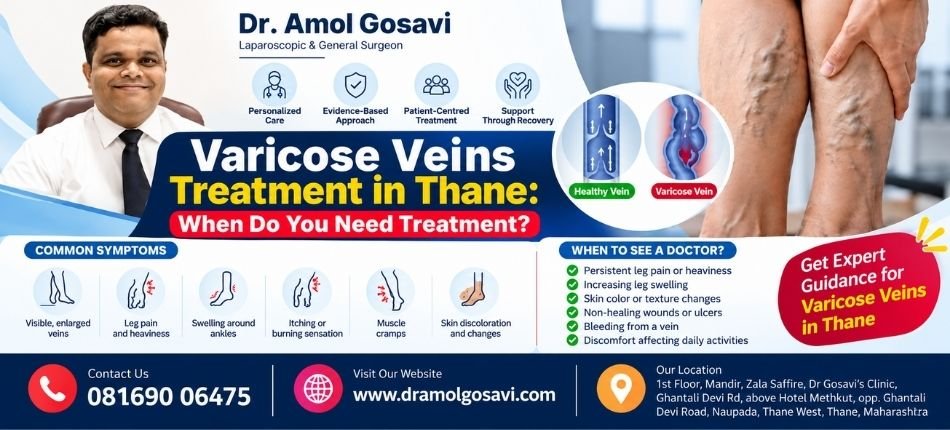
Varicose Veins Treatment in Thane: When Do You Need Treatment? – Dr. Amol Gosavi
Varicose veins are a common condition affecting the blood vessels in the legs. They develop when the small valves inside the veins become weak or damaged, allowing blood to collect instead of flowing efficiently toward the heart. This can cause veins to become enlarged, twisted, and visible beneath the skin.
Although varicose veins are sometimes considered a cosmetic concern, they can also cause persistent leg pain, swelling, heaviness, itching, and skin changes. Ignoring these symptoms may allow underlying venous problems to progress.
Understanding Advanced Varicose Veins Care and Treatment Options in Thane can help patients recognize warning signs, explore appropriate treatment approaches, and seek medical attention when necessary.
At Dr. Amol Gosavi’s Clinic, patients can seek medical consultation for their health concerns. Dr. Amol Gosavi is also an Advanced Laser Proctologist in Thane, offering specialized care for anorectal conditions.
1. What Are Varicose Veins?
Varicose veins are enlarged, swollen, or twisted superficial veins that most commonly appear in the legs and feet. They develop when the valves responsible for maintaining one-way blood flow become weakened or damaged.
Normally, veins carry blood from different parts of the body back toward the heart. In the legs, small valves prevent blood from flowing backward due to gravity. When these valves fail to function properly, blood may accumulate inside the veins, increasing pressure and causing them to stretch.
This condition is called venous reflux.
Varicose veins may appear blue, purple, or skin-colored. Some are visibly raised above the skin, while others are associated with deeper circulation problems that require diagnostic testing.
Not every visible vein requires treatment. However, persistent symptoms or changes in the surrounding skin should be evaluated by a medical professional.
2. Common Symptoms of Varicose Veins
Symptoms vary depending on the severity of the condition. Some people experience mild discomfort, while others develop symptoms that interfere with daily activities.
Visible, Enlarged Veins
Bulging or rope-like veins are among the most recognizable signs. These veins commonly develop around the calves, thighs, and ankles.
Leg Pain and Heaviness
Patients may experience aching, throbbing, or heaviness in the legs, particularly after prolonged standing or sitting. Symptoms may improve temporarily after resting or elevating the legs.
Swelling Around the Ankles
Poor venous circulation may contribute to fluid accumulation in the lower legs. Swelling is often more noticeable toward the evening.
Itching and Burning Sensation
Some individuals experience itching, burning, or irritation around the affected veins. Persistent symptoms may be associated with inflammation or skin changes caused by chronic venous disease.
Muscle Cramps
Nighttime leg cramps can occur in people with varicose veins, although cramps can also have other causes.
Skin Discoloration
Long-standing venous pressure may lead to brownish discoloration, dryness, inflammation, or thickening of the skin near the ankles.
These symptoms should not be ignored, particularly when they gradually worsen.
3. What Causes Varicose Veins?
Several factors can contribute to the development of varicose veins.
Family History
Individuals with a family history of varicose veins may have a greater likelihood of developing similar vein problems.
Increasing Age
As people grow older, the walls and valves of the veins may become less effective, increasing the risk of venous reflux.
Prolonged Standing or Sitting
Jobs involving extended periods of standing or sitting may increase pressure in the leg veins and contribute to symptoms.
Pregnancy
Hormonal changes and increased blood volume during pregnancy may contribute to enlarged leg veins.
Excess Body Weight
Additional body weight can increase pressure on the lower-limb venous system.
Previous Blood Clots
A history of deep vein thrombosis can damage vein valves and affect normal blood circulation.
Identifying risk factors helps doctors understand the patient’s condition and recommend suitable management.
4. When Should You Seek Medical Treatment for Varicose Veins?
Not everyone with varicose veins needs an immediate procedure. However, certain symptoms suggest that professional evaluation is important.
Persistent Pain Affecting Daily Activities
If leg pain, aching, or heaviness makes it difficult to stand, walk, or perform routine activities, medical assessment may help determine whether venous disease is contributing to the discomfort.
Repeated Leg Swelling
Swelling that frequently develops around the ankles or lower legs should be evaluated, especially when accompanied by visible veins or skin changes.
Skin Darkening or Inflammation
Brown discoloration, itching, eczema-like changes, or thickening around the ankles may indicate chronic venous insufficiency.
Slow-Healing Wounds
Open wounds near the ankles that do not heal normally may be venous ulcers. These require proper medical assessment and wound care.
Bleeding from Enlarged Veins
A superficial varicose vein can occasionally bleed following minor trauma. Apply firm direct pressure and seek urgent medical care if bleeding occurs.
Sudden Swelling or Severe Pain
Sudden pain, warmth, redness, or swelling in one leg may indicate a blood clot and requires prompt medical evaluation.
Chest pain or sudden breathlessness may indicate a medical emergency and requires immediate emergency care.
5. How Are Varicose Veins Diagnosed?
Accurate diagnosis is essential before selecting a treatment approach.
A doctor typically begins by reviewing the patient’s medical history, symptoms, occupation, family history, and previous vascular conditions.
During a physical examination, the doctor may assess visible veins, swelling, skin changes, and tenderness.
Duplex Doppler Ultrasound
Duplex Doppler ultrasound is commonly used to examine blood flow within the veins.
This non-invasive investigation can help identify:
- Abnormal backward blood flow, known as venous reflux.
- The location and extent of affected veins.
- Certain blood clots or venous obstructions.
- Vein anatomy relevant to treatment planning.
The findings help determine whether conservative management or a specialized vein procedure may be appropriate.
6. Advanced Varicose Veins Care and Treatment Options in Thane
Treatment is selected according to the patient’s symptoms, vein anatomy, overall health, and diagnostic findings.
Modern management includes conservative approaches and minimally invasive procedures. A qualified vascular specialist can recommend the most appropriate option after assessment.
A. Lifestyle Changes and Conservative Management
Patients with mild symptoms may benefit from regular walking, leg elevation, weight management, and avoiding prolonged immobility.
These measures can improve comfort and support circulation, but they generally do not eliminate established varicose veins.
B. Compression Stockings
Medical compression stockings provide graduated pressure to the legs.
They may help reduce swelling and discomfort in selected patients. However, compression therapy does not permanently correct damaged vein valves.
Compression should be recommended by a healthcare professional, particularly for patients with possible arterial circulation problems.
C. Endovenous Laser Treatment
Endovenous laser treatment is a minimally invasive procedure that uses controlled laser energy to close an affected superficial vein.
A thin catheter is inserted into the vein under ultrasound guidance. Laser energy is delivered to close the problematic vein, allowing blood to flow through healthier veins.
This procedure may be suitable for certain patients with symptomatic venous reflux.
D. Radiofrequency Ablation
Radiofrequency ablation uses thermal energy to close an affected vein.
It is another minimally invasive option for selected patients with superficial venous reflux.
E. Sclerotherapy
Sclerotherapy involves injecting a specialized solution into an affected vein, causing it to close.
It may be used for selected smaller varicose veins and spider veins. Ultrasound-guided foam sclerotherapy may also be appropriate for certain larger veins.
F. Ambulatory Phlebectomy
Ambulatory phlebectomy involves removing selected superficial varicose veins through small skin openings.
It may be used alone or combined with other treatments.
G. Conventional Surgery
In certain cases, surgical procedures may still be recommended when minimally invasive options are unsuitable.
The choice of treatment depends on clinical findings and specialist recommendations.
7. Benefits of Timely Varicose Veins Management
Timely medical evaluation can help identify underlying venous problems before symptoms become more troublesome.
For patients with symptomatic venous reflux, appropriate treatment may reduce aching, heaviness, and swelling.
Some patients experience improved mobility and greater comfort during daily activities.
When chronic venous disease causes skin inflammation or ulcers, proper management may help address complications and support healing.
Treatment outcomes vary depending on the severity of the condition, the selected procedure, and individual health factors.
8. Is Varicose Veins Treatment Possible Without Surgery?
Yes. Some patients can manage symptoms without undergoing surgery.
Conservative treatment may involve physical activity, weight management, leg elevation, and medically recommended compression stockings.
However, lifestyle measures usually control symptoms rather than permanently removing enlarged veins.
For patients who need an intervention, procedures such as endovenous laser treatment, radiofrequency ablation, or sclerotherapy may offer alternatives to conventional surgery.
A vascular specialist can explain which approach is appropriate based on ultrasound findings.
9. Recovery After Varicose Veins Treatment
Recovery depends on the procedure performed and the patient’s overall health.
Following certain minimally invasive treatments, patients may be encouraged to walk soon after the procedure.
Temporary bruising, tenderness, or tightness around the treated area may occur.
Depending on the treatment, doctors may recommend compression stockings, activity modifications, or follow-up ultrasound examinations.
Patients should follow their treating specialist’s instructions regarding walking, exercise, travel, and medications.
Unusual swelling, severe pain, or breathing difficulties after treatment should be assessed urgently.
10. Can Varicose Veins Return After Treatment?
Yes. Although successfully treated veins may remain closed, new varicose veins can develop over time.
Recurrence may be influenced by hereditary factors, progression of venous disease, and changes in other veins.
Maintaining a healthy weight, staying physically active, and attending recommended follow-up appointments may help manage ongoing symptoms.
Patients should understand that no treatment guarantees permanent prevention of all future varicose veins.
11. Daily Habits That Support Healthy Veins
Healthy lifestyle practices can support circulation and help reduce discomfort associated with varicose veins.
Walk Regularly: Walking activates the calf muscles, which help move blood from the legs toward the heart.
Avoid Sitting or Standing for Too Long: Change position regularly and take short walking breaks during extended periods of inactivity.
Maintain a Healthy Weight: Weight management may help reduce pressure on the leg veins.
Elevate Your Legs: Raising the legs while resting may temporarily reduce swelling and heaviness.
Stay Physically Active: Activities such as walking, swimming, and cycling can support general circulation.
Follow Medical Recommendations: Use compression stockings and prescribed treatments as directed.
These habits can support symptom management but should not replace professional assessment when significant symptoms develop.
12. Why Early Medical Consultation Matters
Early consultation helps patients understand whether their symptoms are caused by uncomplicated varicose veins, chronic venous insufficiency, or another condition.
Leg swelling and discomfort can have several causes, including blood clots, medication effects, and other medical conditions.
A clinical evaluation can identify warning signs and determine whether further investigations are necessary.
Patients experiencing persistent discomfort, skin changes, or repeated swelling should seek appropriate medical advice rather than relying only on home remedies.
13. Consult Dr. Amol Gosavi in Thane
Patients experiencing persistent leg discomfort, swelling, or visible vein changes can seek medical consultation to understand their symptoms and determine the appropriate next steps.
Dr. Amol Gosavi is a laparoscopic and general surgeon practicing in Naupada, Thane West.
Patients can contact his clinic to enquire about consultation and whether specialist vascular evaluation is appropriate.
Choosing the right treatment should always involve an accurate diagnosis, a discussion of available options, and consideration of individual medical needs.
Conclusion
Varicose veins can cause more than visible changes in the legs. Persistent pain, swelling, heaviness, and skin changes may indicate an underlying venous circulation problem.
Understanding the symptoms and available treatment options can help patients make informed healthcare decisions.
Modern management may include lifestyle changes, compression therapy, minimally invasive procedures, or surgery, depending on the patient’s condition.
If you are experiencing persistent leg discomfort or visible vein changes, seeking timely medical advice can help identify the cause and guide appropriate care.
Contact Dr. Amol Gosavi
Dr. Amol Gosavi – Laparoscopic & General Surgeon
Phone: 081690 06475
Website: https://www.dramolgosavi.com/
Clinic Address: 1st Floor, Zala Saffire, Dr. Gosavi’s Clinic, Ghantali Devi Road, Above Hotel Methkut, Naupada, Thane West, Thane, Maharashtra.
Call today to enquire about a medical consultation.
Advanced Varicose Veins Care and Treatment Options in Thane Advanced Varicose Veins Care and Treatment Options in Thane Advanced Varicose Veins Care and Treatment Options in Thane Advanced Varicose Veins Care and Treatment Options in Thane Advanced Varicose Veins Care and Treatment Options in Thane Advanced Varicose Veins Care and Treatment Options in Thane Advanced Varicose Veins Care and Treatment Options in Thane Advanced Varicose Veins Care and Treatment Options in Thane Advanced Varicose Veins Care and Treatment Options in Thane Advanced Varicose Veins Care and Treatment Options in Thane Advanced Varicose Veins Care and Treatment Options in Thane Advanced Varicose Veins Care and Treatment Options in Thane Advanced Varicose Veins Care and Treatment Options in Thane Advanced Varicose Veins Care and Treatment Options in Thane Advanced Varicose Veins Care and Treatment Options in Thane Advanced Varicose Veins Care and Treatment Options in Thane Advanced Varicose Veins Care and Treatment Options in Thane Advanced Varicose Veins Care and Treatment Options in Thane Advanced Varicose Veins Care and Treatment Options in Thane Advanced Varicose Veins Care and Treatment Options in Thane Advanced Varicose Veins Care and Treatment Options in Thane
