
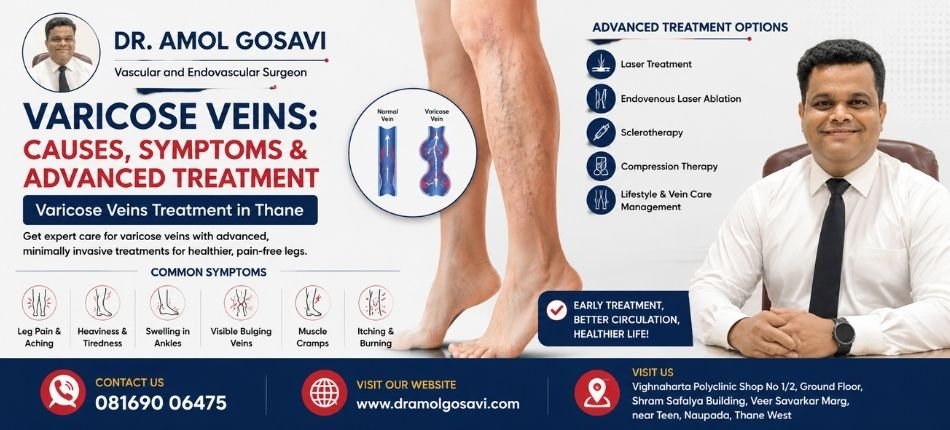
Varicose Veins: Causes, Symptoms & Advanced Treatment | Varicose Veins Treatment in Thane – Dr. Amol Gosavi
Varicose veins are enlarged, twisted, and swollen veins that commonly appear on the legs and feet. They occur when the valves inside the veins become weak or damaged, causing blood to pool instead of flowing efficiently back to the heart. Although varicose veins are often considered a cosmetic concern, they can also cause discomfort, pain, and complications if left untreated.
If you are experiencing symptoms of varicose veins, seeking professional Varicose Veins Treatment in Thane can help improve circulation, relieve discomfort, and prevent further complications.
What Are Varicose Veins?
Veins are responsible for carrying blood back to the heart. Small valves inside the veins ensure that blood flows in one direction. When these valves become weak or fail to function properly, blood collects within the veins, causing them to enlarge and become visible beneath the skin.
Varicose veins most commonly affect the legs because they experience higher pressure from standing and walking.
Common Causes of Varicose Veins
Prolonged Standing or Sitting
Occupations and daily routines that involve prolonged periods of standing or sitting can significantly increase the risk of developing varicose veins. When a person remains in the same position for extended durations, blood circulation in the legs can become less efficient. This causes increased pressure within the veins, making it harder for blood to flow back to the heart. Over time, the added strain can weaken the vein walls and valves, leading to blood pooling and the formation of enlarged, twisted veins. Professionals such as teachers, healthcare workers, office employees, and factory workers are particularly susceptible to this condition.
Aging
Aging is a natural risk factor for varicose veins because the veins and their valves gradually lose strength and elasticity over time. As people get older, the valves that help regulate blood flow may become less effective, allowing blood to flow backward and collect within the veins. This condition, known as venous insufficiency, can cause veins to enlarge and become visible beneath the skin. Age-related changes in circulation and connective tissues further increase the likelihood of developing varicose veins and associated symptoms such as leg heaviness and swelling.
Obesity
Excess body weight places additional pressure on the veins, particularly those in the legs. The increased pressure makes it more difficult for blood to circulate efficiently and return to the heart. As a result, the vein walls and valves may become strained, increasing the risk of blood pooling and vein enlargement. Obesity is also associated with reduced physical activity, which can further impair circulation. Maintaining a healthy weight through regular exercise and a balanced diet can help reduce the risk of varicose veins and improve overall vascular health.
Pregnancy
Pregnancy is a common factor contributing to the development of varicose veins due to several physiological changes that occur in the body. During pregnancy, blood volume increases significantly to support the growing baby, placing additional pressure on the veins. Hormonal changes also cause the vein walls to relax, making them more susceptible to stretching and enlargement. Additionally, the growing uterus can exert pressure on the pelvic veins, affecting blood flow from the legs. While pregnancy-related varicose veins often improve after childbirth, some women may continue to experience symptoms that require medical evaluation and treatment.
Family History
Genetics play a major role in determining an individual’s risk of developing varicose veins. If one or both parents have a history of varicose veins, the likelihood of developing the condition is significantly higher. Inherited factors can affect the strength of vein walls, the function of vein valves, and overall circulation. While family history cannot be changed, individuals with a genetic predisposition can take preventive measures such as maintaining a healthy weight, staying physically active, and seeking early medical advice if symptoms begin to appear. Early intervention can help manage the condition effectively and prevent progression.
Symptoms of Varicose Veins
Common symptoms include:
- Bulging blue or purple veins
- Leg pain or aching
- Heaviness in the legs
- Swelling in the ankles and feet
- Muscle cramps
- Itching around affected veins
- Burning sensation
- Increased discomfort after prolonged standing
Advanced Treatment Options for Varicose Veins
Lifestyle Modifications
Regular exercise, weight management, leg elevation, and avoiding prolonged standing can help manage symptoms.
Compression Therapy
Compression stockings help improve blood circulation and reduce swelling in the legs.
Minimally Invasive Procedures
Modern treatments are designed to close damaged veins while preserving healthy circulation.
Laser Treatment
Laser-based procedures target affected veins with precision, helping improve blood flow and reduce visible varicose veins.
Endovenous Procedures
Advanced catheter-based techniques offer effective treatment with minimal downtime and faster recovery.
When Should You Seek Medical Attention?
Many people ignore varicose veins in the early stages because they believe the condition is only cosmetic. However, medical attention should be sought when symptoms begin to interfere with daily activities or show signs of progression. If you experience persistent leg pain, heaviness, swelling, burning sensations, itching around the veins, frequent muscle cramps, or visible enlargement of veins, it is important to consult a specialist. Immediate medical evaluation is also recommended if there is skin discoloration, hardening of the skin, bleeding from a vein, or the development of non-healing ulcers around the ankles. Early diagnosis can help prevent complications and ensure timely treatment for better long-term outcomes.
Benefits of Early Treatment
Seeking treatment for varicose veins at an early stage offers several important benefits. Early intervention can help relieve symptoms such as pain, swelling, heaviness, and leg fatigue before they become more severe. It also helps improve blood circulation, reducing the risk of complications such as skin changes, venous ulcers, blood clots, and chronic venous insufficiency. Modern treatment options can effectively address the underlying cause of varicose veins while improving the appearance of the legs. Additionally, patients who receive early treatment often experience faster recovery, better mobility, enhanced comfort, and an improved quality of life. Addressing varicose veins promptly can prevent the condition from progressing and support long-term vascular health.
Why Choose Dr. Amol Gosavi?
Dr. Amol Gosavi provides comprehensive evaluation and advanced treatment options for varicose veins. With a patient-focused approach and modern treatment techniques, patients receive personalized care aimed at improving vascular health and overall quality of life.
Conclusion
Varicose veins are more than a cosmetic concern and should not be ignored. Early diagnosis and timely Varicose Veins Treatment in Thane can help relieve symptoms, improve circulation, and prevent future complications. Consult Dr. Amol Gosavi for expert evaluation and advanced treatment solutions tailored to your needs.
Varicose Veins Treatment in Thane Varicose Veins Treatment in Thane Varicose Veins Treatment in Thane Varicose Veins Treatment in Thane Varicose Veins Treatment in Thane Varicose Veins Treatment in Thane Varicose Veins Treatment in Thane Varicose Veins Treatment in Thane Varicose Veins Treatment in Thane
