
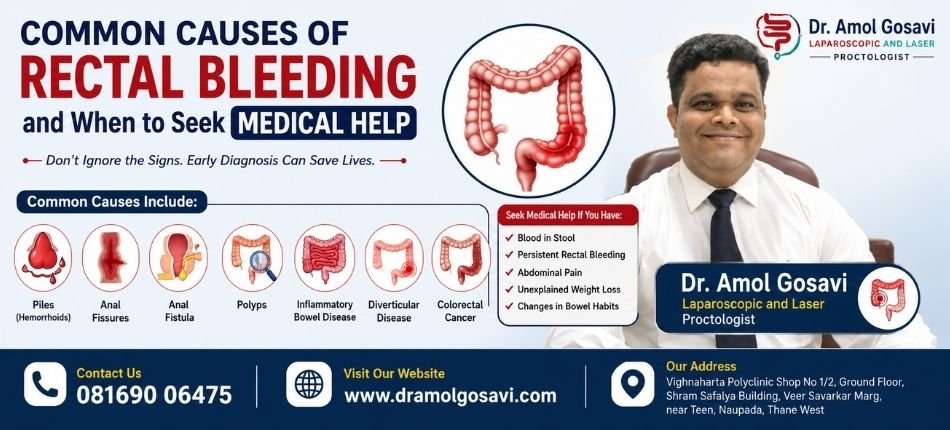
Common Causes of Rectal Bleeding and When to Seek Medical Help – Dr. Amol Gosavi
Seeing blood during or after a bowel movement can be alarming. While rectal bleeding is often caused by common and treatable conditions such as piles or anal fissures, it can sometimes indicate more serious gastrointestinal diseases that require immediate medical attention. Ignoring persistent or recurrent bleeding may delay diagnosis and treatment, potentially leading to complications.
Understanding the common causes of rectal bleeding and recognizing warning signs can help you seek timely medical care and protect your overall digestive health.
What Is Rectal Bleeding?
Rectal bleeding refers to the passage of blood from the anus or lower rectum. The blood may appear bright red, dark red, or even black depending on where the bleeding originates in the digestive tract. Some people notice blood on toilet paper, in the toilet bowl, or mixed with stool, while others may experience bleeding accompanied by pain, itching, or discomfort.
Although not every episode of rectal bleeding is an emergency, it should never be ignored, especially if it is recurrent or associated with other symptoms.
Common Causes of Rectal Bleeding
Several medical conditions can cause rectal bleeding. The most common include:
1. Hemorrhoids (Piles)
Piles are swollen veins inside or around the anus and are among the most frequent causes of rectal bleeding. Bright red blood is usually seen after passing stool and may be accompanied by itching, swelling, or discomfort. Constipation, prolonged sitting, pregnancy, and straining during bowel movements increase the risk of developing piles.
2. Anal Fissures
An anal fissure is a small tear in the lining of the anus, often caused by passing hard stools. This condition typically causes sharp pain during bowel movements along with a small amount of bright red bleeding. Early treatment can help prevent chronic fissures and promote faster healing.
3. Anal Fistula
An anal fistula is an abnormal tunnel connecting the anal canal to the skin around the anus. It may cause recurrent infections, pus discharge, swelling, pain, and occasional bleeding. Surgical treatment is usually required to resolve the condition effectively.
4. Colorectal Polyps
Polyps are abnormal growths inside the colon or rectum. While many are non-cancerous, some can develop into colorectal cancer over time. Polyps may cause painless rectal bleeding, making routine screening important, especially after the age of 45 or in individuals with a family history of colorectal disease.
5. Inflammatory Bowel Disease (IBD)
Conditions such as ulcerative colitis and Crohn’s disease can cause inflammation of the digestive tract, resulting in rectal bleeding, abdominal pain, diarrhea, weight loss, and fatigue. Early diagnosis and appropriate treatment help control symptoms and prevent complications.
6. Diverticular Disease
Small pouches called diverticula may develop in the colon as people age. If these pouches bleed, they can cause sudden and sometimes significant rectal bleeding. Medical evaluation is essential to determine the severity and appropriate treatment.
7. Colorectal Cancer
Although less common than piles or fissures, colorectal cancer can also present with rectal bleeding. Additional symptoms may include unexplained weight loss, persistent changes in bowel habits, abdominal discomfort, and fatigue. Early detection greatly improves treatment outcomes.
How Is Rectal Bleeding Diagnosed?
Diagnosing rectal bleeding begins with a detailed evaluation of your symptoms, medical history, and lifestyle. The doctor will ask about the color and amount of bleeding, bowel habits, pain, constipation, and any associated symptoms such as weight loss or abdominal discomfort. A physical examination, including a digital rectal examination, may be performed to identify common conditions like piles or anal fissures. Depending on the suspected cause, additional tests such as anoscopy, proctoscopy, sigmoidoscopy, colonoscopy, blood tests, stool analysis, or imaging studies may be recommended. An accurate diagnosis helps determine the exact cause of bleeding and allows the doctor to recommend the most appropriate and effective treatment.
Treatment Options for Rectal Bleeding
Treatment depends entirely on the underlying cause.
Mild cases caused by hemorrhoids or fissures may improve with dietary changes, medications, increased fluid intake, and lifestyle modifications.
For persistent or advanced conditions, minimally invasive procedures or laser surgery may be recommended. Conditions such as fistulas, large polyps, or colorectal cancer often require specialized surgical treatment.
Early intervention usually leads to faster recovery and better long-term outcomes.
Tips to Prevent Rectal Bleeding
Preventing rectal bleeding often starts with maintaining good digestive and bowel health. Eating a high-fiber diet that includes fruits, vegetables, whole grains, and legumes helps keep stools soft and reduces the risk of constipation and straining during bowel movements. Drinking plenty of water, exercising regularly, and avoiding prolonged sitting on the toilet also support healthy bowel function. It is important not to ignore the urge to pass stools and to maintain good anal hygiene. Managing conditions such as piles or inflammatory bowel disease under medical supervision and seeking prompt treatment for persistent constipation or bowel changes can further reduce the risk of rectal bleeding and promote long-term colorectal health.
When Should You Seek Medical Help?
You should consult a specialist immediately if rectal bleeding continues for more than a few days, occurs repeatedly, or is accompanied by severe pain, fever, dizziness, weakness, weight loss, or changes in bowel habits. Even if the bleeding appears mild, professional evaluation is important because many serious conditions present with similar symptoms in their early stages. Prompt diagnosis helps prevent complications and ensures timely, effective treatment.
Why Choose Dr. Amol Gosavi?
Dr. Amol Gosavi is an experienced Laser Proctologist and Laparoscopic Surgeon providing advanced diagnosis and treatment for piles, fissures, fistulas, rectal bleeding, and other colorectal conditions. Using modern diagnostic techniques and minimally invasive surgical procedures, he focuses on accurate diagnosis, faster recovery, reduced pain, and personalized patient care. His comprehensive approach ensures patients receive safe, effective, and compassionate treatment for anorectal disorders.
Conclusion
Rectal bleeding should never be ignored, regardless of the amount of blood. While many cases are caused by treatable conditions like piles or fissures, persistent or recurrent bleeding may signal a more serious digestive disorder. Early consultation with a qualified specialist ensures accurate diagnosis, timely treatment, and peace of mind. If you notice rectal bleeding or any concerning bowel symptoms, seek medical evaluation without delay to protect your long-term health.
Common Causes of Rectal Bleeding Common Causes of Rectal Bleeding Common Causes of Rectal Bleeding Common Causes of Rectal Bleeding Common Causes of Rectal Bleeding Common Causes of Rectal Bleeding Common Causes of Rectal Bleeding Common Causes of Rectal Bleeding Common Causes of Rectal Bleeding
