
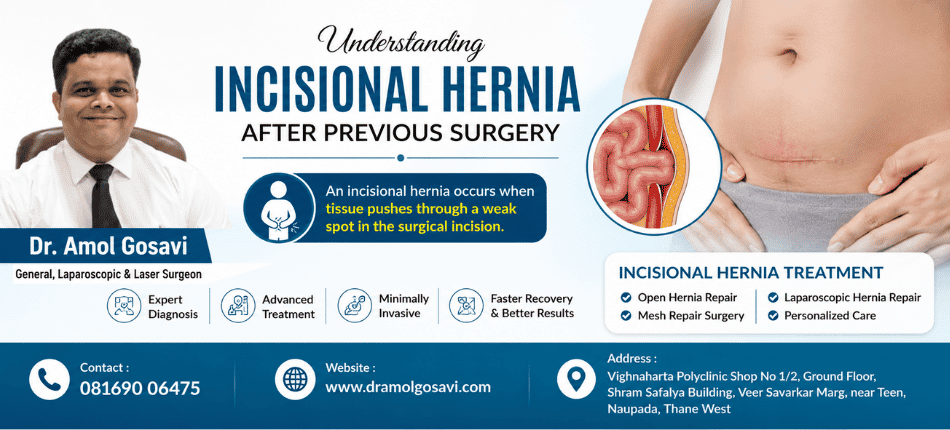
Understanding Incisional Hernia After Previous Surgery |Incisional Hernia Treatment – Dr. Amol Gosavi
An incisional hernia is a common complication that may develop after abdominal surgery. It occurs when tissue or part of an organ pushes through a weakened area of the abdominal wall at the site of a previous surgical incision. While many surgical wounds heal properly, some may not regain full strength, making the area vulnerable to hernia formation. Early diagnosis and appropriate Incisional Hernia Treatment are essential to prevent complications and restore abdominal strength.
If you notice a swelling or bulge near a previous surgical scar, consult an experienced surgeon promptly for evaluation and treatment.
What is an Incisional Hernia?
An incisional hernia develops when the muscles and tissues around a surgical incision weaken or fail to heal completely. Through this weakened area, fat, intestine, or other abdominal tissue may protrude, creating a noticeable bulge beneath the skin. Although some incisional hernias remain small initially, they may gradually enlarge over time and cause discomfort, pain, or other complications if left untreated.
Why Does an Incisional Hernia Occur?
Following surgery, the abdominal wall requires time to heal completely. Factors such as poor wound healing, infection, increased abdominal pressure, or weakened tissues can interfere with the healing process. As a result, the surgical site becomes vulnerable, allowing abdominal contents to push through the weakened muscles. While not every surgical incision leads to a hernia, understanding the risk factors can help patients take preventive measures.
Common Causes of Incisional Hernia
Several factors increase the likelihood of developing an incisional hernia after surgery. These include wound infection, obesity, diabetes, smoking, poor nutrition, chronic coughing, constipation, heavy lifting soon after surgery, pregnancy, and repeated abdominal surgeries. In some cases, emergency surgeries may also carry a higher risk because of limited preparation before the procedure. Following your surgeon’s postoperative instructions carefully can significantly reduce these risks.
Symptoms of Incisional Hernia
The most common symptom is a visible bulge or swelling near the previous surgical scar, which may become more noticeable while standing, coughing, or lifting heavy objects. Some patients experience pain, tenderness, pressure, or discomfort around the affected area, especially during physical activity. Larger hernias may cause abdominal heaviness, digestive discomfort, or difficulty performing routine activities. If severe pain, nausea, vomiting, or an irreducible swelling occurs, immediate medical attention is necessary as these may indicate a surgical emergency.
Who is at Higher Risk?
Certain individuals are more likely to develop an incisional hernia than others. People who are overweight, smokers, elderly patients, individuals with chronic respiratory diseases, diabetes, poor nutritional status, or those with multiple previous abdominal surgeries face a higher risk. Patients involved in strenuous physical work without adequate recovery after surgery may also be more susceptible to developing this condition.
Possible Complications
If left untreated, an incisional hernia can gradually enlarge and become more difficult to repair. In some cases, a portion of the intestine may become trapped inside the hernia, leading to incarceration or strangulation. This can cut off the blood supply to the affected tissue, resulting in severe pain, intestinal obstruction, tissue damage, and a medical emergency requiring immediate surgery. Early treatment helps prevent these potentially serious complications.
Diagnosis of Incisional Hernia
Diagnosis usually begins with a thorough medical history and physical examination. Your surgeon will examine the swelling while you are standing, coughing, or straining to assess the size and severity of the hernia. In some cases, imaging tests such as an ultrasound or CT scan may be recommended to evaluate the defect in the abdominal wall and determine the most appropriate treatment approach. Accurate diagnosis helps ensure successful surgical planning and better outcomes.
Incisional Hernia Treatment Options
The most effective treatment for an incisional hernia is surgical repair. Depending on the size, location, and complexity of the hernia, your surgeon may recommend either open surgery or laparoscopic (minimally invasive) hernia repair. Many repairs involve reinforcing the weakened abdominal wall with a surgical mesh, which reduces tension on the tissues and lowers the risk of recurrence. The choice of procedure is based on the patient’s overall health and individual clinical condition.
Recovery After Hernia Surgery
Recovery varies depending on the type of surgery performed and the patient’s overall health. Most individuals are encouraged to begin light walking soon after surgery to improve circulation and reduce the risk of complications. Heavy lifting and strenuous physical activity should be avoided until approved by the surgeon. Maintaining a healthy diet, controlling body weight, managing chronic cough or constipation, and attending follow-up appointments contribute to a smooth recovery and reduce the risk of recurrence.
Can an Incisional Hernia Be Prevented?
Although not all incisional hernias can be prevented, several measures can reduce the risk. Following postoperative instructions carefully, avoiding heavy lifting during recovery, maintaining a healthy body weight, quitting smoking, controlling diabetes, treating chronic cough, and eating a balanced, protein-rich diet all support proper wound healing. Regular follow-up with your surgeon also helps identify any concerns early.
Why Choose Dr. Amol Gosavi?
Dr. Amol Gosavi is an experienced general and laparoscopic surgeon specializing in the diagnosis and treatment of various hernia conditions, including incisional hernias. He offers comprehensive evaluation, advanced surgical techniques, personalized treatment plans, and compassionate patient care. Using modern minimally invasive procedures whenever appropriate, Dr. Gosavi focuses on faster recovery, reduced postoperative discomfort, and excellent long-term outcomes.
Conclusion
An incisional hernia is a treatable condition that should never be ignored. Early diagnosis and timely Incisional Hernia Treatment can prevent complications, relieve discomfort, and restore the strength of the abdominal wall. If you notice a swelling or pain near a previous surgical scar, consult Dr. Amol Gosavi for expert evaluation and advanced hernia care.
Incisional Hernia Treatment Incisional Hernia Treatment Incisional Hernia Treatment Incisional Hernia Treatment Incisional Hernia Treatment Incisional Hernia Treatment Incisional Hernia Treatment
