
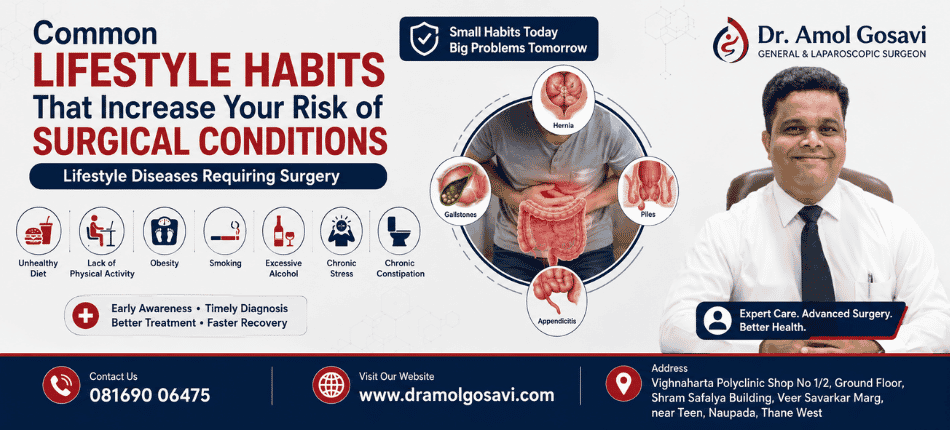
Common Lifestyle Habits That Increase Your Risk of Surgical Conditions | Lifestyle Diseases Requiring Surgery – Dr. Amol Gosavi
Modern lifestyles have made life more convenient, but they have also contributed to a significant rise in chronic health problems. Poor dietary habits, lack of physical activity, obesity, smoking, excessive alcohol consumption, and prolonged sitting have increased the number of people developing conditions that eventually require surgical treatment. Many of these problems develop gradually and remain unnoticed until symptoms become severe enough to interfere with daily life.
While not every surgical condition can be prevented, adopting healthier lifestyle choices can significantly reduce your risk. Understanding which daily habits contribute to these conditions allows you to take proactive steps to protect your health and avoid unnecessary surgery.
Learn how unhealthy habits can lead to lifestyle diseases requiring surgery. Consult Dr. Amol Gosavi for expert surgical care in Thane.
What Are Lifestyle Diseases Requiring Surgery?
Lifestyle diseases requiring surgery are medical conditions that develop or worsen due to unhealthy daily habits and eventually need surgical intervention for effective treatment. These conditions often progress slowly and may not show obvious symptoms during the early stages. Over time, poor lifestyle choices can damage different organs and tissues, making surgery the most suitable treatment option. Examples include hernias, gallstones, severe piles, appendicitis, obesity-related complications, varicose veins, and certain gastrointestinal disorders. Early diagnosis and healthy lifestyle modifications can help reduce the risk of these conditions becoming severe.
Common Lifestyle Habits That Increase Surgical Risk
Many surgical conditions develop gradually due to unhealthy lifestyle habits that place continuous stress on the body. A diet high in processed foods, excessive sugar, unhealthy fats, and low fiber can contribute to obesity, gallstones, and digestive disorders. Physical inactivity weakens muscles, slows metabolism, and increases the risk of hernias and obesity-related complications. Smoking reduces blood circulation and delays tissue healing, while excessive alcohol consumption damages vital organs such as the liver and pancreas. Chronic constipation, poor posture, improper lifting techniques, prolonged sitting, unmanaged diabetes, and ignoring persistent symptoms can also increase the likelihood of developing conditions that may eventually require surgical treatment. Adopting healthier daily habits is one of the most effective ways to reduce these risks.
Surgical Conditions Commonly Linked to Lifestyle
Several surgical conditions are closely associated with long-term lifestyle choices. Obesity and weak abdominal muscles can increase the risk of developing hernias, while diets rich in fatty foods may contribute to gallstone formation. Chronic constipation caused by inadequate fiber intake and poor hydration can lead to piles, anal fissures, and other anorectal disorders. Smoking and unhealthy dietary habits may worsen gastrointestinal problems, increasing the need for surgical intervention in some cases. Sedentary lifestyles are also linked to varicose veins and poor circulation. Although not every case can be prevented, maintaining a healthy lifestyle significantly reduces the likelihood of developing these conditions and improves overall health.
How Poor Diet Affects Surgical Health
A diet high in processed foods, refined sugar, unhealthy fats, and low fiber can negatively affect digestive health and overall well-being. Poor nutrition increases the risk of obesity, constipation, gallstones, fatty liver disease, and metabolic disorders, many of which may eventually require surgical treatment. Low-fiber diets contribute to chronic constipation, which increases pressure during bowel movements and raises the likelihood of developing piles, fissures, and hernias. Choosing a balanced diet rich in fruits, vegetables, whole grains, lean proteins, and healthy fats supports digestive function, strengthens immunity, and helps reduce the risk of lifestyle-related surgical conditions.
The Impact of Obesity
Obesity is one of the leading contributors to several surgical diseases. Excess body weight places continuous pressure on the abdominal wall, increasing the likelihood of developing hernias. It also raises the risk of gallstones, fatty liver disease, sleep apnea, joint disorders, and complications during surgery. Obese individuals may experience slower wound healing, higher infection rates, and prolonged recovery after surgical procedures. Maintaining a healthy weight through regular exercise and a balanced diet not only reduces surgical risks but also improves overall health and quality of life.
Smoking and Alcohol Increase Surgical Risks
Smoking reduces blood circulation, delays wound healing, weakens the immune system, and increases the risk of infections after surgery. It is also associated with a higher risk of developing several gastrointestinal and vascular disorders. Excessive alcohol consumption can damage the liver, pancreas, and digestive tract while increasing the likelihood of nutritional deficiencies and surgical complications. Avoiding tobacco and limiting alcohol intake significantly improves long-term health and reduces the risk of conditions that may require surgery.
Why Physical Activity Matters
A sedentary lifestyle contributes to obesity, poor circulation, constipation, muscle weakness, and metabolic disorders, all of which increase the risk of surgical conditions. Regular physical activity improves digestion, strengthens abdominal muscles, maintains a healthy weight, and supports cardiovascular health. Even simple activities such as walking, cycling, stretching, or light strength training for at least 30 minutes a day can help prevent many lifestyle-related diseases and reduce the need for surgical intervention.
Warning Signs You Should Never Ignore
Certain symptoms may indicate an underlying surgical condition that requires immediate medical attention. Persistent or severe abdominal pain, a noticeable lump or swelling in the abdomen or groin, blood in the stool, painful bowel movements, chronic constipation, repeated vomiting, unexplained weight loss, fever accompanied by abdominal pain, or severe pain after eating fatty meals should never be ignored. These warning signs may be associated with conditions such as hernias, gallbladder disease, appendicitis, piles, intestinal obstruction, or other gastrointestinal disorders. Seeking medical evaluation at an early stage allows for timely diagnosis, appropriate treatment, and helps prevent serious complications or emergency surgery.
Healthy Lifestyle Tips to Reduce Surgical Risk
Making positive lifestyle changes can significantly lower the risk of developing conditions that require surgery. Eating a balanced diet rich in fruits, vegetables, whole grains, lean proteins, and fiber supports digestive health and helps maintain a healthy weight. Regular physical activity strengthens muscles, improves circulation, and reduces the risk of obesity-related diseases. Staying well-hydrated, avoiding smoking, limiting alcohol intake, managing stress, and getting adequate sleep all contribute to better overall health. Practicing proper lifting techniques, maintaining good posture, avoiding prolonged sitting, and attending routine health check-ups can further reduce the likelihood of surgical conditions. Most importantly, do not ignore persistent symptoms—early medical consultation often leads to simpler treatment and better long-term outcomes.
When Should You Consult a General Surgeon?
Consult a general surgeon if you experience persistent abdominal pain, swelling, recurring digestive issues, bleeding during bowel movements, painful lumps, or symptoms that interfere with your daily activities. Early consultation helps identify the underlying cause before it progresses into a more serious condition. Timely diagnosis often allows for less invasive treatment, quicker recovery, and better long-term outcomes. Delaying medical attention can increase the risk of complications and emergency surgery.
Why Choose Dr. Amol Gosavi?
Dr. Amol Gosavi is an experienced General and Laparoscopic Surgeon committed to providing comprehensive care for a wide range of surgical conditions. He specializes in minimally invasive procedures for hernias, gallbladder disease, piles, fissures, fistulas, and other gastrointestinal disorders. Every patient receives a detailed evaluation, personalized treatment plan, and expert guidance on lifestyle modifications to promote long-term health and prevent recurrence. With advanced surgical techniques, compassionate care, and a focus on faster recovery, Dr. Gosavi ensures safe and effective treatment tailored to each patient’s needs.
Conclusion
Many surgical conditions are closely linked to everyday lifestyle habits. While genetics and age play a role, maintaining a healthy diet, staying physically active, avoiding tobacco, limiting alcohol, and seeking timely medical advice can significantly reduce your risk of developing lifestyle diseases requiring surgery. Recognizing early warning signs and making positive lifestyle changes not only improve overall health but also help prevent complications that may require surgical intervention. If you experience persistent symptoms, consult an experienced general surgeon for accurate diagnosis and timely treatment.
Lifestyle Diseases Requiring Surgery Lifestyle Diseases Requiring Surgery Lifestyle Diseases Requiring Surgery Lifestyle Diseases Requiring Surgery Lifestyle Diseases Requiring Surgery Lifestyle Diseases Requiring Surgery Lifestyle Diseases Requiring Surgery Lifestyle Diseases Requiring Surgery Lifestyle Diseases Requiring Surgery
