
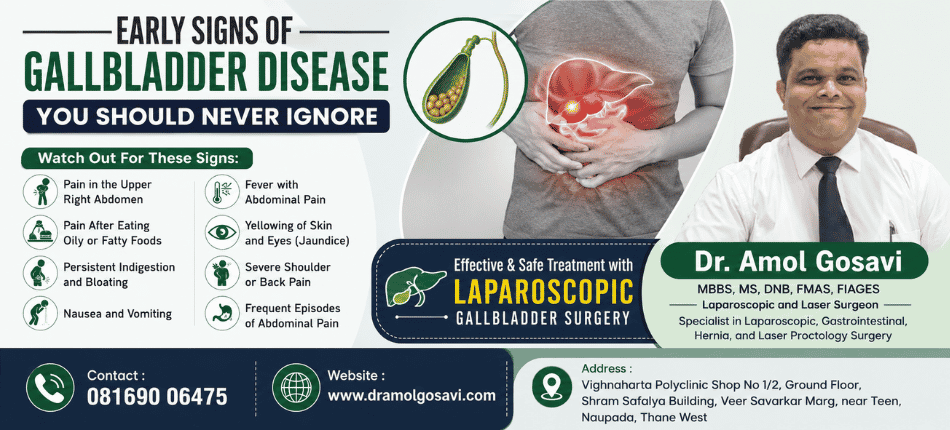
Early Signs of Gallbladder Disease You Should Never Ignore | Laparoscopic gallbladder surgery – Dr. Amol Gosavi
The gallbladder is a small organ located beneath the liver that stores bile, a digestive fluid essential for breaking down fats. Although small in size, it plays an important role in digestion. When the gallbladder develops problems such as gallstones, inflammation, or infection, it can cause severe pain and digestive discomfort. Unfortunately, many people ignore the early signs of gallbladder disease, assuming they are simple gastric issues or indigestion. Delaying treatment can lead to serious complications requiring emergency surgery.
Understanding the warning signs can help you seek timely medical care and benefit from minimally invasive laparoscopic gallbladder surgery, ensuring faster recovery and fewer complications.
What Causes Gallbladder Disease?
Gallbladder disease can develop due to several factors, with gallstones being the most common cause. Gallstones form when substances like cholesterol or bilirubin harden into deposits, blocking the normal flow of bile. Other causes include gallbladder inflammation (cholecystitis), infections, bile duct obstruction, obesity, diabetes, rapid weight loss, a high-fat diet, and a family history of gallbladder problems. Women, people over the age of 40, and individuals who are overweight are generally at a higher risk of developing gallbladder disease. Early diagnosis can help prevent complications and the need for emergency treatment.
Early Signs of Gallbladder Disease You Should Never Ignore
1. Pain in the Upper Right Abdomen
One of the earliest and most recognizable symptoms of gallbladder disease is pain in the upper right side of the abdomen, just below the rib cage. The pain may be mild initially but can become severe and persistent over time. It often appears suddenly after eating, especially after consuming fatty foods, and may last from several minutes to a few hours. In many cases, the discomfort radiates to the back or right shoulder. Ignoring recurring abdominal pain can allow the condition to worsen and increase the risk of complications.
2. Pain After Eating Oily or Fatty Foods
The gallbladder releases bile to help digest fats. When gallstones or inflammation block the flow of bile, eating oily, fried, or fatty foods forces the gallbladder to contract, causing intense pain known as a gallbladder attack. This pain usually begins within an hour after a meal and may be accompanied by nausea or bloating. If this symptom occurs repeatedly after eating rich or greasy foods, it should not be dismissed as simple indigestion, as it may indicate an underlying gallbladder problem requiring medical evaluation.
3. Persistent Indigestion and Bloating
Many people with gallbladder disease experience ongoing digestive discomfort that resembles common gastric problems. Frequent bloating, excessive gas, burping, acidity, and a feeling of fullness even after eating a small meal are common symptoms. Since these issues overlap with other digestive disorders, patients often delay seeking treatment. However, persistent indigestion that continues despite dietary changes or medications may indicate gallbladder dysfunction and should be evaluated by a healthcare professional.
4. Nausea and Vomiting
Nausea and vomiting are common symptoms when the gallbladder is unable to function properly. As bile flow becomes blocked due to gallstones or inflammation, digestion is affected, leading to nausea, especially after meals. Some patients may experience repeated episodes of vomiting along with severe abdominal pain. When nausea occurs frequently and is accompanied by other gallbladder symptoms, it is important to seek medical attention to determine the underlying cause and begin appropriate treatment.
5. Fever with Abdominal Pain
A combination of fever, chills, and severe abdominal pain may indicate that the gallbladder has become infected or inflamed, a condition known as acute cholecystitis. This is considered a medical emergency because untreated infection can spread to surrounding tissues or even lead to life-threatening complications. If fever develops alongside persistent pain in the upper abdomen, immediate consultation with a surgeon or emergency medical care is essential for prompt diagnosis and treatment.
6. Yellowing of Skin and Eyes (Jaundice)
Yellowing of the skin and the whites of the eyes, known as jaundice, can occur when a gallstone blocks the common bile duct, preventing bile from draining properly. As bile accumulates in the bloodstream, it causes yellow discoloration of the skin and eyes. Other associated symptoms may include dark-colored urine, pale stools, and itching. Jaundice is a serious warning sign that requires urgent medical evaluation, as prolonged bile duct obstruction can damage the liver and increase the risk of severe infection.
7. Severe Shoulder or Back Pain
Gallbladder pain often radiates beyond the abdomen and may be felt in the right shoulder, upper back, or between the shoulder blades. This referred pain occurs because the nerves supplying the gallbladder also affect nearby areas of the body. Many people mistakenly attribute this discomfort to muscle strain or poor posture, delaying diagnosis. If shoulder or back pain occurs repeatedly along with abdominal discomfort or after meals, it should be assessed for possible gallbladder disease.
8. Frequent Episodes of Abdominal Pain
Recurring attacks of abdominal pain are a strong indication that the gallbladder condition is progressing. These episodes may become more frequent, more severe, and last longer over time. Repeated gallbladder attacks can lead to inflammation, infection, bile duct blockage, pancreatitis, or even rupture of the gallbladder if left untreated. Seeking medical evaluation after recurring pain episodes allows for timely treatment and reduces the risk of serious complications.
When Should You Visit a Surgeon?
You should consult a surgeon if you experience repeated upper abdominal pain, especially after eating fatty foods, or if the pain lasts for more than a few hours. Other warning signs include persistent nausea, vomiting, fever, chills, jaundice, severe bloating, or pain radiating to the shoulder or back. Early consultation allows the surgeon to perform appropriate investigations such as an ultrasound or blood tests to determine the cause of your symptoms. If gallstones or gallbladder disease are diagnosed, timely treatment with laparoscopic gallbladder surgery can prevent complications and provide long-term relief.
Diagnosis of Gallbladder Disease
Your doctor may recommend:
- Physical examination
- Ultrasound abdomen
- Liver function tests
- Blood investigations
- CT Scan (if required)
- MRI or MRCP in complex cases
These tests help determine the severity of the condition and the appropriate treatment plan.
What is Laparoscopic Gallbladder Surgery?
Laparoscopic gallbladder surgery (Laparoscopic Cholecystectomy) is considered the gold standard treatment for symptomatic gallstones and gallbladder disease.
The procedure involves removing the diseased gallbladder through 3–4 tiny incisions using a laparoscopic camera and specialized surgical instruments.
The surgery generally takes around 30–60 minutes and is performed under general anesthesia.
Benefits of Laparoscopic Gallbladder Surgery
Minimally Invasive Procedure
Tiny incisions reduce tissue damage and minimize pain after surgery.
Faster Recovery
Most patients return home within 24 hours and resume normal activities in a few days.
Minimal Blood Loss
Small incisions significantly reduce bleeding during surgery.
Less Pain
Compared to open surgery, laparoscopic surgery causes considerably less postoperative discomfort.
Smaller Scars
Cosmetically appealing tiny scars heal much faster.
Lower Risk of Infection
Reduced exposure of internal organs decreases infection risk.
Can You Live Without a Gallbladder?
Yes.
The liver continues producing bile even after gallbladder removal. Instead of being stored, bile flows directly into the intestine, allowing normal digestion.
Most patients live completely healthy lives after surgery.
Why Choose Dr. Amol Gosavi for Laparoscopic Gallbladder Surgery in Thane?
Dr. Amol Gosavi provides advanced laparoscopic surgical care using modern techniques that prioritize patient safety, faster recovery, and minimal postoperative discomfort. Every patient receives a personalized evaluation and treatment plan based on their condition. From accurate diagnosis to comprehensive post-operative care, the focus remains on achieving the best possible surgical outcomes with compassionate support.
Conclusion
Ignoring the early signs of gallbladder disease can lead to severe complications and emergency surgery. Persistent abdominal pain, digestive discomfort, nausea, fever, or jaundice should never be overlooked. Timely diagnosis and laparoscopic gallbladder surgery offer a safe, minimally invasive, and highly effective solution for long-term relief. If you are experiencing symptoms, consult an experienced laparoscopic surgeon before the condition worsens.
Laparoscopic gallbladder surgery Laparoscopic gallbladder surgery Laparoscopic gallbladder surgery Laparoscopic gallbladder surgery Laparoscopic gallbladder surgery Laparoscopic gallbladder surgery
