
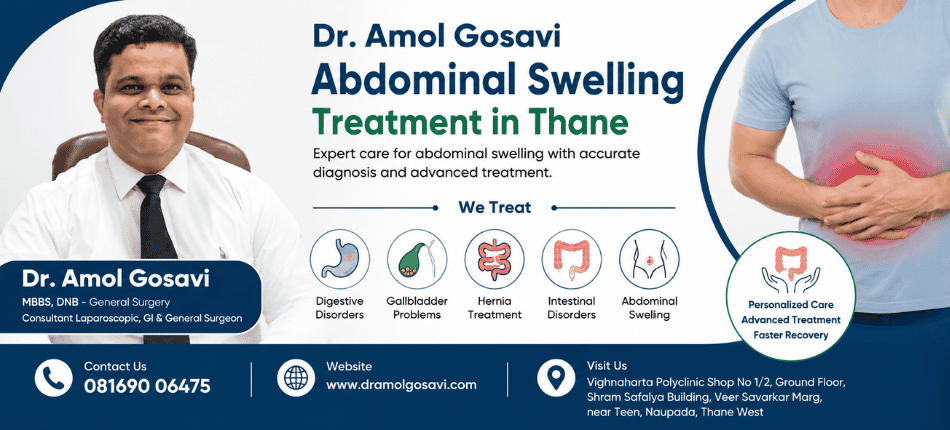
Understanding Abdominal Swelling: Causes, Diagnosis & Treatment | Abdominal Swelling Treatment in Thane – Dr. Amol Gosavi
Abdominal swelling is a common condition that causes your stomach area to appear enlarged, tight, or bloated. While occasional bloating after eating is usually harmless, persistent abdominal swelling may indicate an underlying digestive, liver, kidney, or surgical condition that requires medical attention.
If you are experiencing continuous abdominal swelling, pain, or discomfort, seeking Abdominal Swelling Treatment in Thane from an experienced surgeon like Dr. Amol Gosavi can help identify the exact cause and provide the right treatment before complications develop.
What is Abdominal Swelling?
Abdominal swelling refers to an increase in the size of the abdomen due to the accumulation of gas, fluid, fat, enlarged organs, or abnormal growths. It may develop gradually or suddenly depending on the underlying condition.
Some patients experience swelling only after meals, while others notice continuous enlargement throughout the day.
Common Causes of Abdominal Swelling
1. Excess Gas
Excess gas is one of the most common reasons for abdominal swelling. It develops when air is swallowed while eating or drinking, or when bacteria in the intestines break down certain foods during digestion. Eating too quickly, consuming carbonated beverages, chewing gum, and eating gas-producing foods such as beans, cabbage, broccoli, and onions can contribute to excessive gas. Most cases improve with dietary modifications, regular exercise, and avoiding foods that trigger bloating. However, persistent gas accompanied by severe pain or other symptoms should be evaluated by a doctor.
2. Constipation
Constipation occurs when bowel movements become infrequent or difficult to pass, causing stool to accumulate in the intestines. This buildup can make the abdomen feel swollen, tight, and uncomfortable. Common causes include a low-fiber diet, inadequate water intake, lack of physical activity, certain medications, and underlying digestive disorders. Increasing fiber intake, staying well-hydrated, exercising regularly, and following healthy bowel habits can often relieve constipation. If constipation persists for several weeks or is associated with severe pain or bleeding, medical evaluation is recommended.
3. Irritable Bowel Syndrome (IBS)
Irritable Bowel Syndrome (IBS) is a chronic digestive disorder that affects the normal functioning of the large intestine. People with IBS frequently experience abdominal swelling, bloating, cramps, gas, and changes in bowel habits such as constipation, diarrhea, or both. Stress, certain foods, and hormonal changes may trigger symptoms. Although IBS does not cause permanent damage to the intestines, it can significantly affect daily life. Proper diagnosis, dietary adjustments, stress management, and prescribed medications can effectively control symptoms.
4. Hernia
A hernia develops when an internal organ or fatty tissue pushes through a weak spot in the abdominal muscles, creating a visible or noticeable bulge. The swelling often becomes more prominent while standing, coughing, lifting heavy objects, or straining. Patients may experience discomfort, heaviness, or pain around the affected area. While small hernias may initially cause minimal symptoms, they do not heal on their own and often require surgical repair to prevent complications such as intestinal obstruction or strangulation.
5. Liver Disease
Certain liver conditions, including liver cirrhosis, hepatitis, and chronic liver disease, can lead to fluid accumulation in the abdomen, a condition known as ascites. This causes progressive abdominal swelling, along with symptoms such as fatigue, loss of appetite, leg swelling, and jaundice. Since liver-related abdominal swelling can indicate advanced disease, timely diagnosis and treatment are essential. Management may include medications, dietary changes, fluid restriction, and treatment of the underlying liver condition.
6. Gallbladder Disease
Gallbladder diseases such as gallstones or gallbladder inflammation (cholecystitis) can cause abdominal swelling, especially after consuming fatty meals. Patients often experience pain in the upper right abdomen, nausea, vomiting, indigestion, and a feeling of fullness. If left untreated, gallbladder disease can lead to infection or blockage of the bile ducts. Depending on the severity, treatment may include medications or minimally invasive laparoscopic gallbladder surgery.
7. Intestinal Obstruction
An intestinal obstruction occurs when food, fluids, and gas cannot pass normally through the intestines due to a blockage. This condition is considered a medical emergency and can cause severe abdominal swelling, intense pain, vomiting, constipation, and an inability to pass gas. Causes include adhesions from previous surgeries, hernias, tumors, or twisted intestines. Immediate medical attention is necessary, and treatment may involve hospitalization, intravenous fluids, or emergency surgery to remove the obstruction.
8. Tumors or Growths
Benign or malignant growths within the abdomen may also cause visible swelling.
Symptoms That Should Not Be Ignored
Consult a specialist immediately if abdominal swelling is associated with:
- Severe abdominal pain
- Persistent vomiting
- Fever
- Blood in stool
- Sudden weight loss
- Difficulty eating
- Yellowing of skin (Jaundice)
- Shortness of breath due to abdominal pressure
How is Abdominal Swelling Diagnosed?
Diagnosing abdominal swelling begins with a detailed medical history and an assessment of the patient’s symptoms. The doctor will ask about the duration of swelling, associated pain, eating habits, bowel movements, previous surgeries, medications, and existing medical conditions. Based on the initial evaluation, additional investigations such as blood tests, ultrasound, CT scan, MRI, endoscopy, colonoscopy, or stool tests may be recommended to identify the exact cause. Accurate diagnosis is essential because treatment depends entirely on the underlying condition.
Physical Examination
A thorough physical examination is an important part of diagnosing abdominal swelling. During the examination, the doctor carefully inspects and gently presses different areas of the abdomen to check for tenderness, swelling, lumps, hernias, enlarged organs, or fluid accumulation. The doctor may also listen to bowel sounds using a stethoscope to assess intestinal activity. Findings from the physical examination help determine whether further diagnostic tests or immediate treatment is required.
Diagnostic Tests
Depending on the symptoms, investigations may include:
- Blood tests
- Ultrasound Abdomen
- CT Scan
- MRI
- Endoscopy
- Colonoscopy
- Stool examination
These tests help determine the exact cause and guide appropriate treatment.
Treatment Options for Abdominal Swelling
The treatment for abdominal swelling depends on its underlying cause rather than the swelling itself. Mild digestive conditions may improve with dietary modifications, increased physical activity, adequate hydration, and lifestyle changes. However, more serious conditions such as hernias, gallstones, liver disease, intestinal obstruction, or abdominal tumors require specialized medical or surgical treatment. An individualized treatment plan ensures effective symptom relief while addressing the root cause of the problem.
Medications
Medications are often prescribed when abdominal swelling results from digestive disorders, infections, constipation, acid reflux, or Irritable Bowel Syndrome. Depending on the diagnosis, treatment may include antacids, probiotics, laxatives, antibiotics, anti-inflammatory medicines, or medications that reduce gas formation and improve digestion. It is important to avoid self-medication, as taking inappropriate medicines may delay the diagnosis of more serious conditions.
Surgical Treatment
Surgery may be necessary when abdominal swelling is caused by conditions that cannot be managed with medications alone. Hernias, gallstones, intestinal obstructions, appendicitis, and certain abdominal tumors often require surgical intervention. Whenever appropriate, minimally invasive laparoscopic surgery is preferred because it involves smaller incisions, less pain, shorter hospital stays, faster recovery, and reduced risk of complications compared to traditional open surgery. The decision for surgery is made after a comprehensive evaluation by the surgeon.
Can Abdominal Swelling Be Prevented?
Although not all causes of abdominal swelling can be prevented, adopting a healthy lifestyle can significantly reduce the risk of many digestive problems. Eating a balanced diet rich in fiber, drinking plenty of water, exercising regularly, avoiding overeating, limiting carbonated beverages, and reducing fatty or processed foods can help maintain good digestive health. Managing stress, maintaining a healthy weight, avoiding excessive alcohol consumption, and seeking prompt medical attention for persistent digestive symptoms also play an important role in preventing chronic abdominal swelling and its complications.
Why Choose Dr. Amol Gosavi for Abdominal Swelling Treatment in Thane?
Dr. Amol Gosavi provides comprehensive diagnosis and treatment for various abdominal conditions using advanced diagnostic techniques and evidence-based surgical care.
Patients benefit from:
- Accurate diagnosis
- Personalized treatment plans
- Modern surgical techniques
- Compassionate patient care
- Complete follow-up support
Whether your abdominal swelling is caused by digestive disorders, hernia, gallbladder disease, or another surgical condition, early diagnosis can prevent serious complications.
Conclusion
Abdominal swelling should never be ignored if it becomes frequent, painful, or persistent. While many cases are caused by simple digestive issues, others may indicate conditions requiring immediate medical or surgical treatment.
If you are experiencing continuous abdominal swelling or abdominal discomfort, consult Dr. Amol Gosavi for expert Abdominal Swelling Treatment in Thane and receive the right diagnosis and treatment at the earliest.
Abdominal Swelling Treatment in Thane Abdominal Swelling Treatment in Thane Abdominal Swelling Treatment in Thane Abdominal Swelling Treatment in Thane Abdominal Swelling Treatment in Thane Abdominal Swelling Treatment in Thane Abdominal Swelling Treatment in Thane Abdominal Swelling Treatment in Thane Abdominal Swelling Treatment in Thane Abdominal Swelling Treatment in Thane
