
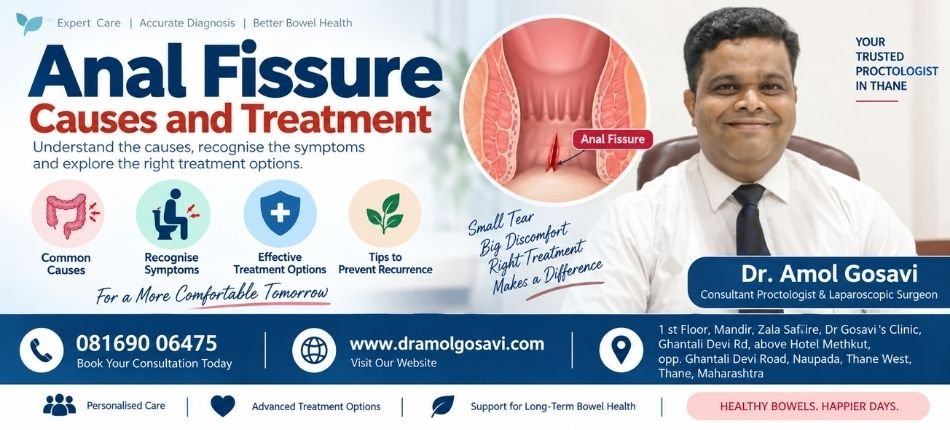
Anal Fissure Causes and Treatment – Dr. Amol Gosavi
Introduction
An anal fissure is a small tear in the delicate lining of the anal canal. It commonly develops after passing hard or large stools and can cause significant discomfort during or after bowel movements. While some fissures may improve with conservative measures, persistent or recurring symptoms require proper medical evaluation.
Understanding anal fissure causes and treatment is important because simply managing temporary symptoms may not address the underlying factors responsible for recurrence. Constipation, excessive straining, irregular bowel habits, and hard stools are among the common contributing factors.
For people experiencing recurring symptoms in Thane, timely evaluation can help determine whether the condition is an acute fissure, a chronic fissure, or another anorectal problem requiring different management.
What Is an Anal Fissure?
An anal fissure is a small cut or tear in the tissue lining the anal opening. The tear can become irritated whenever stool passes through the area.
Anal fissures are generally divided into two categories:
Acute Anal Fissure: A relatively recent fissure that may respond to conservative treatment and improved bowel habits.
Chronic Anal Fissure: A fissure that persists for a longer period and may develop changes that make spontaneous healing more difficult.
Determining whether a fissure is acute or chronic can influence the treatment approach.
What Are the Main Causes of Anal Fissure?
Several factors can contribute to an anal fissure. Identifying these factors is an important part of treatment and prevention.
1. Constipation
Constipation is one of the most common factors associated with anal fissures. Hard, dry stools can stretch the anal canal and injure its delicate lining.
Repeated constipation may also prevent an existing fissure from healing completely.
2. Passing Hard or Large Stools
Even without chronic constipation, occasionally passing an unusually hard or large stool may create excessive pressure on the anal lining.
Maintaining softer and more regular stools is therefore an important part of fissure management.
3. Excessive Straining
Straining while passing stool increases pressure around the anal canal. Frequent straining may cause tissue injury or repeatedly irritate an existing fissure.
4. Low-Fibre Diet
A diet lacking adequate fibre may contribute to harder stools and irregular bowel movements.
Fruits, vegetables, whole grains, pulses, and other fibre-containing foods can support healthier bowel habits.
5. Inadequate Fluid Intake
Adequate hydration supports normal bowel function. In some people, insufficient fluid intake may contribute to harder stools and difficulty during bowel movements.
6. Repeated Loose Stools
Although constipation is commonly associated with anal fissures, frequent loose stools can also repeatedly irritate the anal lining.
7. Other Medical Conditions
Occasionally, fissure-like symptoms may occur alongside other medical conditions. Persistent, unusual, or recurring symptoms therefore require proper evaluation rather than self-diagnosis.
What Are the Symptoms of Anal Fissure?
Symptoms can vary from person to person. Common anal fissure symptoms may include:
- Sharp discomfort during bowel movements
- Burning sensation after passing stool
- Fresh blood on toilet paper or stool
- Itching or irritation around the anal area
- Difficulty passing stool comfortably
- A visible small tear near the anal opening
- Symptoms that worsen after constipation
- Recurrent discomfort during bowel movements
Because some of these symptoms can also occur with piles and other anorectal conditions, examination by a healthcare professional is important.
Anal Fissure vs Piles: Are They the Same?
No. Anal fissure and piles are different conditions.
An anal fissure is a tear in the lining of the anal canal, whereas piles involve swollen vascular structures in or around the anal canal.
However, both conditions may sometimes cause fresh blood during bowel movements and discomfort. This overlap is one reason patients should avoid assuming that every anorectal symptom is caused by piles.
A proper diagnosis helps ensure that treatment is directed toward the actual condition.
How Is Anal Fissure Diagnosed?
Anal fissure diagnosis usually begins with a discussion about symptoms, bowel habits, constipation, and how long the problem has been present. The doctor may perform a careful physical examination of the affected area to identify the fissure and assess its severity. This also helps distinguish an anal fissure from piles or other anorectal conditions. Additional tests may be recommended if symptoms are persistent, recurrent, or unusual.
What Are the Treatment Options for Anal Fissure?
The appropriate treatment depends on the severity and duration of the fissure.
Dietary Changes
Increasing dietary fibre may help improve stool consistency and bowel regularity.
A balanced diet containing vegetables, fruits, whole grains, pulses, and other appropriate fibre sources may be recommended.
Adequate Hydration
Regular fluid intake can support healthy bowel habits and help reduce the likelihood of hard stools.
Improving Toilet Habits
Patients may be advised to avoid excessive straining and prolonged sitting on the toilet.
Repeatedly delaying the natural urge for a bowel movement should also be avoided where possible.
Warm Sitz Bath
A warm sitz bath may provide temporary comfort and help relax the area. Your doctor can advise how it should be used as part of your treatment plan.
Medicines
Depending on the condition, a doctor may prescribe stool-softening medicines, local creams, ointments, or other medications.
Patients should avoid prolonged self-medication because persistent symptoms may require reassessment.
When Are Advanced Treatment Options Considered?
Advanced treatment options may be considered when an anal fissure becomes chronic or does not improve adequately with dietary changes, medicines, and other conservative measures. They may also be discussed when symptoms repeatedly return or significantly affect daily activities. The choice of procedure depends on the severity of the fissure, examination findings, and the patient’s overall health. A specialist can explain the available options, potential benefits, and possible risks before treatment.
For patients who want to understand modern and minimally invasive options for anorectal conditions, learn more about Dr. Amol Gosavi’s Advanced Laser Proctologist in Thane services.
Can an Anal Fissure Heal Without Surgery?
Some anal fissures can improve without surgery, particularly when they are identified early and factors such as constipation and hard stools are effectively managed.
However, not every fissure behaves in the same way. Chronic fissures may require additional medical or procedural management.
A doctor can determine whether conservative treatment remains appropriate based on examination findings and response to previous treatment.
How Can You Prevent Anal Fissure from Recurring?
Preventing recurrence mainly involves maintaining soft and regular bowel movements. Eating enough fibre, drinking adequate fluids, staying physically active, and avoiding excessive straining can support healthy bowel habits. It is also helpful to avoid unnecessarily delaying the urge to pass stool. People with frequent constipation or recurring symptoms should seek medical advice to identify and manage contributing factors.
When Should You Consult a Doctor?
Consider medical evaluation when symptoms persist, repeatedly return, or interfere with normal bowel movements.
Prompt evaluation is particularly important for significant or persistent bleeding, fever, unusual discharge, swelling, unexplained bowel changes, or symptoms that do not improve as expected.
Rectal bleeding should not automatically be assumed to be caused by a fissure or piles.
Consult Dr. Amol Gosavi in Thane
If you are experiencing recurring anorectal symptoms, Dr. Amol Gosavi can provide clinical evaluation to determine the underlying condition and appropriate management.
Treatment may include lifestyle and bowel-habit modifications, medicines, or advanced options depending on the diagnosis and severity of the condition.
Conclusion
Understanding anal fissure causes and treatment can help patients recognize contributing factors and seek appropriate medical care. Constipation, hard stools, excessive straining, and irregular bowel habits are common factors, but persistent symptoms should always be properly evaluated.
Early diagnosis, appropriate treatment, and long-term attention to bowel habits can play an important role in recovery and reducing recurrence.
Anal Fissure Causes and Treatment Anal Fissure Causes and Treatment Anal Fissure Causes and Treatment Anal Fissure Causes and Treatment Anal Fissure Causes and Treatment Anal Fissure Causes and Treatment Anal Fissure Causes and Treatment Anal Fissure Causes and Treatment Anal Fissure Causes and Treatment Anal Fissure Causes and Treatment
