
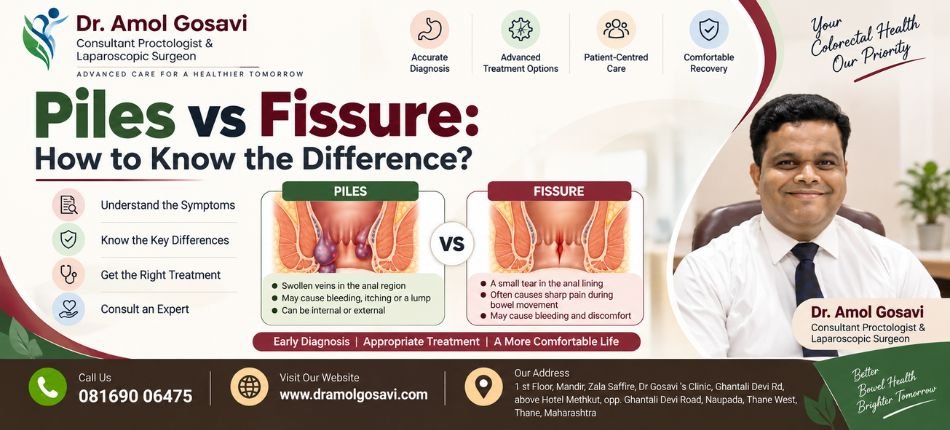
Piles vs Fissure : How to Know the Difference? – Dr. Amol Gosavi
Introduction
Piles and anal fissures are two common conditions affecting the anal region. Because both may be associated with discomfort and bleeding during bowel movements, people often confuse one condition with the other. However, piles and fissures are different conditions, with different underlying causes and clinical features.
Understanding Piles vs Fissure can help you recognize possible symptoms, but symptoms alone are not always enough for self-diagnosis. A proper medical examination can help determine the actual cause and guide appropriate treatment. For professional evaluation and information about available treatment approaches, you can learn more about Dr. Amol Gosavi as an Advanced Laser Proctologist in Thane.
This guide explains the difference between piles and fissures, including their causes, symptoms, diagnosis, treatment options, and preventive measures.
What Are Piles?
Piles, also called hemorrhoids, are swollen and enlarged veins in or around the anus and lower rectum. They may develop internally or externally.
Internal piles occur inside the rectum and may not always be noticeable in their early stages. External piles develop around the anal opening and may cause swelling or discomfort.
Symptoms and severity can vary depending on the type and extent of the condition.
What Is an Anal Fissure?
An anal fissure is a small tear or split in the lining of the anal canal. It commonly develops when the tissue is stretched during the passage of hard or large stools.
Fissures may cause sharp discomfort during bowel movements, and the discomfort can sometimes continue afterward. Constipation and repeated straining are commonly associated with the condition.
A fissure that persists for a longer period may require further medical evaluation and management.
Piles vs Fissure: What Is the Main Difference?
The fundamental difference is the type of problem involved.
Piles involve swollen blood vessels, whereas an anal fissure is a tear in the anal lining.
Although both conditions may cause bleeding or discomfort during bowel movements, their symptom patterns can differ. For example, fissures are often associated with sharp discomfort during or after passing stool, whereas piles may be associated with swelling, itching, a lump, or bleeding.
Because symptoms can overlap, diagnosis should be based on a clinical examination rather than symptoms alone.
Common Symptoms of Piles
The symptoms of piles depend on whether they are internal or external and on their severity.
Possible symptoms include:
- Bleeding during bowel movements
- Itching around the anal area
- Swelling around the anus
- A lump near the anal opening
- Discomfort while sitting or passing stool
- A feeling of incomplete evacuation in some cases
Bleeding from the rectum should not automatically be assumed to be piles because other conditions can also cause it.
Common Symptoms of Anal Fissure
An anal fissure can produce a somewhat different symptom pattern.
Common symptoms may include:
- Sharp discomfort while passing stool
- Discomfort that continues after bowel movements
- Small amounts of bright red blood
- A visible tear near the anal opening in some cases
- Symptoms associated with constipation or hard stools
- Fear or avoidance of bowel movements because of discomfort
Persistent symptoms should be medically evaluated.
Piles vs Fissure: Quick Comparison
| Feature | Piles | Anal Fissure |
|---|---|---|
| Basic condition | Swollen/enlarged veins | Tear in anal lining |
| Common association | Straining and increased pressure | Hard stool and trauma to anal lining |
| Discomfort | Can vary depending on type | Often sharp during/after stool |
| Bleeding | Can occur | Can occur |
| Lump/swelling | May be present | Usually not the main feature |
| Itching | Can occur | Less characteristic |
| Constipation | Can contribute | Common contributing factor |
This comparison is only a general guide. Individual symptoms can vary.
What Causes Piles?
Piles can develop when increased pressure causes the veins in the lower rectum and anal area to become swollen. Common contributing factors include chronic constipation, repeated straining during bowel movements, prolonged sitting on the toilet, pregnancy, and being overweight. A low-fibre diet may also contribute by making stools harder to pass. In many cases, several factors may be involved rather than one single cause.
What Causes an Anal Fissure?
An anal fissure usually develops when the delicate lining of the anal canal becomes stretched or injured. Passing hard or large stools, constipation, and repeated straining are common contributing factors. Frequent diarrhoea or childbirth-related trauma may also lead to fissures in some people. If a fissure repeatedly returns or does not heal, medical evaluation can help identify other possible causes.
Can Constipation Cause Both Piles and Fissure?
Yes, constipation can contribute to both conditions, although through somewhat different mechanisms.
Repeated straining can increase pressure on veins and contribute to piles. At the same time, hard stools can stretch and injure the anal lining, potentially leading to a fissure.
Maintaining softer, regular stools can therefore be an important part of prevention and management for many patients.
How Are Piles and Fissures Diagnosed?
Diagnosis usually begins with a discussion of symptoms, bowel habits, duration of the problem, and relevant medical history.
The doctor may perform an appropriate physical examination to identify whether symptoms are consistent with piles, a fissure, or another condition. Depending on the symptoms and clinical findings, additional examination or testing may sometimes be recommended.
Correct diagnosis is important because rectal bleeding and anal discomfort can have causes other than piles or fissures.
Treatment for Piles
Treatment depends on the type and severity of piles and the patient’s symptoms.
Early management may focus on improving bowel habits and reducing constipation. Measures can include adequate dietary fibre, appropriate fluid intake, avoiding unnecessary straining, and following medical advice for symptom management.
When symptoms persist or the condition is more advanced, a doctor may discuss additional procedures or surgical treatment depending on the individual diagnosis.
Treatment for Anal Fissure
Treatment for an anal fissure generally focuses on supporting healing while reducing factors that repeatedly irritate the affected area.
Management may include measures to keep stools soft, improve bowel habits, and reduce straining. A doctor may also recommend appropriate medicines depending on the condition.
If a fissure becomes chronic or does not respond adequately to conservative management, further treatment options may be considered after evaluation.
Can Piles and Fissures Heal Without Surgery?
Some cases can improve with conservative treatment and changes in bowel habits, particularly when identified and managed appropriately. However, whether non-surgical management is suitable depends on the diagnosis, duration, severity, and response to previous treatment.
Persistent or recurrent symptoms do not necessarily mean surgery is required, but they do indicate that medical evaluation may be useful.
Treatment decisions should be individualized rather than based solely on information found online.
Diet and Bowel Habits for Piles and Fissure
Healthy bowel habits can help reduce constipation and unnecessary straining, which are important factors in both piles and fissures. Include fibre-rich foods such as fruits, vegetables, whole grains, and pulses, along with adequate fluids as appropriate for you. Regular physical activity and responding promptly to the natural urge to pass stool can also support regular bowel movements. Avoid spending unnecessarily long periods on the toilet or repeatedly straining.
What Should You Avoid?
If you have symptoms suggestive of piles or fissures, avoid repeatedly straining during bowel movements and avoid delaying the urge to pass stool.
It is also important not to repeatedly self-treat rectal bleeding without knowing its cause. Assuming every episode of bleeding is caused by piles can delay diagnosis of another condition.
Persistent, recurrent, or unusual symptoms should be discussed with a qualified medical professional.
When Should You Consult a Doctor?
Consider seeking medical evaluation if:
- Bleeding is persistent or recurrent
- Symptoms are severe or worsening
- A lump or swelling develops
- Bowel movements remain consistently difficult
- Symptoms repeatedly return
- Conservative measures are not helping
- There is an unexplained change in bowel habits
Seek prompt medical attention for significant bleeding, dizziness or fainting, black or tarry stools, fever with worsening symptoms, or other concerning symptoms.
Why Proper Diagnosis Matters
Although piles and fissures are common, symptoms such as rectal bleeding should not automatically be attributed to either condition.
Other gastrointestinal or anorectal conditions can sometimes produce overlapping symptoms. A clinical examination helps identify the likely cause and allows treatment to be selected accordingly.
This is particularly important when symptoms are new, persistent, recurrent, or different from previous episodes.
Piles vs Fissure: Which One Do You Have?
Certain symptoms can provide clues, but they cannot always provide a definite answer.
A sharp sensation during or after bowel movements may be more characteristic of a fissure, while swelling, itching, or a lump around the anus may be associated with piles. Bleeding can occur with either.
Therefore, the safest way to distinguish Piles vs Fissure is through an appropriate medical evaluation.
Preventing Recurrence
Preventing recurrence often involves maintaining regular, comfortable bowel movements and addressing factors that contributed to the original problem. Focus on adequate fibre and fluids, regular activity, avoiding repeated straining, and following prescribed treatment properly. Do not ignore constipation or repeatedly recurring symptoms. If bleeding, discomfort, or other symptoms return frequently, consult a doctor for further evaluation.
Piles and Fissure Care with Dr. Amol Gosavi
If symptoms such as bleeding, swelling, itching, or discomfort during bowel movements continue, proper evaluation can help determine whether the condition is piles, an anal fissure, or another anorectal problem.
Dr. Amol Gosavi provides evaluation and treatment for proctology-related conditions in Thane. Treatment recommendations can be made according to the diagnosis, severity of symptoms, duration of the condition, and individual patient requirements.
Patients with persistent or recurring symptoms should avoid relying only on self-diagnosis and seek an appropriate medical assessment.
Conclusion
Understanding Piles vs Fissure begins with recognizing that they are two different conditions. Piles involve swollen veins, while an anal fissure involves a tear in the anal lining. Although their symptoms may overlap, differences in the pattern of discomfort, swelling, itching, and other symptoms can provide useful clues.
However, symptoms alone cannot always confirm the diagnosis. If bleeding, discomfort, constipation, swelling, or recurrent symptoms are affecting your daily routine, a professional medical evaluation can help identify the cause and determine an appropriate treatment plan.
Piles vs Fissure Piles vs Fissure Piles vs Fissure Piles vs Fissure Piles vs Fissure Piles vs Fissure Piles vs Fissure Piles vs Fissure Piles vs Fissure Piles vs Fissure Piles vs Fissure Piles vs Fissure Piles vs Fissure Piles vs Fissure Piles vs Fissure Piles vs Fissure Piles vs Fissure
