
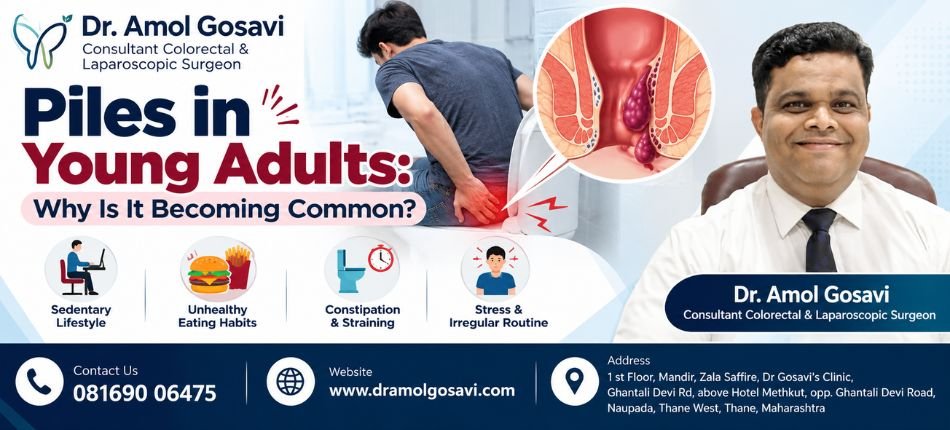
Piles in Young Adults: Why Is It Becoming Common? – Dr. Amol Gosavi
Introduction
Piles, also known as haemorrhoids, are swollen blood vessels in or around the anus and lower rectum. Although piles are often associated with older adults, younger people can also develop them. Lifestyle habits, bowel patterns, prolonged sitting, dietary factors, and other individual factors may contribute to symptoms in younger adults.
Piles in young adults may cause discomfort, itching, swelling, or bleeding during bowel movements. However, these symptoms should not automatically be assumed to be piles because other conditions can produce similar complaints.
For persistent or recurring symptoms, consultation with an Advanced Laser Proctologist can help with proper evaluation, diagnosis, and discussion of suitable treatment options based on the condition and its severity.
Understanding the possible contributing factors and making appropriate lifestyle changes may help reduce recurring symptoms. Persistent or concerning symptoms should be evaluated by a qualified healthcare professional.
Why Are Piles Becoming Common in Young Adults?
There is no single reason why a young adult develops piles. In many cases, increased pressure on the veins around the anus and rectum plays an important role.
Constipation, straining during bowel movements, prolonged sitting, inadequate dietary fibre, and limited physical activity can contribute to this pressure. Individual bowel habits and other health factors can also influence the likelihood of developing haemorrhoidal symptoms.
Rather than focusing only on age, it is important to consider daily habits and persistent changes in bowel movements.
1. Chronic Constipation and Straining
Constipation is an important factor associated with piles. Passing hard stools or repeatedly straining during bowel movements can increase pressure on the veins in the anal region.
Young adults with irregular eating habits, inadequate fibre intake, or insufficient fluid intake may experience constipation more frequently.
Improving bowel habits and avoiding unnecessary straining can therefore be an important part of preventing recurring symptoms.
2. Sitting for Long Hours
Many young adults spend a large part of the day sitting at a desk, studying, working on computers, commuting, or using digital devices.
A sedentary routine can also be associated with reduced physical activity and changes in bowel habits. Together, these factors may contribute to constipation and haemorrhoidal symptoms in some individuals.
Taking regular movement breaks and maintaining routine physical activity can support general digestive health.
3. Low-Fibre Diet
Dietary fibre helps add bulk to stools and can make them easier to pass. A diet that regularly lacks fruits, vegetables, whole grains, legumes, and other fibre-rich foods may contribute to constipation.
Frequent reliance on highly processed foods may also mean that overall fibre intake is inadequate.
Increasing fibre gradually, together with adequate fluids, can help support more regular bowel movements.
4. Not Drinking Enough Fluids
Adequate fluid intake helps support normal bowel function. When fluid intake is insufficient, stools may become harder and more difficult to pass in some people.
This can lead to greater straining during bowel movements.
Fluid requirements vary between individuals depending on factors such as activity, climate, diet, and medical conditions, so there is no single amount that is appropriate for everyone.
5. Spending Too Much Time on the Toilet
Sitting on the toilet for unnecessarily long periods can increase pressure around the anal area.
Using a mobile phone while on the toilet may unintentionally extend the amount of time spent sitting there. For people who already experience constipation or haemorrhoidal symptoms, this habit may be worth changing.
It is generally better to respond to the natural urge for a bowel movement and avoid prolonged straining.
6. Ignoring the Urge to Pass Stool
Busy schedules, work, travel, or lack of convenient restroom access may cause some people to repeatedly postpone bowel movements.
Regularly ignoring the urge may contribute to harder stools or irregular bowel habits in some individuals.
Establishing a consistent bowel routine and allowing adequate time without excessive straining may help maintain healthier bowel habits.
7. Lack of Physical Activity
Regular physical activity supports general health and may also help promote healthy bowel function.
A largely sedentary lifestyle may contribute to constipation in some people, particularly when combined with inadequate dietary fibre and irregular routines.
Simple activities such as walking and regular movement throughout the day can be useful parts of a healthy lifestyle.
Common Symptoms of Piles in Young Adults
Symptoms can vary depending on whether haemorrhoids are internal or external and on their severity.
Possible symptoms include:
- Bleeding during or after a bowel movement
- Itching or irritation around the anus
- Swelling or a lump near the anus
- Discomfort during bowel movements
- A feeling of incomplete evacuation
- Mucus discharge in some cases
Importantly, rectal bleeding should not automatically be attributed to piles. Other gastrointestinal and anal conditions can also cause bleeding and may require evaluation.
Internal vs External Piles
Internal piles develop inside the rectum and may not initially be visible. They can sometimes cause painless bleeding during bowel movements and, depending on their severity, may protrude through the anal opening.
External piles develop beneath the skin around the anus. They may cause swelling, irritation, itching, or discomfort.
A medical examination can help determine the type of haemorrhoids and whether another condition could be responsible for the symptoms.
Can Stress Cause Piles?
Stress itself is not usually considered a direct cause of piles. However, stress can affect routines, diet, sleep, physical activity, and bowel habits.
For example, some people may experience constipation or altered bowel movements during periods of stress.
Therefore, managing stress alongside maintaining healthy dietary and bowel habits can be beneficial for overall digestive health.
Can Gym and Heavy Weightlifting Cause Piles?
Heavy lifting can temporarily increase pressure within the abdomen, particularly when a person holds their breath or strains during the lift.
For someone who already has haemorrhoidal symptoms, repeated excessive straining may aggravate discomfort.
Proper lifting technique, appropriate breathing, and avoiding unnecessary straining are therefore important. Persistent symptoms should be medically evaluated rather than simply stopping all exercise.
Are Piles Dangerous?
Piles are generally not considered life-threatening, but their symptoms can cause considerable discomfort and interfere with daily activities.
More importantly, symptoms such as rectal bleeding can occur with conditions other than piles.
For this reason, recurrent bleeding, significant changes in bowel habits, unexplained weight loss, persistent symptoms, or other concerning changes should not be ignored.
How Are Piles Diagnosed?
Diagnosis usually begins with a discussion of symptoms, bowel habits, diet, medical history, and duration of the problem.
Depending on the symptoms, a doctor may perform a physical examination and examination of the anal and rectal area. Additional tests may sometimes be recommended when necessary to determine the source of bleeding or rule out other conditions.
Accurate diagnosis is important because not every episode of anal discomfort or bleeding is caused by haemorrhoids.
How Can Young Adults Reduce the Risk of Piles?
Young adults can reduce the risk of piles by maintaining healthy bowel habits and preventing constipation. Eating fibre-rich foods, drinking adequate fluids, and staying physically active can help keep bowel movements regular. Avoid prolonged sitting on the toilet and excessive straining during bowel movements. Responding to the natural urge to pass stool instead of delaying it may also help reduce unnecessary pressure on the anal and rectal veins.
Foods That May Support Healthy Bowel Movements
A balanced diet containing fibre-rich foods can help maintain softer, more regular stools.
Useful sources of dietary fibre include fruits, vegetables, whole grains, beans, lentils, and other legumes.
Fibre intake should generally be increased gradually because a sudden increase can sometimes cause bloating or abdominal discomfort. Adequate fluid intake is also important when increasing dietary fibre.
Common Mistakes Young Adults Should Avoid
Ignoring symptoms for a long time is one of the important mistakes to avoid. Self-diagnosing every episode of rectal bleeding as piles can delay appropriate assessment of another condition.
Excessive straining, spending long periods on the toilet, and repeatedly ignoring the urge to pass stool can also contribute to poor bowel habits.
Using medicines or home remedies repeatedly without understanding the cause of persistent symptoms may provide temporary relief without addressing the underlying problem.
When Should You Consult a Doctor?
Medical evaluation is advisable when symptoms persist, repeatedly return, or interfere with normal activities.
You should consider consulting a doctor if you experience recurrent rectal bleeding, significant discomfort, persistent swelling, changes in bowel habits, or symptoms that do not improve with basic lifestyle measures.
Prompt assessment is particularly important for heavy or continuous bleeding, black or tarry stools, severe symptoms, fainting, dizziness, marked weakness, or unexplained weight loss.
What Are the Treatment Options for Piles?
Treatment depends on the type and severity of piles, symptoms, and individual clinical circumstances.
Mild cases may sometimes improve with changes in diet, bowel habits, and other conservative measures. A doctor may recommend appropriate medications or other treatments when necessary.
For persistent or more advanced haemorrhoids, office-based procedures or surgical treatment may be considered after clinical evaluation. Not every patient requires a procedure.
When Are Advanced Treatment Options Considered?
Advanced treatment may be considered when symptoms continue despite appropriate conservative management, piles repeatedly prolapse, or recurrent bleeding significantly affects the patient.
The decision should be based on examination and the severity and type of haemorrhoids rather than symptoms alone.
Different procedures have different indications, advantages, recovery considerations, and limitations. A surgeon can explain which options, if any, are appropriate after evaluation.
Can Piles Come Back After Treatment?
Piles can recur, particularly when contributing factors such as constipation, repeated straining, prolonged toilet sitting, or inadequate fibre intake continue.
Treatment addresses the existing problem, while healthy bowel habits can help reduce factors that contribute to recurrence.
Long-term attention to diet, hydration, physical activity, and bowel habits therefore remains important even after symptoms improve.
Conclusion
Piles in young adults can be associated with constipation, straining, sedentary routines, inadequate dietary fibre, prolonged toilet sitting, and other bowel-related factors. While mild symptoms may improve with lifestyle and bowel-habit changes, persistent symptoms should not simply be ignored.
In particular, rectal bleeding should not automatically be assumed to be piles. Proper evaluation can help establish the cause and determine whether conservative care or further treatment is appropriate.
For persistent or recurrent symptoms, Dr. Amol Gosavi can evaluate the condition and discuss treatment options based on the diagnosis and severity.
Piles in Young Adults Piles in Young Adults Piles in Young Adults Piles in Young Adults Piles in Young Adults Piles in Young Adults Piles in Young Adults Piles in Young Adults Piles in Young Adults Piles in Young Adults Piles in Young Adults Piles in Young Adults Piles in Young Adults Piles in Young Adults
