
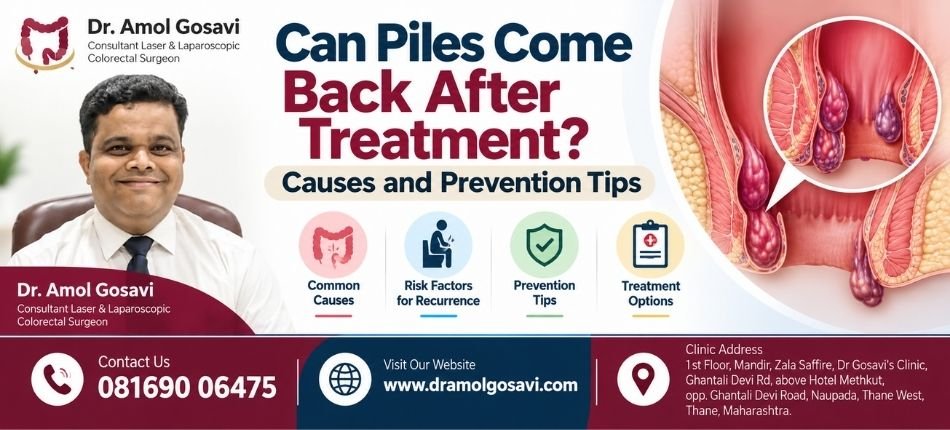
Can Piles Come Back After treatment? Causes and Prevention Tips – Dr. Amol Gosavi
Piles, also known as hemorrhoids, are a common condition that can cause discomfort, itching, swelling, and bleeding during bowel movements. Many patients experience significant relief after receiving appropriate treatment, including medication, lifestyle modifications, or surgical procedures. However, one question often arises: Can piles come back after treatment?
The answer is yes. Piles recurrence after treatment is possible, even when the initial treatment has been successful. The risk depends on factors such as the type and severity of hemorrhoids, treatment method, bowel habits, chronic constipation, and individual health conditions.
Understanding why piles return and following preventive measures can help reduce the chances of developing hemorrhoid symptoms again.
For patients experiencing recurring piles symptoms in Thane, Dr. Amol Gosavi’s advanced laser proctology services provide information about specialized treatment options and professional evaluation.
This article explains the causes of recurring piles, warning signs, treatment options, and practical prevention strategies to maintain better bowel health.
1. What Is Piles Recurrence After Treatment?
Piles recurrence refers to the return of hemorrhoids or hemorrhoid-related symptoms after previous treatment.
Hemorrhoids are swollen vascular cushions in or around the anal canal. These cushions are a normal part of the anatomy, but they may become enlarged or symptomatic due to increased pressure, straining, or changes in supporting tissues.
Piles are generally classified into two categories:
-
Internal Hemorrhoids: Develop inside the rectum and may cause painless bleeding, prolapse, or discomfort.
-
External Hemorrhoids: Develop beneath the skin around the anus and may cause swelling, itching, or pain, especially when a blood clot forms.
Treatment can reduce or remove problematic hemorrhoidal tissue, but it does not necessarily eliminate the underlying factors that contributed to the condition.
For example, if a patient continues experiencing chronic constipation and repeated straining after treatment, new hemorrhoidal problems may develop over time.
Importantly, the return of bleeding or pain does not automatically confirm that piles have returned. Anal fissures, infections, inflammatory conditions, and other colorectal disorders can cause similar symptoms.
2. Can Piles Come Back After Laser Treatment or Surgery?
Yes, hemorrhoids can recur after laser procedures or conventional surgery, although recurrence rates differ depending on the treatment technique, disease severity, and duration of follow-up.
Piles Recurrence After Laser Treatment
Laser-based hemorrhoid procedures are used in selected patients to treat symptomatic hemorrhoids.
Some techniques use laser energy to shrink hemorrhoidal tissue, while others may be combined with surgical removal.
Although patients may experience symptom improvement after treatment, recurrence remains possible, particularly when contributing factors such as constipation and straining continue.
Laser treatment is not a guarantee that hemorrhoids will never return.
Piles Recurrence After Conventional Surgery
Hemorrhoidectomy involves surgically removing problematic hemorrhoidal tissue. It is often considered for larger, advanced, or recurrent hemorrhoids.
Conventional excisional hemorrhoidectomy generally offers durable results for appropriately selected patients, but recurrence is still possible.
Piles Recurrence After Non-Surgical Procedures
Treatments such as rubber band ligation and sclerotherapy may effectively control symptoms in selected cases.
However, some patients require repeat treatment, particularly when hemorrhoids are more advanced or symptoms return.
The most suitable treatment depends on the hemorrhoid grade, symptoms, previous procedures, and overall health rather than whether a technique is described as laser or conventional surgery.
3. Common Causes of Piles Recurrence After Treatment
Understanding the causes of recurring piles is important because successful treatment alone may not prevent future hemorrhoid problems.
Chronic Constipation
Chronic constipation is one of the major contributing factors to piles recurrence. When stools become hard and difficult to pass, patients often strain excessively during bowel movements. This repeated pressure can contribute to swelling and enlargement of hemorrhoidal tissues. Even after successful treatment, persistent constipation may increase the likelihood of developing symptoms again. Maintaining soft, regular bowel movements through adequate fiber intake, hydration, and appropriate medical management is an important preventive measure.
Low-Fiber Diet
A diet lacking sufficient fiber can contribute to hard stools and irregular bowel movements. People who regularly consume low-fiber meals without adequate fruits, vegetables, legumes, and whole grains may experience constipation. Increasing dietary fiber gradually helps improve stool consistency and reduces the need for straining. Long-term dietary improvements are particularly important for patients with a history of hemorrhoids.
Excessive Straining During Bowel Movements
Repeated straining increases pressure within the anal canal and may contribute to hemorrhoid enlargement. Some people develop a habit of pushing forcefully even when stools are not particularly hard. This behavior can continue after treatment and increase the risk of recurring symptoms. Patients should avoid forcing bowel movements and seek medical guidance if they regularly experience difficulty passing stools.
Prolonged Sitting on the Toilet
Spending excessive time on the toilet, particularly while using a mobile phone or reading, can increase pressure on hemorrhoidal tissues. This habit may contribute to hemorrhoid symptoms even in individuals who have previously undergone treatment. Patients should respond to the natural urge to pass stools and avoid remaining seated on the toilet unnecessarily.
Chronic Diarrhea
Frequent loose stools and repeated bowel movements can also irritate the anal region and contribute to hemorrhoidal symptoms. Patients experiencing persistent diarrhea should undergo evaluation to identify and manage the underlying cause.
Heavy Lifting and Increased Abdominal Pressure
Repeated heavy lifting, particularly when accompanied by breath-holding or excessive straining, can increase abdominal pressure. This may contribute to hemorrhoid symptoms in susceptible individuals. Proper lifting techniques and appropriate adjustments during recovery are important.
Pregnancy and Age-Related Changes
Pregnancy can increase pressure on pelvic blood vessels and contribute to hemorrhoid development. Additionally, the supporting tissues around the anus may weaken with age, increasing susceptibility to symptomatic hemorrhoids.
These factors explain why piles may return even after treatment.
4. Early Warning Signs That Piles May Have Returned
Recognizing symptoms early can help patients seek appropriate medical care before discomfort becomes severe.
Common symptoms include:
-
Bright Red Blood During Bowel Movements: Blood may appear on toilet paper, stool, or in the toilet bowl.
-
Anal Itching: Persistent itching or irritation around the anus.
-
Swelling Near the Anus: A lump or swelling may develop around the anal opening.
-
Pain or Discomfort: Pain may occur when sitting or passing stools, particularly with external hemorrhoids.
-
Prolapse: Internal hemorrhoidal tissue may protrude through the anal opening.
-
Mucus Discharge: Some patients with prolapsing hemorrhoids may notice mucus or irritation.
These symptoms are not specific to piles. Rectal bleeding, particularly when persistent or recurrent, should be evaluated rather than automatically attributed to hemorrhoids.
A medical examination helps determine whether symptoms are caused by recurring piles, an anal fissure, or another condition.
5. How to Prevent Piles from Coming Back After Treatment
Preventing piles recurrence after treatment requires consistent bowel-care habits and attention to factors that increase pressure in the anal region.
Eat a High-Fiber Diet
Dietary fiber helps soften stools and makes bowel movements easier. Patients should include fiber-rich foods such as fruits, vegetables, whole grains, beans, and lentils in their regular diet.
Indian food options include dal, whole-wheat roti, oats, guava, pears, leafy vegetables, and other fiber-rich foods.
Fiber intake should be increased gradually to minimize bloating. Adults commonly need approximately 25–30 grams of dietary fiber daily, although individual requirements vary.
Drink Adequate Water
Proper hydration supports stool consistency and helps dietary fiber work effectively. Fluid requirements depend on factors such as activity levels, climate, and medical conditions.
Patients should drink adequate fluids throughout the day unless a healthcare professional has advised fluid restriction.
Avoid Straining During Bowel Movements
Avoid forcing stools or holding your breath while trying to pass them. Repeated straining increases pressure on the anal region.
If bowel movements remain difficult despite dietary improvements, a doctor may recommend an appropriate fiber supplement or stool-softening treatment.
Maintain Regular Physical Activity
Walking and other suitable physical activities support normal bowel function and can help reduce constipation.
Patients recovering from a procedure should follow their surgeon’s instructions regarding exercise and heavy lifting.
Develop Healthy Toilet Habits
Use the toilet when the natural urge occurs rather than repeatedly delaying bowel movements.
Avoid spending unnecessary time sitting on the toilet. Keeping toilet visits brief and avoiding excessive straining can help reduce pressure on hemorrhoidal tissues.
Follow Post-Treatment Instructions
Patients should follow their doctor’s recommendations regarding medications, wound care, diet, physical activity, and follow-up appointments.
After surgical procedures, recovery instructions may differ depending on the treatment performed.
These preventive measures are consistent with established recommendations for hemorrhoid management.
6. Best Foods to Eat After Piles Treatment
Diet plays an important role in maintaining regular bowel movements and reducing constipation after hemorrhoid treatment.
| Food Category | Examples | Benefits |
|---|---|---|
| Fruits | Guava, pears, apples, papaya | Provide dietary fiber |
| Vegetables | Carrots, spinach, beans, peas | Support regular bowel movements |
| Whole Grains | Oats, whole-wheat roti, brown rice | Increase dietary fiber intake |
| Pulses | Moong dal, lentils, chickpeas | Provide fiber and other nutrients |
| Seeds | Chia seeds, flaxseeds | Contribute additional dietary fiber |
| Fluids | Water, soups | Support hydration and stool consistency |
Patients should introduce dietary changes gradually and choose foods according to their tolerance and medical advice.
Highly processed, low-fiber foods may contribute to constipation when they replace fiber-rich meals.
There is no universal requirement to avoid all spicy foods after piles treatment. However, patients should limit foods that consistently worsen their digestive or anal symptoms.
7. Can Piles Return Even After Successful Laser Surgery?
Yes. Piles recurrence after laser treatment remains possible because the procedure addresses existing hemorrhoidal tissue but may not eliminate the factors responsible for developing hemorrhoids.
The likelihood of recurrence depends on the specific laser technique, hemorrhoid grade, treatment effectiveness, and follow-up duration.
Some patients experience long-lasting improvement, while others may develop recurring bleeding, prolapse, or discomfort.
It is important to distinguish between different laser procedures because their techniques and outcomes are not identical.
Patients considering laser treatment should discuss the expected benefits, recovery, possible complications, and likelihood of repeat treatment with their surgeon.
The best procedure is not necessarily the newest one. It is the treatment most appropriate for the patient’s hemorrhoid condition.
8. How Are Recurrent Piles Diagnosed?
When symptoms return after previous treatment, a proctologist may recommend a detailed examination.
Medical History
The doctor may ask about previous hemorrhoid treatments, the duration of symptom relief, bowel habits, bleeding, pain, and any associated medical conditions.
Physical Examination
An examination of the anal region helps identify external hemorrhoids, swelling, skin changes, or other possible causes of symptoms.
Digital Rectal Examination
A digital rectal examination may be performed when appropriate to assess the anal canal and lower rectum.
Anoscopy
Anoscopy allows the doctor to examine the inside of the anal canal and identify internal hemorrhoids.
Additional Investigations
Some patients with rectal bleeding may require further investigations, including colonoscopy, depending on age, symptoms, family history, screening status, and clinical findings.
Not every episode of bleeding is caused by piles, even in patients with a previous hemorrhoid diagnosis.
9. Treatment Options for Recurrent Piles
Treatment for recurrent piles depends on the severity of symptoms, hemorrhoid grade, previous procedures, and findings during examination.
Dietary and Lifestyle Management
Mild symptoms may improve with adequate fiber intake, hydration, improved toilet habits, and management of constipation.
These measures remain important even when a procedure is necessary.
Medications
Short-term topical treatments may help relieve itching, swelling, or discomfort.
Fiber supplements or stool softeners may also be recommended when appropriate.
Medications generally control symptoms rather than permanently removing enlarged hemorrhoidal tissue.
Rubber Band Ligation
Rubber band ligation is commonly used for suitable internal hemorrhoids. A small band is placed around the hemorrhoidal tissue to reduce its blood supply.
Some patients may require more than one treatment session.
Sclerotherapy
Sclerotherapy involves injecting a solution into hemorrhoidal tissue to promote shrinkage. It may be considered for selected internal hemorrhoids.
Laser-Based Procedures
Laser techniques may be considered for certain patients, depending on hemorrhoid characteristics and the surgeon’s assessment.
Their suitability should be evaluated alongside other established treatment options.
Hemorrhoidectomy
Surgical hemorrhoid removal may be recommended for advanced, combined internal and external, or repeatedly symptomatic hemorrhoids.
The American Society of Colon and Rectal Surgeons recommends tailoring treatment to hemorrhoid grade, anatomy, and patient needs.
10. Does Piles Recurrence Mean the Previous Treatment Failed?
Not necessarily.
Hemorrhoids may recur months or years after successful treatment because new hemorrhoidal changes develop or existing tissue becomes symptomatic again.
A previous procedure may have successfully treated the original hemorrhoids while leaving the patient susceptible to future problems.
However, symptoms that never fully resolve after treatment may indicate persistent hemorrhoidal disease, incomplete symptom control, or another underlying condition.
A clinical examination is necessary to distinguish true recurrence from persistent symptoms or a different diagnosis.
11. When Should You Consult a Proctologist for Recurring Piles?
Patients should seek medical advice if they notice:
-
Repeated rectal bleeding.
-
Persistent anal pain or swelling.
-
A lump that does not improve.
-
Prolapse during bowel movements.
-
Symptoms that continue despite appropriate home care.
-
Recurring symptoms after previous laser treatment or surgery.
Seek urgent medical attention for heavy bleeding, dizziness, fainting, severe anal pain accompanied by fever, or significant abdominal symptoms.
Early assessment helps identify the actual cause and determine whether conservative treatment or another procedure is required.
12. Why Consult Dr. Amol Gosavi for Recurring Piles in Thane?
Recurring hemorrhoid symptoms can be uncomfortable and may affect daily activities. Patients who have previously undergone treatment should receive an appropriate evaluation before deciding whether another procedure is necessary.
Dr. Amol Gosavi’s clinic in Naupada, Thane West, can be contacted for consultation regarding piles symptoms and proctology-related concerns.
A consultation may help determine the possible cause of recurring symptoms, evaluate hemorrhoid severity, and discuss available management options.
To learn more about the clinic’s treatment services, visit Advanced Laser Proctologist – Dr. Amol Gosavi.
For clinic-related updates, follow Dr. Amol Gosavi on Facebook
Conclusion
Piles recurrence after treatment is possible, but patients can take meaningful steps to reduce the likelihood of recurring symptoms.
Maintaining a fiber-rich diet, drinking adequate fluids, avoiding straining, developing healthy toilet habits, and managing constipation are important for long-term bowel health.
Although laser procedures, office-based treatments, and surgery can provide significant symptom relief, no treatment guarantees that hemorrhoids will never return.
If you experience recurring bleeding, swelling, or discomfort after previous piles treatment, seek professional medical evaluation rather than assuming the symptoms are caused by hemorrhoids.
For consultation regarding piles symptoms and treatment options in Thane, contact Dr. Amol Gosavi.
Clinic Details
Dr. Amol Gosavi – Dr. Gosavi’s Clinic
1st Floor, Zala Saffire, Ghantali Devi Road, Above Hotel Methkut, Naupada, Thane West, Thane, Maharashtra.
081690 06475
Piles Recurrence After Treatment Piles Recurrence After Treatment Piles Recurrence After Treatment Piles Recurrence After Treatment Piles Recurrence After Treatment Piles Recurrence After Treatment Piles Recurrence After Treatment Piles Recurrence After Treatment Piles Recurrence After Treatment Piles Recurrence After Treatment Piles Recurrence After Treatment Piles Recurrence After Treatment Piles Recurrence After Treatment Piles Recurrence After Treatment Piles Recurrence After Treatment Piles Recurrence After Treatment Piles Recurrence After Treatment Piles Recurrence After Treatment Piles Recurrence After Treatment Piles Recurrence After Treatment
