
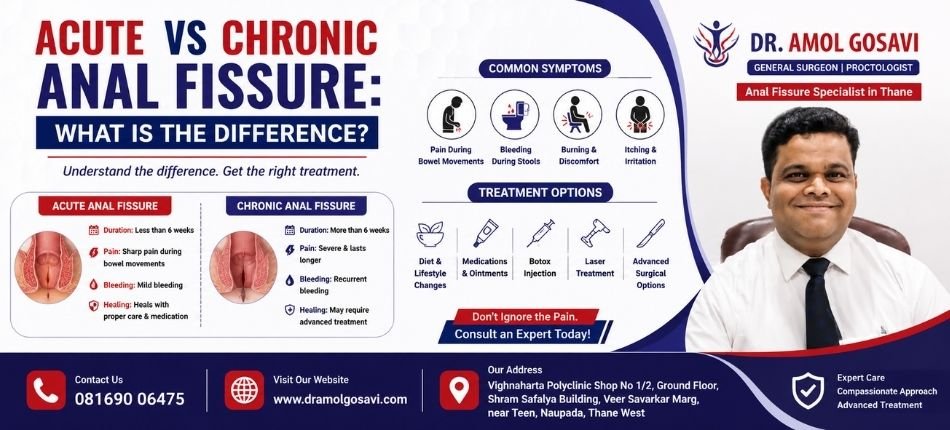
Acute vs Chronic Anal Fissure: What Is the Difference? | Anal Fissure Specialist in Thane – Dr. Amol Gosavi
An anal fissure is a small tear in the lining of the anal canal that can cause severe pain and bleeding during bowel movements. While many fissures heal naturally with proper care, some persist and become chronic, requiring specialized medical treatment. Understanding the difference between acute vs chronic anal fissure helps patients seek timely treatment and avoid complications.
As an experienced Anal Fissure Specialist in Thane, Dr. Amol Gosavi offers comprehensive diagnosis and advanced treatment options for both acute and chronic fissures.
What Is an Acute Anal Fissure?
An acute anal fissure is a newly developed tear in the anal canal that usually lasts for less than six weeks. It commonly occurs due to constipation, passing hard stools, prolonged diarrhea, or excessive straining during bowel movements.
The tear is usually fresh and superficial, allowing it to heal quickly with conservative treatment.
Symptoms of Acute Anal Fissure
Patients with an acute fissure may experience:
- Sharp pain during bowel movements
- Mild bleeding on toilet paper
- Burning sensation after passing stool
- Temporary anal discomfort
- Small visible tear near the anus
Early treatment often leads to complete healing without surgery.
What Is a Chronic Anal Fissure?
A chronic anal fissure is a tear that persists for more than six weeks and fails to heal naturally. Over time, repeated injury and muscle spasm prevent proper blood flow, making healing difficult.
Chronic fissures often develop scar tissue, exposed muscle fibers, or a skin tag known as a sentinel pile, indicating long-standing disease.
Symptoms of Chronic Anal Fissure
Common symptoms include:
- Severe pain lasting several hours after bowel movements
- Recurrent bleeding
- Persistent anal discomfort
- Visible skin tag near the fissure
- Itching and irritation
- Difficulty sitting comfortably
Unlike acute fissures, chronic fissures rarely heal without professional treatment.
Acute vs Chronic Anal Fissure: Key Differences
| Feature | Acute Anal Fissure | Chronic Anal Fissure |
|---|---|---|
| Duration | Less than 6 weeks | More than 6 weeks |
| Appearance | Fresh tear | Scar tissue and exposed muscle |
| Pain | Temporary | Persistent and severe |
| Healing | Usually heals with medicines | Often requires advanced treatment |
| Surgery | Rarely needed | May be recommended |
Causes of Anal Fissures
Anal fissures usually develop when the delicate lining of the anal canal is stretched or torn during bowel movements. The most common cause is passing hard or large stools due to chronic constipation, which creates excessive pressure on the anal tissue. Frequent diarrhea, prolonged straining, childbirth, inflammatory bowel diseases such as Crohn’s disease, and poor dietary habits can also contribute to the development of anal fissures. Inadequate water intake and a low-fiber diet often worsen constipation, increasing the risk of repeated injury. Identifying and treating the underlying cause is essential to promote healing and prevent the fissure from becoming chronic.
How Is an Anal Fissure Diagnosed?
Diagnosis usually involves a physical examination and detailed medical history. In some cases, additional investigations such as anoscopy or colonoscopy may be recommended to rule out other anorectal conditions.
Early diagnosis helps prevent an acute fissure from progressing to a chronic one.
Treatment Options
Acute Anal Fissure Treatment
An acute anal fissure, which typically lasts less than six weeks, often responds well to conservative treatment without the need for surgery. The primary goal is to reduce pain, promote healing, and prevent further injury. Treatment usually includes increasing dietary fiber intake, drinking plenty of water, using stool softeners to make bowel movements easier, and taking warm sitz baths several times a day to relax the anal muscles and improve blood circulation. Doctors may also prescribe topical medications or ointments to reduce pain and muscle spasms. Most acute fissures heal completely within a few weeks when patients follow these recommendations consistently and avoid straining during bowel movements.
Chronic Anal Fissure Treatment
A chronic anal fissure is one that persists for more than six weeks and often does not heal with basic home remedies alone. In such cases, specialized medical treatment is usually required. Initially, doctors may prescribe medicated creams that help relax the anal sphincter and improve blood flow to the affected area. If conservative treatment fails, advanced options such as Botox injections or minimally invasive laser procedures may be recommended to promote healing. In severe or long-standing cases, Lateral Internal Sphincterotomy (LIS) may be advised. This surgical procedure relieves excessive muscle tension, allowing the fissure to heal while significantly reducing the chances of recurrence. The choice of treatment depends on the severity of the condition, the patient’s symptoms, and their overall health.
When Should You Visit an Anal Fissure Specialist?
Although mild anal fissures may heal with proper home care, you should consult an Anal Fissure Specialist if your symptoms persist for more than a few weeks or become increasingly painful. Seek immediate medical attention if you experience severe pain during or after bowel movements, recurring rectal bleeding, difficulty passing stools due to pain, or repeated episodes of anal fissures. A visible skin tag near the fissure, persistent itching, or discomfort that interferes with daily activities may also indicate a chronic fissure requiring professional treatment. Early consultation with a specialist helps ensure an accurate diagnosis, timely treatment, faster recovery, and prevents complications that may require surgical intervention later.
Why Choose Dr. Amol Gosavi?
Dr. Amol Gosavi provides comprehensive evaluation and personalized treatment for anal fissures using modern diagnostic techniques and minimally invasive procedures. His patient-centered approach focuses on relieving pain, promoting faster healing, and preventing recurrence.
Conclusion
Recognizing the difference between acute vs chronic anal fissure allows patients to receive timely treatment before the condition worsens. While acute fissures often heal with simple measures, chronic fissures require specialized medical care. If you’re experiencing persistent pain or bleeding, consult Dr. Amol Gosavi, Anal Fissure Specialist in Thane, for expert diagnosis and effective treatment.
Anal Fissure Specialist in Thane Anal Fissure Specialist in Thane Anal Fissure Specialist in Thane Anal Fissure Specialist in Thane Anal Fissure Specialist in Thane Anal Fissure Specialist in Thane Anal Fissure Specialist in Thane Anal Fissure Specialist in Thane Anal Fissure Specialist in Thane Anal Fissure Specialist in Thane
