
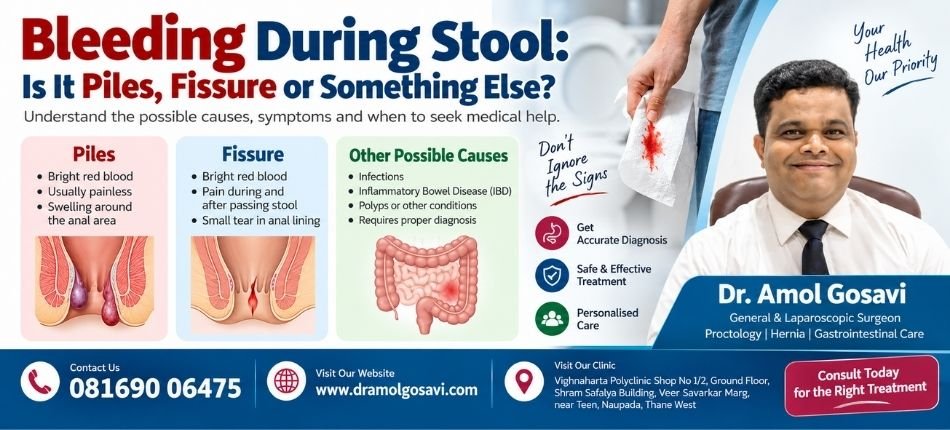
Bleeding During Stool: Is It Piles, Fissure or Something Else? – Dr. Amol Gosavi
Introduction
Seeing blood during or after passing stool can be alarming. Some people notice a few drops of bright red blood on toilet paper, while others may see blood in the toilet bowl or mixed with the stool.
Two common causes of bleeding during stool are piles (haemorrhoids) and anal fissures. However, rectal bleeding should not automatically be assumed to be caused by either condition because several other digestive and colorectal problems can also produce bleeding.
The colour of the blood, presence or absence of pain, bowel habits, duration of symptoms and accompanying problems can provide important clues about the possible cause.
A proper medical evaluation is particularly important when bleeding is recurrent, unexplained or associated with other concerning symptoms.
For accurate diagnosis and modern treatment of piles, fissure, fistula, and other anorectal conditions, consult an experienced Advanced Laser Proctologist in Thane for minimally invasive and personalized care.
What Does Bleeding During Stool Mean?
Bleeding during stool means noticing blood during or after a bowel movement. It may appear as bright red blood on toilet paper, drops in the toilet bowl, blood coating the stool, or blood mixed with it. The appearance and colour of the blood can provide clues about where the bleeding may be coming from. Recurrent or unexplained rectal bleeding should be medically evaluated to identify the underlying cause.
Is Bleeding During Stool Always Due to Piles?
No, bleeding during stool is not always caused by piles. Anal fissures, constipation-related injury, intestinal inflammation, polyps, infections, diverticular disease, and other gastrointestinal conditions can also cause rectal bleeding. Although piles are a common cause of bright red bleeding, symptoms alone may not confirm the diagnosis. Persistent or recurring bleeding should therefore not be automatically treated as piles without proper evaluation.
What Are Piles?
Piles, also known as haemorrhoids, are swollen vascular cushions in or around the anal canal.
They are generally classified as:
Internal haemorrhoids: Located inside the anal canal.
External haemorrhoids: Located around the anal opening.
Internal haemorrhoids can cause painless bright red bleeding, although symptoms vary depending on the type and severity.
Symptoms of Piles
Possible symptoms include:
- Bright red bleeding during bowel movements
- Itching around the anus
- Swelling or lump around the anal opening
- Discomfort
- Mucus discharge
- Feeling of incomplete evacuation
- Prolapse of tissue during bowel movements
Not everyone with piles experiences all these symptoms.
Why Do Piles Bleed?
Bleeding can occur when haemorrhoidal tissue becomes irritated or traumatized during a bowel movement.
Hard stools and repeated straining may contribute to irritation.
The bleeding is commonly bright red and may be noticed after passing stool.
However, the appearance of bleeding alone cannot confirm that piles are responsible.
What Is an Anal Fissure?
An anal fissure is a small tear in the lining of the anal canal.
It commonly develops after passing a hard or large stool, although other causes are possible.
Unlike many cases of internal haemorrhoids, fissures frequently cause significant pain during or after bowel movements.
Symptoms of an Anal Fissure
Common symptoms may include:
- Sharp pain while passing stool
- Burning pain after bowel movement
- Bright red bleeding
- Fear of passing stool because of pain
- Constipation
- Small visible tear near the anal opening in some cases
The pain may persist for some time after the bowel movement.
Piles vs Fissure: How Can You Tell the Difference?
Patients often confuse piles and fissures because both can cause bright red bleeding.
A simple comparison can help:
| Feature | Piles | Anal Fissure |
|---|---|---|
| Bleeding | Often bright red | Usually bright red |
| Pain | May be painless, especially internal piles | Often sharp or severe |
| Itching | Can occur | Less characteristic |
| Lump/swelling | May occur | Usually not the main symptom |
| Pain after stool | Variable | Often continues after stool |
| Common association | Straining/constipation | Hard stool/trauma |
These differences are useful for understanding symptoms but should not replace a medical diagnosis.
Can Constipation Cause Bleeding During Stool?
Constipation can contribute to conditions that cause rectal bleeding.
Hard stools may injure the anal lining and contribute to an anal fissure. Repeated straining may also aggravate haemorrhoidal symptoms.
Managing constipation is therefore an important part of treatment for many anorectal conditions.
Can Diarrhoea Cause Rectal Bleeding?
Frequent loose stools can irritate the anal region and may aggravate existing conditions.
Persistent diarrhoea associated with blood, abdominal pain, fever or other symptoms should be medically evaluated because the cause may involve more than local anal irritation.
Does the Colour of Blood Matter?
Yes. The appearance of blood can provide useful information, although it cannot establish the diagnosis on its own.
Bright Red Blood
Bright red blood may originate from the lower digestive tract and can occur with piles or anal fissures, among other causes.
Dark Red or Maroon Blood
Darker blood or blood mixed throughout the stool may have a different source and warrants medical evaluation.
Black, Tarry Stool
Black, sticky or tar-like stools can sometimes indicate bleeding from higher in the gastrointestinal tract.
This should not be assumed to be piles or fissure and requires prompt medical attention.
What If There Is Blood but No Pain?
Painless rectal bleeding can occur with internal haemorrhoids.
However, painless bleeding should not automatically be diagnosed as piles.
Other colorectal conditions can also cause bleeding without significant pain, which is why persistent or unexplained bleeding needs evaluation.
What If Bleeding Is Accompanied by Severe Pain?
Sharp or burning pain associated with bowel movements can occur with an anal fissure.
Other painful anorectal conditions are also possible.
If the pain is severe, persistent, associated with swelling, fever or discharge, medical assessment is advisable.
Can Diet Affect Piles and Fissure Symptoms?
Diet can influence stool consistency and bowel habits, which may affect symptoms associated with piles and anal fissures. Fibre-rich foods such as fruits, vegetables, whole grains, pulses, and legumes can help make stools easier to pass for many people. Adequate fluid intake can also support healthy bowel movements. Improving bowel habits may reduce constipation and straining, but ongoing bleeding still requires appropriate medical assessment.
Why Should You Avoid Excessive Straining?
Repeated straining increases pressure in the anal region and may aggravate haemorrhoidal symptoms.
It may also make bowel movements more difficult and uncomfortable when a fissure is already present.
Avoid spending unnecessarily long periods sitting on the toilet and respond to the natural urge to pass stool where practical.
Can Bleeding During Stool Stop on Its Own?
A small amount of bleeding related to a minor local problem may sometimes settle.
However, the disappearance of bleeding does not necessarily identify its cause.
If bleeding repeatedly returns, continues, increases or occurs with other symptoms, professional evaluation is important.
When Should You Consult a Doctor?
Consider consulting a doctor when:
- Bleeding occurs repeatedly
- The amount of blood increases
- You cannot identify the cause
- There is significant anal pain
- Bowel habits have changed
- Blood appears mixed with stool
- Symptoms persist despite basic measures
- You experience unexplained tiredness or weakness
Early evaluation can help determine the cause and appropriate treatment.
Warning Signs That Should Not Be Ignored
Seek prompt medical attention if rectal bleeding is heavy or accompanied by symptoms such as dizziness, fainting or significant weakness.
Black, tarry stools also require medical assessment.
Persistent bleeding accompanied by unexplained weight loss, major changes in bowel habits or other concerning symptoms should not simply be treated as piles at home.
How Is the Cause of Bleeding Diagnosed?
Diagnosis usually begins with a detailed medical history and assessment of the bleeding pattern, including its colour, frequency, amount, and associated symptoms. A doctor may ask about constipation, pain, changes in bowel habits, medications, and previous digestive problems. A physical or anorectal examination may be performed to look for conditions such as piles or fissures. Additional tests may be recommended depending on the patient’s symptoms, age, medical history, and examination findings.
Treatment Depends on the Cause
There is no single treatment for every person experiencing bleeding during stool.
For example, management of an anal fissure differs from treatment for haemorrhoids, and both differ from treatment for other intestinal conditions.
This is why identifying the underlying cause is more important than simply trying to stop the visible bleeding.
Conclusion
Bleeding during stool is commonly associated with piles and anal fissures, but these are not the only possible causes.
Bright red painless bleeding may occur with internal piles, while sharp pain and bright red bleeding during or after bowel movements are commonly associated with anal fissures. However, symptoms alone cannot always reliably distinguish between conditions.
If rectal bleeding persists, recurs, increases or is accompanied by other concerning symptoms, seek medical evaluation instead of repeatedly self-treating it as piles.
Dr. Amol Gosavi can evaluate anorectal symptoms and recommend management based on the underlying diagnosis and individual clinical findings.
Bleeding During Stool Bleeding During Stool Bleeding During Stool Bleeding During Stool Bleeding During Stool Bleeding During Stool Bleeding During Stool Bleeding During Stool Bleeding During Stool Bleeding During Stool
