
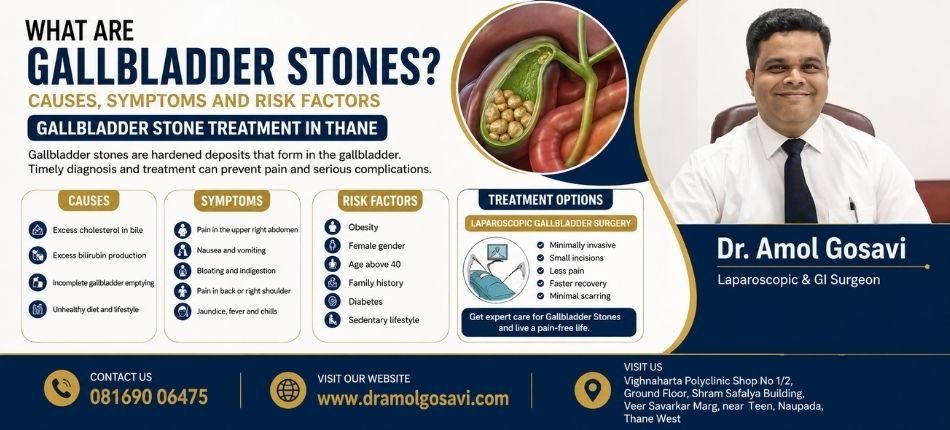
What Are Gallbladder Stones? Causes, Symptoms and Risk Factors | Gallbladder Stone Treatment in Thane – Dr. Amol Gosavi
Introduction
Gallbladder stones, commonly known as gallstones, are a common digestive disorder affecting millions of people worldwide. These stones develop inside the gallbladder, a small organ located beneath the liver that stores bile, a digestive fluid responsible for helping the body digest fats. While some gallstones may not cause symptoms, others can lead to severe abdominal pain, digestive problems, and potentially serious complications if left untreated.
Understanding the causes, symptoms, and risk factors associated with gallstones is crucial for early diagnosis and timely treatment. If you are experiencing symptoms of gallstones, seeking expert Gallbladder Stone Treatment in Thane can help prevent complications and improve your quality of life.
What Are Gallbladder Stones?
Gallstones are hardened deposits that form inside the gallbladder when substances present in bile become imbalanced. These stones can vary greatly in size, ranging from tiny grains of sand to large stones several centimeters in diameter.
Types of Gallstones
Cholesterol Stones : These are the most common type of gallstones and are formed primarily due to excess cholesterol in the bile.
Pigment Stones : Pigment stones are dark-colored stones that develop when there is an excess amount of bilirubin in the bile.A person may develop a single large stone or multiple small stones within the gallbladder.
Causes of Gallbladder Stones
Gallstones form when the composition of bile becomes abnormal.
Excess Cholesterol in Bile
When the liver produces more cholesterol than bile can dissolve, cholesterol crystals begin to form, eventually developing into gallstones.
Excess Bilirubin Production
Certain medical conditions such as liver disease, infections, and blood disorders may increase bilirubin production and contribute to pigment stone formation.
Poor Gallbladder Emptying
If the gallbladder does not empty completely, bile becomes concentrated, increasing the likelihood of stone formation.
Unhealthy Diet
A diet rich in fatty foods, processed foods, and refined carbohydrates can increase the risk of gallstones.
Symptoms of Gallbladder Stones
Gallbladder stones may not always cause noticeable symptoms, especially when they remain inside the gallbladder without blocking the flow of bile. However, when a gallstone becomes lodged in a bile duct, it can trigger sudden and severe symptoms. The most common symptom is intense pain in the upper right side of the abdomen, often referred to as a gallbladder attack. This pain may occur after consuming fatty or heavy meals and can last from a few minutes to several hours. Many patients also experience nausea, vomiting, bloating, indigestion, excessive gas, and a feeling of fullness after eating. In some cases, the pain may radiate to the upper back or right shoulder blade. If the blockage leads to infection or inflammation, symptoms such as fever, chills, dark-colored urine, pale stools, and jaundice (yellowing of the skin and eyes) may occur, requiring immediate medical attention.
Risk Factors for Gallbladder Stones
Several factors can increase the likelihood of developing gallbladder stones. Obesity is one of the most significant risk factors, as excess body weight can increase cholesterol levels in bile, promoting stone formation. Women are generally at a higher risk than men due to hormonal changes associated with pregnancy, birth control pills, and hormone replacement therapy. Age also plays a role, with individuals over the age of 40 being more susceptible to gallstones. Other important risk factors include a family history of gallstones, diabetes, high cholesterol levels, and a sedentary lifestyle. Rapid weight loss through crash dieting or weight-loss surgery can also increase the risk because it alters the balance of bile components. Additionally, consuming a diet high in fats and refined carbohydrates while being low in fiber may contribute to gallstone development. Understanding these risk factors can help individuals take preventive measures and seek timely medical evaluation when necessary.
Complications of Untreated Gallstones
Ignoring symptomatic gallstones can lead to serious complications such as:
Acute Cholecystitis (Gallbladder Inflammation)
Bile Duct Obstruction
Pancreatitis Gallbladder
Infection Jaundice
Gallbladder Stone Treatment in Thane
Medical Management
In selected cases, medications may be prescribed to dissolve cholesterol stones, although this method is not suitable for all patients.
Laparoscopic Gallbladder Surgery
Laparoscopic cholecystectomy is the most effective treatment for symptomatic gallstones. This minimally invasive procedure removes the gallbladder through small incisions, offering:
- Less Pain
- Faster Recovery
- Minimal Scarring
- Short Hospital Stay
Why Choose Dr. Amol Gosavi?
- Experienced Laparoscopic Surgeon
- Advanced Diagnostic Facilities
- Minimally Invasive Surgical Expertise
- Personalized Patient Care
- Faster Recovery Approach
Conclusion
Gallbladder stones are a common but potentially serious condition. Recognizing the symptoms and understanding the risk factors can help ensure timely diagnosis and treatment. If you are experiencing abdominal pain or digestive discomfort, consult Dr. Amol Gosavi for expert Gallbladder Stone Treatment in Thane.
Gallbladder Stone Treatment in Thane Gallbladder Stone Treatment in Thane Gallbladder Stone Treatment in Thane Gallbladder Stone Treatment in Thane Gallbladder Stone Treatment in Thane Gallbladder Stone Treatment in Thane Gallbladder Stone Treatment in Thane Gallbladder Stone Treatment in Thane
