
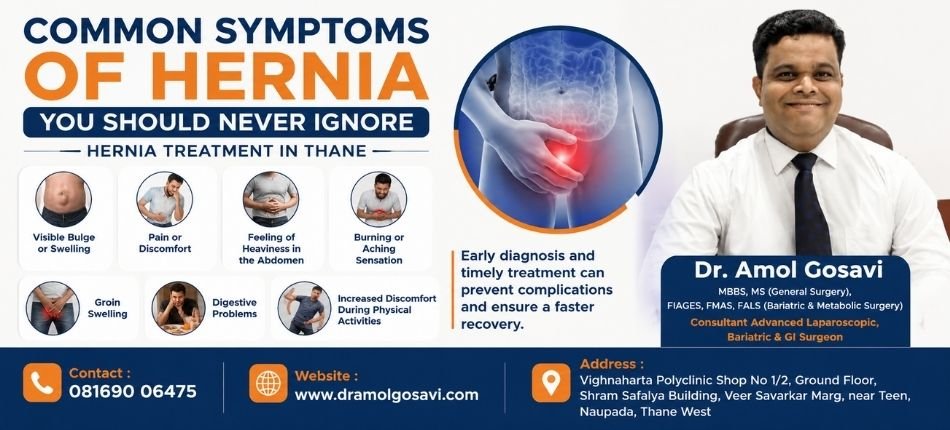
Common Symptoms of Hernia You Should Never Ignore | Hernia Treatment in Thane – Dr. Amol Gosavi
A hernia is a common condition that affects people of all ages and occurs when an internal organ or fatty tissue pushes through a weak area in the surrounding muscle or connective tissue. While some hernias may initially cause little discomfort, they can gradually worsen and lead to serious complications if left untreated. Recognizing the early symptoms and seeking timely Hernia Treatment in Thane can help prevent further health issues and improve overall quality of life.
What is a Hernia?
A hernia develops when there is a weakness in the muscle wall, allowing tissues or organs to protrude through the opening. Hernias commonly occur in the groin, abdomen, and upper thigh regions. They can develop due to heavy lifting, chronic coughing, obesity, pregnancy, aging, or previous surgeries.
Common Symptoms of Hernia You Should Never Ignore
Visible Bulge or Swelling
A visible bulge or swelling is often the most recognizable symptom of a hernia. This bulge occurs when an internal organ or tissue pushes through a weakened area of the muscle wall. The swelling may become more noticeable when standing, coughing, lifting heavy objects, or straining and may reduce or disappear when lying down. Although it may initially be painless, a persistent bulge should never be ignored, as it can indicate an underlying hernia that may worsen over time.
Pain or Discomfort
Pain or discomfort is a common symptom experienced by many individuals with a hernia. The discomfort can range from mild soreness to sharp pain, depending on the size and location of the hernia. Activities such as bending, lifting, coughing, or prolonged standing often increase the pain. As the condition progresses, the discomfort may become more frequent and interfere with daily activities, making timely medical evaluation important.
Feeling of Heaviness in the Abdomen
Many patients describe a sensation of heaviness, pressure, or weakness in the abdomen or groin area. This feeling occurs because the weakened muscle wall is unable to properly support the protruding tissue or organ. The sensation may become more noticeable after physical exertion or at the end of the day and can affect mobility and overall comfort.
Burning or Aching Sensation
A hernia may cause a burning, aching, or pulling sensation around the affected area. This discomfort is often caused by pressure on surrounding muscles, tissues, and nerves. The burning sensation may be mild initially but can become more noticeable as the hernia enlarges. Persistent aching or unusual sensations near a bulge should be evaluated by a healthcare professional.
Groin Swelling
Groin swelling is commonly associated with inguinal hernias, which are among the most frequently diagnosed types of hernias. Patients may notice a lump or swelling on one or both sides of the groin. In men, the swelling can sometimes extend into the scrotum. The swelling may increase during physical activity and decrease while resting, but it should always be assessed to determine the underlying cause.
Digestive Problems
Certain hernias can affect the digestive system and lead to symptoms such as bloating, constipation, nausea, abdominal discomfort, or difficulty passing stools. These symptoms occur when a portion of the intestine becomes involved in the hernia. Digestive issues associated with a hernia should not be overlooked, as they may indicate a more serious condition that requires prompt medical attention.
Increased Discomfort During Physical Activities
Physical activities often place additional pressure on the abdominal muscles, making hernia symptoms more noticeable. Tasks such as lifting heavy objects, exercising, coughing, sneezing, or even prolonged walking may increase pain and discomfort. If routine activities consistently worsen symptoms, it may be a sign that the hernia is progressing and requires professional evaluation.
When Should You Seek Immediate Medical Attention?
A hernia can become a medical emergency if complications occur. Consult a specialist immediately if you experience:
- Severe pain
- Sudden enlargement of the bulge
- Redness or discoloration around the swelling
- Nausea and vomiting
- Inability to pass stools or gas
These symptoms may indicate a trapped or obstructed hernia requiring urgent medical care.
Risk Factors for Hernia
Several factors can increase the likelihood of developing a hernia. These include obesity, heavy lifting, chronic coughing, pregnancy, constipation, previous abdominal surgeries, and age-related muscle weakness. Individuals with a family history of hernias may also have a higher risk. Understanding these risk factors can help people take preventive measures and seek medical advice when symptoms arise.
Importance of Early Hernia Treatment
Early hernia treatment is important to prevent the condition from worsening and to reduce the risk of complications. If left untreated, a hernia may enlarge over time and potentially lead to serious problems such as obstruction or reduced blood supply to the affected tissue. Seeking timely medical evaluation allows for accurate diagnosis and appropriate treatment planning, helping patients maintain their quality of life and avoid future complications.
Hernia Treatment in Thane
If you notice any signs of a hernia, consulting an experienced specialist is important for proper evaluation and treatment planning. Early intervention can help improve outcomes and prevent complications.
Conclusion
A visible bulge, pain, heaviness, swelling, and digestive discomfort are warning signs that should never be ignored. Seeking timely Hernia Treatment in Thane can help manage symptoms effectively and prevent serious health issues. If you suspect a hernia, consult Dr. Amol Gosavi for expert evaluation and personalized care.
Hernia Treatment in Thane Hernia Treatment in Thane Hernia Treatment in Thane Hernia Treatment in Thane Hernia Treatment in Thane Hernia Treatment in Thane Hernia Treatment in Thane Hernia Treatment in Thane
