
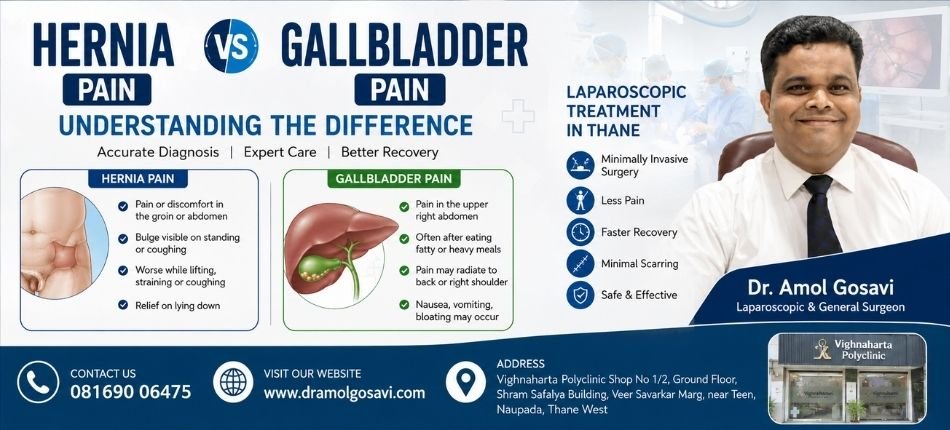
Hernia vs Gallbladder Pain: Understanding the Difference | Laparoscopic Treatment in Thane – Dr. Amol Gosavi
Introduction
Abdominal pain is a common complaint that can arise from various medical conditions. Two conditions that often cause confusion due to overlapping symptoms are hernia and gallbladder disease. While both can lead to discomfort and pain in the abdominal region, their causes, symptoms, and treatments differ significantly. Understanding these differences is essential for timely diagnosis and effective treatment.
If you are experiencing persistent abdominal pain, consulting an experienced surgeon for laparoscopic treatment in Thane can help identify the underlying cause and provide appropriate care.
What Is a Hernia?
A hernia occurs when an internal organ or tissue pushes through a weak spot in the surrounding muscle or connective tissue. Hernias commonly develop in the abdomen or groin and may gradually worsen over time.
Common Types of Hernia
- Inguinal Hernia
- Umbilical Hernia
- Femoral Hernia
- Incisional Hernia
- Hiatal Hernia
Symptoms of Hernia
A hernia occurs when an internal organ or tissue pushes through a weakened area of the muscle or connective tissue. One of the most common symptoms is a visible bulge in the abdomen, groin, or near the belly button that may become more noticeable while standing, coughing, or lifting heavy objects. Patients often experience pain, discomfort, pressure, or a burning sensation in the affected area. The discomfort may worsen during physical activities and improve while resting. In some cases, hernias can lead to serious complications such as strangulation, causing severe pain, nausea, vomiting, and requiring immediate medical attention.
What Is Gallbladder Disease?
Gallbladder disease refers to conditions that affect the gallbladder, a small organ located beneath the liver that stores bile used for digestion. The most common gallbladder problem is the formation of gallstones, which can block the normal flow of bile and cause pain and inflammation. Other gallbladder conditions include cholecystitis (gallbladder inflammation), bile duct obstruction, and gallbladder infections. These conditions can interfere with digestion and significantly affect a person’s quality of life if left untreated. Early diagnosis and appropriate treatment are essential to prevent complications and maintain digestive health.
Symptoms of Gallbladder Pain
Gallbladder pain is typically felt in the upper right side of the abdomen and may occur suddenly, especially after eating fatty or greasy foods. The pain can range from mild discomfort to severe, sharp pain that may radiate to the back, right shoulder, or chest. Many patients also experience nausea, vomiting, bloating, indigestion, and a feeling of fullness after meals. In cases of infection or severe inflammation, fever and chills may also occur. Since gallbladder pain can sometimes resemble other abdominal conditions, a proper medical evaluation is important for an accurate diagnosis.
Hernia vs Gallbladder Pain: Key Differences
Location of Pain
Hernia pain typically occurs in the groin, lower abdomen, or around the belly button, while gallbladder pain is usually felt in the upper right abdomen.
Nature of Pain
Hernia discomfort often worsens with physical activity, lifting, or straining. Gallbladder pain is more likely to occur after meals, particularly fatty foods.
Visible Signs
A hernia often presents with a noticeable bulge. Gallbladder disease does not usually cause any visible external swelling.
Associated Symptoms
Gallbladder problems are frequently accompanied by nausea, vomiting, and digestive issues. Hernias generally cause localized pain and pressure.
When Should You Consult a Surgeon?
Seek medical attention if you experience:
- Persistent abdominal pain
- A growing abdominal or groin bulge
- Severe pain after eating
- Recurrent nausea and vomiting
- Fever along with abdominal discomfort
Early diagnosis can prevent complications and improve treatment outcomes.
Benefits of Laparoscopic Treatment
Laparoscopic treatment is a modern surgical technique that uses small incisions and specialized instruments to perform procedures with minimal disruption to surrounding tissues. Compared to traditional open surgery, laparoscopic procedures offer numerous benefits, including less postoperative pain, smaller scars, reduced blood loss, and a lower risk of infection. Patients typically experience shorter hospital stays, faster recovery times, and can return to their daily activities much sooner. Laparoscopic surgery is widely used for hernia repair and gallbladder removal, making it a safe and effective treatment option for many abdominal conditions.
Why Choose Dr. Amol Gosavi for Laparoscopic Treatment in Thane?
Dr. Amol Gosavi provides advanced surgical care using modern laparoscopic techniques. With extensive experience in hernia repair and gallbladder surgery, he focuses on accurate diagnosis, patient safety, and effective treatment outcomes.
Conclusion
Although hernia and gallbladder pain may seem similar initially, they have distinct causes and symptoms. Understanding the differences can help you seek timely medical care and avoid serious complications. If you are experiencing abdominal pain, consult Dr. Amol Gosavi for expert evaluation and laparoscopic treatment in Thane.
Laparoscopic Treatment in Thane Laparoscopic Treatment in Thane Laparoscopic Treatment in Thane Laparoscopic Treatment in Thane Laparoscopic Treatment in Thane Laparoscopic Treatment in Thane Laparoscopic Treatment in Thane Laparoscopic Treatment in Thane Laparoscopic Treatment in Thane
