
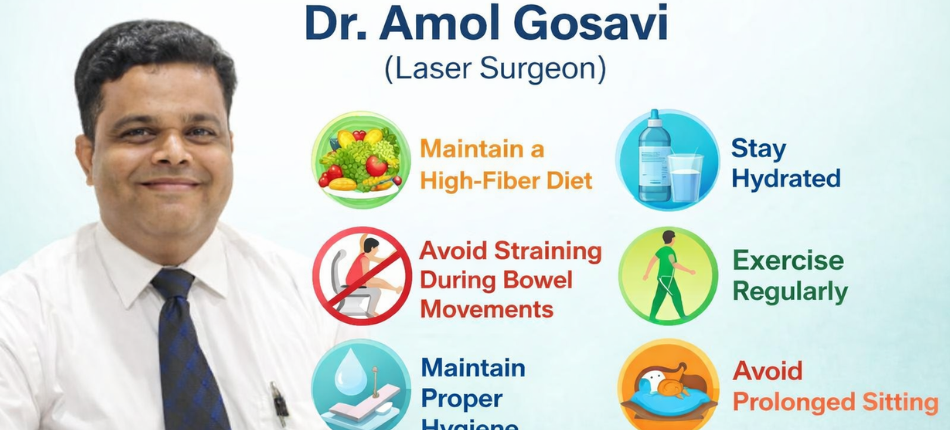
Precautions for Piles | Dr. Amol Gosavi – Expert Advice by Dr. Amol Gosavi (Laser Surgeon)
Introduction
Piles, also known as hemorrhoids, are a common yet uncomfortable condition affecting people of all ages. While treatments like laser surgery offer quick relief, prevention and proper care are equally important. Dr. Amol Gosavi, an experienced laser surgeon, shares essential precautions to manage and prevent piles effectively.
Understanding Piles
Piles are swollen veins in the rectum or anus caused by pressure buildup. They can be internal or external and may cause pain, itching, and bleeding.
What Causes Piles?
Piles develop due to increased pressure in the rectal area. Common causes include:
-
Chronic constipation
-
Straining during bowel movements
-
Sitting for long hours
-
Low-fiber diet
-
Pregnancy
Top Precautions for Piles
1. Maintain a High-Fiber Diet
A high-fiber diet is one of the most effective ways to prevent and manage piles. Fiber adds bulk to the stool and makes it softer, which helps in easy passage without straining. Including foods like fruits, green leafy vegetables, whole grains, oats, and legumes in your daily meals can significantly improve digestion. A fiber-rich diet also reduces the chances of constipation, which is a major cause of piles. Gradually increasing fiber intake is important to avoid bloating and ensure better digestive health.
2. Stay Hydrated
Drinking enough water throughout the day plays a crucial role in maintaining a healthy digestive system. Proper hydration helps soften the stool, making bowel movements smoother and less painful. When the body is dehydrated, stools become hard and difficult to pass, increasing strain and pressure on the rectal veins. Aim to drink at least 8–10 glasses of water daily, and include fluids like coconut water, soups, and fresh juices to keep your body well-hydrated.
3. Avoid Straining During Bowel Movements
Straining during bowel movements puts excessive pressure on the veins in the rectal area, which can worsen or even cause piles. It is important to go to the toilet only when you feel the natural urge and avoid forcing the process. Sitting for too long on the toilet can also increase pressure, so try to keep your time limited. Developing healthy bowel habits and ensuring a fiber-rich diet can help reduce the need to strain.
4. Exercise Regularly
Regular physical activity helps improve digestion and prevents constipation, which is a key factor in piles. Exercise stimulates bowel movements and reduces pressure on veins. Activities like walking, yoga, swimming, or light workouts for at least 30 minutes a day can be very beneficial. However, it is important to avoid heavy weightlifting or exercises that put excessive strain on the abdominal area, as they can worsen the condition.
5. Maintain Proper Hygiene
Good hygiene is essential to prevent irritation, infection, and discomfort associated with piles. After bowel movements, gently clean the anal area using water or soft, unscented wipes instead of rough toilet paper. Keeping the area clean and dry helps reduce itching and inflammation. Avoid using harsh soaps or chemicals, as they can aggravate the sensitive skin around the affected area.
6. Avoid Prolonged Sitting
Sitting for long periods, especially on hard surfaces, increases pressure on the rectal veins and can worsen piles. This is particularly common in people with desk jobs or sedentary lifestyles. Taking short breaks every 30–40 minutes to stand, stretch, or walk can help improve blood circulation and reduce pressure. Using a cushioned seat or a donut pillow can also provide relief while sitting.
Advanced Treatment Option
If lifestyle changes are not enough, laser surgery is a highly effective option:
-
Minimally invasive
-
Less pain
-
Quick recovery
-
No long hospital stay
When to Consult Dr. Amol Gosavi?
You should consult Dr. Amol Gosavi if you experience persistent or worsening symptoms of piles that do not improve with home remedies or lifestyle changes. Warning signs include regular bleeding during bowel movements, severe pain, swelling around the anus, itching, or a noticeable lump. Difficulty in sitting comfortably or passing stool is also a sign that the condition may be progressing. Ignoring these symptoms can lead to complications such as infection or increased discomfort. Seeking timely medical advice ensures proper diagnosis and access to advanced treatments like laser surgery, which offers a quick, safe, and minimally painful recovery.
Conclusion
Preventing piles is easier than treating them. By adopting healthy habits and taking early precautions, you can avoid discomfort and complications. For expert care and advanced laser treatment, consult Dr. Amol Gosavi.
Precautions for Piles Precautions for Piles Precautions for Piles Precautions for Piles Precautions for Piles Precautions for Piles Precautions for Piles Precautions for Piles Precautions for Piles Precautions for Piles Precautions for Piles Precautions for Piles