
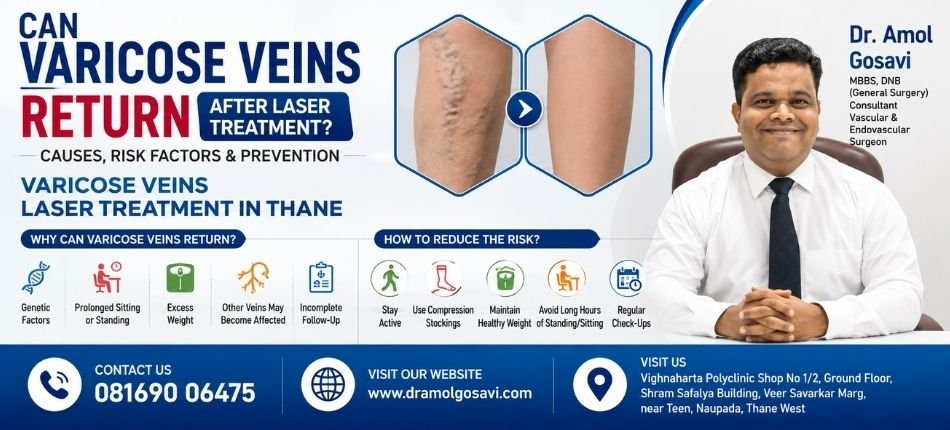
Can Varicose Veins Return After Laser Treatment? Causes, Risk Factors and Prevention | Varicose Veins Laser Treatment in Thane – Dr. Amol Gosavi
Varicose veins are enlarged, twisted veins that commonly develop in the legs due to problems with the valves responsible for maintaining proper blood flow. They may cause visible bulging veins, heaviness, aching, swelling, itching or discomfort, particularly after prolonged standing.
Modern minimally invasive procedures such as laser treatment are commonly used to manage problematic varicose veins. However, one question many patients have before or after undergoing treatment is: Can varicose veins return after laser treatment?
The answer requires an important distinction. A successfully treated vein is intended to remain closed, but this does not necessarily prevent other veins from developing problems in the future. Understanding why this happens can help patients manage their long-term vein health.
Get expert Varicose Veins Laser Treatment in Thane with advanced, minimally invasive care. Consult Dr. Amol Gosavi for diagnosis and treatment.
How Does Laser Treatment for Varicose Veins Work?
Laser treatment for varicose veins, commonly performed using endovenous techniques, involves introducing laser energy into the affected vein. The heat causes the targeted vein to close.
Blood is then naturally redirected through healthier veins. Over time, the treated vein is gradually absorbed by the body.
Because the procedure is minimally invasive, it can offer advantages such as small puncture sites and a relatively quick return to routine activities for suitable patients. However, treatment suitability depends on the patient’s vein anatomy, symptoms and medical assessment.
Can Varicose Veins Come Back After Laser Treatment?
Varicose veins can appear again after treatment, but this does not always mean that the originally treated vein has simply reopened.
In some patients, new varicose veins may develop in previously unaffected veins. Vein disease can progress over time, particularly when a person has underlying venous insufficiency or other risk factors.
Recurrence can therefore have different causes, and proper medical evaluation is necessary to determine what is actually happening.
Why Can Varicose Veins Return?
1. Progression of Venous Disease
Varicose veins may be part of an ongoing condition affecting the venous system. Treating one problematic vein does not necessarily stop other veins from becoming incompetent later.
As a result, a person may notice new visible veins months or years after successful treatment.
2. Genetic Predisposition
Family history can play an important role in the development of varicose veins. If close family members have experienced vein problems, an individual may have a higher tendency to develop them.
Laser treatment addresses existing problematic veins, but it cannot change a person’s genetic predisposition.
3. Prolonged Standing or Sitting
Occupations and lifestyles that involve standing or sitting for long periods may contribute to increased pressure in the leg veins.
Teachers, healthcare professionals, retail workers, office employees and others who remain in one position for extended periods should pay attention to regular movement and leg health.
4. Weight and Lifestyle Factors
Excess body weight may increase pressure on the veins in the lower limbs. Limited physical activity may also affect healthy circulation.
Maintaining an active lifestyle and appropriate body weight can therefore form part of long-term vein care.
5. New Veins Becoming Incompetent
Even when the original treatment has worked as intended, other veins may gradually develop faulty valves.
This is why newly appearing varicose veins should be assessed instead of automatically assuming that the previous treatment has failed.
6. Incomplete Treatment of the Underlying Venous Problem
Varicose veins visible on the skin may be connected to deeper sources of venous reflux. Identifying the underlying source before treatment is therefore important.
A detailed clinical assessment and, when indicated, Doppler ultrasound can help the doctor understand the pattern of abnormal blood flow and plan treatment accordingly.
What Are the Signs of Recurring Varicose Veins?
Patients who have previously undergone treatment should pay attention to changes in their legs.
Possible symptoms include:
- New bulging or twisted veins
- Leg heaviness or aching
- Swelling around the legs or ankles
- Burning or throbbing sensations
- Itching around affected veins
- Discomfort after prolonged standing
- Skin changes around the lower leg
- Recurring pain in previously treated areas
The presence of these symptoms does not automatically confirm recurrence. A clinical evaluation may be needed to identify the cause.
How Are Recurrent Varicose Veins Diagnosed?
Diagnosis generally begins with a medical history and physical examination. The doctor may ask about previous procedures, current symptoms, family history and how symptoms change throughout the day.
A Doppler ultrasound may be recommended to assess blood flow through the veins and identify areas of reflux or abnormal valve function.
This helps distinguish between a previously treated vein, a newly affected vein and another possible cause of the symptoms.
Can the Risk of Varicose Veins Returning Be Reduced?
There is no guaranteed way to prevent every future varicose vein, particularly when genetics and natural progression of venous disease are involved. However, healthy habits may support circulation and overall vein health.
Stay Physically Active
Walking and regular exercise encourage the calf muscles to contract, helping move blood upward through the legs.
Avoid Remaining in One Position for Too Long
If your work involves prolonged sitting, stand up and move periodically. If you stand for long periods, short walking or sitting breaks may help reduce continuous pressure on the legs.
Maintain a Healthy Weight
Maintaining an appropriate body weight can help reduce unnecessary pressure on the lower-limb veins.
Use Compression Stockings When Recommended
Compression stockings may be recommended for certain patients depending on their condition and treatment plan. They should be used according to medical advice.
Attend Follow-Up Appointments
Follow-up care allows the doctor to evaluate recovery and identify new or persistent vein problems when necessary.
Does Recurrence Mean Laser Treatment Failed?
Not necessarily.
If new varicose veins appear after treatment, they may involve different veins from those originally treated. Venous disease can evolve over time, and recurrence needs to be assessed based on the individual patient’s vein anatomy and previous treatment.
A Doppler ultrasound can often provide useful information about the source of the new problem.
When Should You Consult a Varicose Vein Specialist?
Consider seeking medical evaluation if you develop persistent leg pain, swelling, heaviness, new bulging veins, skin discoloration or other recurring symptoms after previous treatment.
Early assessment can help determine whether symptoms are related to recurrent varicose veins or another condition.
Conclusion
So, can varicose veins return after laser treatment? New or recurrent varicose veins can develop in some patients even after successful treatment. This may occur because of progression of venous disease, genetic factors or the development of problems in other veins.
Laser treatment addresses the veins targeted during the procedure, while long-term vein health may require appropriate lifestyle measures, follow-up and evaluation of new symptoms.
If you notice recurring symptoms after previous varicose vein treatment, consult a qualified doctor for an individualized assessment rather than ignoring the problem.
Varicose Veins Laser Treatment in Thane Varicose Veins Laser Treatment in Thane Varicose Veins Laser Treatment in Thane Varicose Veins Laser Treatment in Thane Varicose Veins Laser Treatment in Thane Varicose Veins Laser Treatment in Thane Varicose Veins Laser Treatment in Thane Varicose Veins Laser Treatment in Thane Varicose Veins Laser Treatment in Thane Varicose Veins Laser Treatment in Thane Varicose Veins Laser Treatment in Thane
