
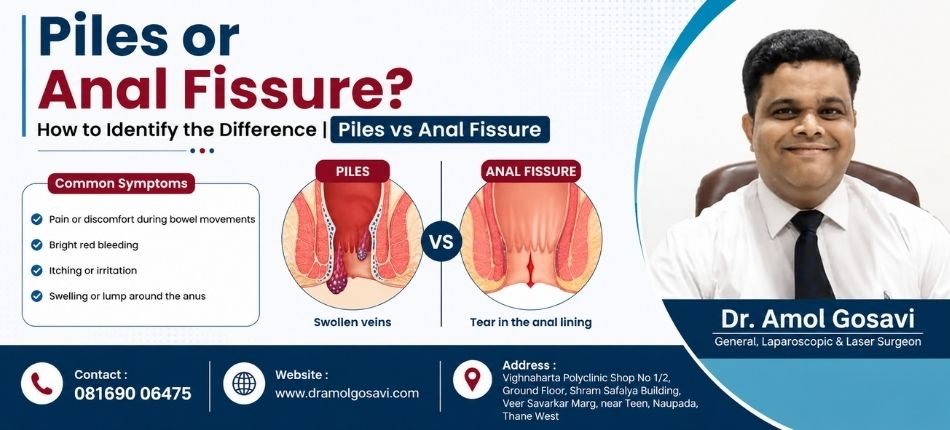
Piles or Anal Fissure? How to Identify the Difference | Piles vs Anal Fissure – Dr. Amol Gosavi
Many people experience pain, bleeding, or discomfort while passing stools but are unsure whether they are suffering from piles or an anal fissure. Since both conditions affect the anal region and share similar symptoms, they are often confused. However, they are different medical conditions that require different treatment approaches.
Understanding the difference between Piles vs Anal Fissure can help you seek timely medical care and prevent complications.
If your symptoms are related to haemorrhoids, you can learn more about Laser Piles Treatment in Thane and the available treatment approaches based on clinical evaluation. For fissure-related symptoms, consultation with an Anal Fissure Specialist in Thane can help determine an appropriate treatment plan.
What Are Piles?
Piles, also known as hemorrhoids, are swollen veins in the lower rectum or anus. They can develop internally (inside the rectum) or externally (around the anus).
Piles usually occur due to increased pressure in the rectal veins caused by constipation, prolonged sitting, obesity, pregnancy, or excessive straining during bowel movements.
What Is an Anal Fissure?
An anal fissure is a small tear or cut in the lining of the anal canal. It commonly develops after passing hard stools or due to repeated constipation.
Although it is a small injury, an anal fissure can cause severe pain because the anal area contains numerous sensitive nerve endings.
Piles vs Anal Fissure: Key Differences
1. Cause
Piles develop due to swollen blood vessels in the anal canal.
Anal fissures occur because of a tear in the skin around the anus.
2. Pain
Pain from piles is usually mild unless external hemorrhoids become swollen or thrombosed.
Pain from an anal fissure is typically sharp, intense, and occurs during or after passing stools. The discomfort may continue for several hours.
3. Bleeding
Both conditions may cause bright red bleeding.
In piles, blood is often noticed on toilet paper or dripping into the toilet without severe pain.
In anal fissures, bleeding is generally accompanied by significant pain.
4. Lump Around the Anus
External piles may produce a soft or swollen lump.
Anal fissures usually do not form a lump, although a small skin tag may develop in chronic cases.
5. Itching
Piles frequently cause itching, irritation, and mucus discharge.
Anal fissures mainly cause pain rather than itching.
Symptoms of Piles
Common symptoms include:
- Bright red bleeding after bowel movements
- Swelling near the anus
- Itching and irritation
- Feeling of incomplete bowel emptying
- Pain while sitting (especially external piles)
- Mucus discharge
Symptoms of Anal Fissure
Typical symptoms include:
- Severe pain during bowel movements
- Burning sensation after passing stools
- Bright red bleeding
- Visible crack near the anus
- Fear of passing stools due to pain
- Muscle spasms around the anus
Risk Factors
Both conditions share several common risk factors, including:
- Chronic constipation
- Low-fiber diet
- Straining during bowel movements
- Dehydration
- Sedentary lifestyle
However, pregnancy, obesity, aging, and prolonged sitting increase the risk of piles, while repeated hard stools are a leading cause of fissures.
How Are These Conditions Diagnosed?
Diagnosing whether you have piles or an anal fissure begins with a detailed discussion of your symptoms, including the nature of the pain, bleeding, bowel habits, and medical history. A general surgeon will perform a gentle physical examination of the anal area to identify visible signs such as swollen hemorrhoids, a tear in the anal lining, or skin tags. If internal piles are suspected or the diagnosis is unclear, procedures like an anoscopy or proctoscopy may be recommended to examine the inside of the anal canal. In some cases, especially if rectal bleeding is persistent or accompanied by other concerning symptoms, additional investigations such as a colonoscopy may be advised to rule out more serious gastrointestinal conditions. Early and accurate diagnosis ensures the most effective treatment and helps prevent complications.
Treatment for Piles
Treatment depends on the severity of the condition.
Mild piles can often be managed with:
- High-fiber diet
- Increased water intake
- Stool softeners
- Warm sitz baths
- Lifestyle modifications
Advanced piles may require minimally invasive procedures such as:
- Laser piles surgery
- Stapler surgery
- Hemorrhoidectomy
- Rubber band ligation
Treatment for Anal Fissure
Most acute fissures heal with conservative treatment, including:
- Fiber-rich diet
- Adequate hydration
- Stool softeners
- Sitz baths
- Topical medications
Chronic fissures that fail to heal may require Lateral Internal Sphincterotomy (LIS) or laser treatment.
When Should You See a Doctor?
You should consult a doctor if you experience persistent rectal bleeding, severe pain during or after bowel movements, recurring constipation, or symptoms that do not improve within a week despite home care. Bleeding from the rectum should never be ignored, as it may sometimes indicate conditions other than piles or fissures, including inflammatory bowel disease or colorectal disorders. Medical attention is also necessary if you notice a painful swelling around the anus, pus discharge, fever, difficulty passing stools, or recurrent episodes of pain and bleeding. Seeking treatment early allows your doctor to identify the exact cause and provide timely management, reducing the risk of chronic pain, infection, or the need for more extensive surgical treatment.
Prevention Tips
Preventing both piles and anal fissures largely depends on maintaining healthy bowel habits and reducing strain during bowel movements. A fiber-rich diet that includes fruits, vegetables, whole grains, and legumes helps keep stools soft and easy to pass. Drinking 2–3 litres of water daily supports proper digestion and prevents constipation. Regular physical activity improves bowel function, while avoiding prolonged sitting, especially on the toilet, reduces pressure on the rectal veins. It is also important to respond promptly to the urge to pass stools instead of delaying bowel movements, as holding stools can make them harder and more difficult to pass. By adopting these simple lifestyle measures, you can significantly lower your risk of developing piles, anal fissures, and recurrent anal discomfort.
Conclusion
Understanding the difference between Piles vs Anal Fissure is essential because both conditions require different treatment approaches. While piles result from swollen veins, anal fissures are tears in the anal lining that often cause intense pain. If you notice bleeding, pain, or discomfort during bowel movements, do not ignore the symptoms. Consulting an experienced general surgeon ensures an accurate diagnosis and effective treatment before complications arise.
Piles vs Anal Fissure Piles vs Anal Fissure Piles vs Anal Fissure Piles vs Anal Fissure Piles vs Anal Fissure Piles vs Anal Fissure Piles vs Anal Fissure Piles vs Anal Fissure Piles vs Anal Fissure Piles vs Anal Fissure Piles vs Anal Fissure Piles vs Anal Fissure Piles vs Anal Fissure Piles vs Anal Fissure Piles vs Anal Fissure
