
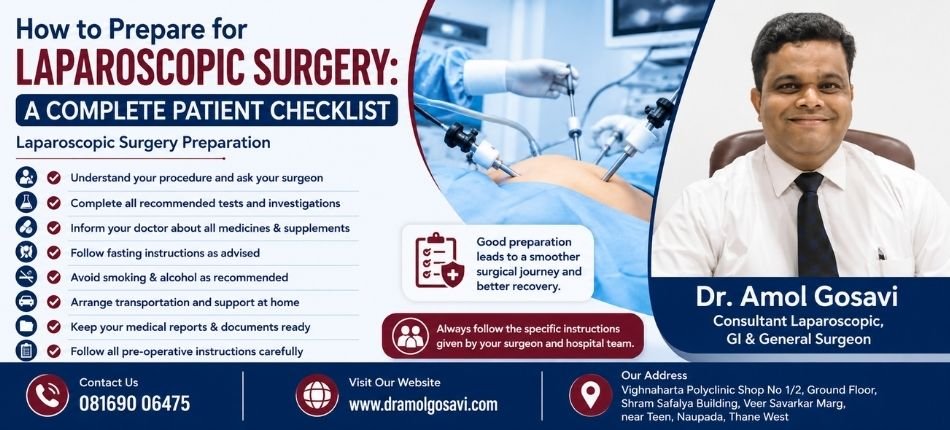
How to Prepare for Laparoscopic Surgery: A Complete Patient Checklist | Laparoscopic Surgery Preparation – Dr. Amol Gosavi
Introduction
Laparoscopic surgery is a minimally invasive surgical approach in which a surgeon performs a procedure through small incisions with the help of a camera and specialized instruments. Compared with traditional open surgery, laparoscopic procedures may offer benefits such as smaller incisions, reduced postoperative discomfort, shorter hospital stays, and faster recovery for appropriately selected patients.
However, successful treatment involves more than the procedure itself. Proper laparoscopic surgery preparation is an important part of the overall surgical journey. Following your surgeon’s instructions regarding food, medicines, investigations, and lifestyle can help ensure that you are appropriately prepared for surgery.
If you have an upcoming laparoscopic procedure, the following patient checklist can help you understand what you may need to do before reaching the hospital.
1. Understand Your Laparoscopic Procedure
Before surgery, make sure you understand why the procedure has been recommended, what it involves, and what you can reasonably expect during recovery.
Ask your surgeon about the planned procedure, expected duration, type of anesthesia, possible benefits and risks, expected hospital stay, and approximate recovery period.
You should also discuss when you may be able to resume activities such as walking, driving, working, exercising, and lifting heavier objects. Knowing what to expect can make laparoscopic surgery preparation more organized and reduce unnecessary uncertainty.
2. Complete the Recommended Pre-Operative Tests
Your surgeon or anesthesiologist may recommend certain investigations before surgery. The exact tests required depend on your age, medical history, health conditions, and the type of procedure being performed.
These may include blood tests, urine tests, an ECG, chest imaging, or other procedure-specific investigations. Some patients may also require evaluation for existing medical conditions before receiving anesthesia.
Complete all prescribed investigations within the recommended timeframe and carry the reports when visiting your surgeon or hospital.
3. Tell Your Doctor About All Your Medicines
One of the most important parts of a laparoscopic surgery checklist is preparing an accurate list of your medications.
Inform your surgeon about prescription medicines, over-the-counter medicines, vitamins, herbal preparations, and dietary supplements you use. Certain medications may need adjustment before surgery, particularly those that affect bleeding, blood pressure, blood sugar, or other aspects of your health.
Never stop a prescribed medicine on your own. Your surgeon, anesthesiologist, or treating physician should tell you exactly which medicines to continue, modify, or temporarily stop.
4. Follow Fasting Instructions Carefully
Patients undergoing surgery under anesthesia are usually asked to avoid eating or drinking for a specified period beforehand. The exact instructions can vary according to the procedure, anesthesia plan, and hospital protocol.
Follow the fasting instructions given specifically to you. Do not assume that instructions from a previous operation or another patient’s experience apply to your situation.
If you accidentally eat or drink during the instructed fasting period, inform your healthcare team rather than hiding it.
5. Discuss Existing Health Conditions
Your surgeon and anesthesiologist should know about relevant medical conditions and previous surgeries.
Tell them if you have conditions such as diabetes, high blood pressure, heart or lung disease, kidney problems, allergies, or previous reactions to anesthesia. You should also disclose any recent fever, cough, infection, or other significant change in your health before the operation.
Complete and accurate information allows your medical team to plan your care more appropriately.
6. Avoid Smoking and Alcohol as Advised
Smoking can affect respiratory health, wound healing, and recovery. Alcohol may also interact with medications and anesthesia and can influence overall surgical care.
If you smoke or consume alcohol, discuss this openly with your surgeon. Follow the medical team’s recommendations about stopping or limiting these before and after your operation.
7. Prepare for the Day of Surgery
Preparing your belongings in advance can make the hospital admission process easier.
Keep your identification documents, medical records, investigation reports, current medication list, insurance or payment documents, and hospital paperwork together. Wear loose, comfortable clothing unless the hospital has provided different instructions.
Avoid carrying unnecessary valuables to the hospital.
8. Arrange Transportation and Support at Home
Depending on the procedure and anesthesia, you may not be able to drive yourself home after surgery.
Arrange for a responsible family member or caregiver to accompany you or take you home when you are discharged. It can also be helpful to have someone available during the initial recovery period, particularly if you need assistance with meals, medications, household activities, or transportation.
9. Prepare Your Home for Recovery
Good laparoscopic surgery preparation also includes planning for the first few days after discharge.
Keep commonly used items within easy reach and arrange a comfortable resting area. Obtain prescribed medications according to your healthcare team’s instructions and plan simple meals if necessary.
Ask your surgeon about wound care, bathing, physical activity, diet, and restrictions before leaving the hospital.
10. Know the Warning Signs After Surgery
Before discharge, ask your medical team which symptoms are expected and which require medical attention.
Depending on your procedure, you may be advised to contact your surgeon if you develop concerning symptoms such as persistent or worsening pain, significant bleeding, breathing difficulty, persistent vomiting, high fever, or changes around the surgical wound.
Your surgeon’s specific postoperative instructions should always take priority over general online information.
Laparoscopic Surgery Preparation Checklist
Before your procedure, check that you have:
- Completed all recommended tests and consultations
- Shared your complete medical and medication history
- Asked which medicines to continue or stop
- Followed the prescribed fasting instructions
- Informed your doctor about allergies and previous anesthesia problems
- Followed advice regarding smoking and alcohol
- Prepared medical and hospital documents
- Arranged transportation after discharge
- Organized support at home if required
- Understood postoperative care and warning signs
Conclusion
Proper laparoscopic surgery preparation can help patients approach their procedure in a more organized and informed manner. From completing investigations and discussing medicines to following fasting instructions and preparing for recovery, every step should be based on guidance from your surgical team.
If you are scheduled for laparoscopic surgery, discuss your individual preparation requirements with an experienced surgeon rather than relying solely on a general checklist.
Laparoscopic Surgery Preparation Laparoscopic Surgery Preparation Laparoscopic Surgery Preparation Laparoscopic Surgery Preparation Laparoscopic Surgery Preparation Laparoscopic Surgery Preparation Laparoscopic Surgery Preparation Laparoscopic Surgery Preparation Laparoscopic Surgery Preparation
