
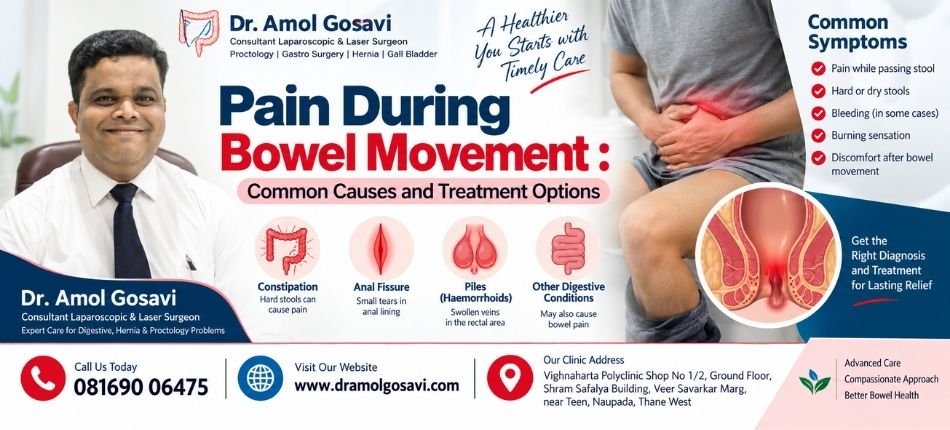
Pain During Bowel Movement : Common Causes and Treatment Options – Dr. Amol Gosavi
Experiencing pain during bowel movement can make a normal daily activity uncomfortable and stressful. While an occasional episode may occur after passing a particularly hard stool, recurring or persistent discomfort deserves attention.
Several conditions can cause discomfort while passing stool, including constipation, anal fissures, haemorrhoids and other anorectal disorders. Anal fissures, for example, are small tears in the anal lining and commonly develop after constipation, straining or passing hard or large stools.
Because different conditions can produce similar symptoms, identifying the underlying cause is important before deciding on treatment.
What Does Pain During Bowel Movement Feel Like?
The experience can vary according to the underlying condition. Some people describe a sharp sensation while passing stool, while others experience burning, soreness, pressure or discomfort that continues afterward.
The location, duration and severity of symptoms can provide useful clues during medical evaluation.
For example, an anal fissure commonly produces discomfort during bowel movements that may continue afterward, while haemorrhoid symptoms vary according to their type and may include irritation, swelling or discomfort.
Common Causes of Pain During Bowel Movement
1. Constipation
Constipation is one of the most common factors associated with difficult bowel movements. Hard or dry stools may require excessive straining, which can make passing stool uncomfortable.
Long-term constipation can also contribute to complications such as haemorrhoids and anal fissures.
2. Anal Fissure
An anal fissure is a small tear in the tissue lining the anus. It commonly occurs after passing hard or large stools or repeatedly straining during bowel movements.
A fissure may cause sharp discomfort during stool passage and symptoms can sometimes persist afterward.
3. Haemorrhoids or Piles
Haemorrhoids, commonly called piles, are swollen veins in or around the anus and lower rectum.
Internal haemorrhoids often cause little discomfort unless they prolapse, whereas external or thrombosed haemorrhoids can be uncomfortable. Straining, chronic constipation, prolonged toilet sitting and low-fibre diets are among the recognised contributing factors.
4. Hard or Large Stools
Even without chronic constipation, occasionally passing a particularly hard or large stool can stretch or irritate sensitive tissues around the anus.
Repeated episodes can increase the likelihood of developing an anal fissure.
5. Persistent Diarrhoea
People often associate bowel discomfort only with constipation, but frequent loose stools can also irritate the anal region.
Long-lasting diarrhoea is also recognised as a possible contributor to anal fissures.
6. Anorectal Abscess or Fistula
Other anorectal conditions, including an abscess or fistula, may also produce discomfort around the anal area. Anal pain has a broad range of possible causes, so persistent symptoms should not automatically be assumed to be piles.
7. Inflammatory Bowel Conditions
Less commonly, conditions such as Crohn’s disease or ulcerative colitis may contribute to anorectal or bowel symptoms.
These conditions require appropriate medical evaluation rather than self-treatment.
How Is the Cause Diagnosed?
Diagnosis usually begins with a discussion about the symptoms, bowel habits, duration of the problem, constipation, medications and other relevant medical history.
A doctor may then perform an appropriate physical examination. Anal fissures, for example, can often be identified through clinical assessment. Additional investigations may be considered when symptoms, age or medical history suggest another underlying bowel condition.
Why You Should Not Assume Every Symptom Is Piles
Many people automatically associate discomfort during bowel movements with piles. However, several anorectal conditions can produce similar symptoms.
Anal fissures are a particularly important alternative cause. In fact, fissures are frequently associated with discomfort during and after bowel movements.
Getting the correct diagnosis helps ensure that treatment targets the actual cause rather than simply treating symptoms.
Treatment Options for Pain During Bowel Movement
Treatment depends entirely on the underlying diagnosis.
1. Managing Constipation
When constipation is contributing to symptoms, improving stool consistency can be an important first step.
Adequate fluids, fibre-rich foods and regular physical activity can help support healthy bowel movements.
2. Increasing Dietary Fibre
Fruits, vegetables, legumes and whole grains are useful sources of dietary fibre.
For anal fissures, Mayo Clinic notes that fibre and adequate fluids can help keep stools soft and reduce straining.
3. Avoiding Excessive Straining
Repeated straining increases pressure in the anorectal area and may contribute to fissures and haemorrhoids.
Patients should also avoid spending unnecessarily long periods sitting on the toilet.
4. Warm Sitz Baths
A warm sitz bath may help relax the anal sphincter and provide relief in selected anorectal conditions such as fissures and haemorrhoids.
5. Medicines
Depending on the diagnosis, a doctor may recommend medicines to soften stools, relieve symptoms or help treat the underlying anorectal condition.
Medication should be selected according to the diagnosis rather than repeatedly using over-the-counter products without knowing the cause.
6. Treatment for Anal Fissure
Initial management commonly focuses on keeping stools soft, increasing fibre and fluid intake and avoiding straining.
Persistent fissures may require prescription topical medicines or other medical treatments. Chronic cases that do not respond adequately to conservative treatment may sometimes require a procedure or surgery.
7. Treatment for Piles
Treatment depends on the type and severity of haemorrhoids.
Mild symptoms may improve with dietary changes and measures that reduce straining. Persistent or more significant haemorrhoids may require medical procedures after evaluation by a specialist.
Can Lifestyle Changes Help?
Yes, particularly when constipation and straining contribute to symptoms.
Regular activity, adequate hydration, sufficient dietary fibre and responding to the natural urge to pass stool can support healthier bowel habits.
These measures can also be useful as part of a long-term prevention strategy.
When Should You Consult a Doctor?
Medical evaluation is recommended when pain during bowel movement persists for more than a few days, repeatedly returns, or occurs alongside changes in bowel habits or rectal bleeding.
Immediate medical attention is appropriate for a large amount of rectal bleeding or bleeding that does not stop, especially with dizziness or faintness. Rapidly worsening anal pain associated with fever, chills or discharge also warrants urgent assessment.
Can Pain During Bowel Movement Be Prevented?
Not every condition is preventable, but maintaining healthy bowel habits may reduce the risk of problems associated with hard stools and excessive straining.
Regular fibre intake, adequate hydration, physical activity and avoiding unnecessary toilet straining are practical steps that can help.
Conclusion
Pain during bowel movement should not automatically be considered piles. Constipation, anal fissures, haemorrhoids and several other anorectal conditions can produce similar symptoms.
Persistent or recurring symptoms should be properly evaluated so that treatment can target the actual cause.
For assessment of anorectal concerns, patients can consult Dr. Amol Gosavi for appropriate diagnosis and treatment options.
Dr. Amol Gosavi
📞 Contact: 081690 06475
🌐 Website: www.dramolgosavi.com
📍 Vighnaharta Polyclinic, Shop No. 1/2, Ground Floor, Shram Safalya Building, Veer Savarkar Marg, Naupada, Thane West
Pain During Bowel Movement Pain During Bowel Movement Pain During Bowel Movement Pain During Bowel Movement Pain During Bowel Movement Pain During Bowel Movement Pain During Bowel Movement Pain During Bowel Movement Pain During Bowel Movement Pain During Bowel Movement Pain During Bowel Movement
