
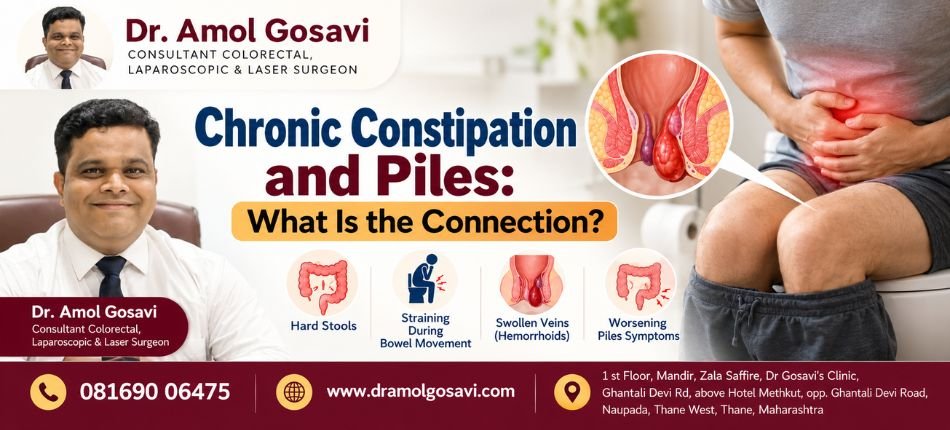
Chronic Constipation and Piles: What Is the Connection? – Dr. Amol Gosavi
Chronic constipation is a common digestive concern that can make bowel movements difficult and uncomfortable. When stools become hard or difficult to pass, a person may need to strain repeatedly during bowel movements. Over time, this increased pressure can affect the veins in and around the anal region.
The relationship between Constipation and Piles is important to understand because persistent constipation and repeated straining may contribute to the development or worsening of hemorrhoids. Improving bowel habits, maintaining adequate fibre intake, and avoiding excessive straining can help reduce this pressure.
If you are experiencing recurring piles, constipation-related symptoms, or other anorectal concerns, you can consult Dr. Amol Gosavi – Advanced Laser Proctologist for appropriate evaluation and treatment guidance.
What Is Chronic Constipation?
Chronic constipation is a condition in which a person regularly experiences difficulty passing stools or has infrequent bowel movements over a prolonged period. Stools may become hard, dry, and difficult to pass, often requiring excessive straining. Some people may also experience a feeling of incomplete bowel emptying. Persistent constipation should be evaluated if it continues despite dietary and lifestyle changes.
What Are Piles?
Piles, medically known as hemorrhoids, are swollen veins in the lower rectum or around the anus. They may develop internally inside the rectum or externally around the anal opening. Some hemorrhoids may cause few symptoms, while others can lead to discomfort, irritation, swelling, or bleeding during bowel movements.
Several factors can contribute to piles, and repeated straining associated with constipation is one of the commonly recognized factors.
How Are Constipation and Piles Connected?
The main connection between Constipation and Piles is the pressure created during difficult bowel movements.
When stool becomes hard, a person may strain forcefully to pass it. Repeated straining increases pressure on the veins in the anal and lower rectal region. Over time, these veins may become enlarged or swollen.
Constipation may also lead people to spend longer periods sitting on the toilet. This can further increase pressure around the anal area and may aggravate existing hemorrhoids.
Can Chronic Constipation Cause Piles?
Chronic constipation can be an important contributing factor in the development or worsening of piles. However, constipation does not mean that a person will necessarily develop hemorrhoids.
Other factors such as pregnancy, ageing, prolonged sitting, repeated heavy lifting, chronic diarrhoea, and increased abdominal pressure may also contribute.
Therefore, managing constipation is particularly important for people who frequently experience hemorrhoid symptoms.
What Symptoms May Occur With Piles?
Piles may cause itching, irritation, swelling, or discomfort around the anal area. Some people may notice a lump near the anal opening or bleeding during bowel movements. Symptoms can vary depending on whether the hemorrhoids are internal or external. Because other conditions can cause similar symptoms, persistent or recurring problems should be medically evaluated.
Can Diet Affect Constipation and Piles?
Yes, diet can play an important role in maintaining healthy bowel movements. A diet low in fibre may contribute to hard stools and constipation, which can increase straining and aggravate piles. Including fruits, vegetables, whole grains, pulses, and other fibre-rich foods can help improve stool consistency. Adequate fluid intake is also important when increasing dietary fibre.
How Can You Reduce Constipation?
Constipation can often be reduced by making consistent changes to diet and daily routine. Drinking adequate fluids, staying physically active, and maintaining regular bowel habits can help stools pass more easily. Avoid delaying the urge to use the toilet and try not to strain excessively. If constipation continues despite these measures, medical evaluation may be needed to identify an underlying cause.
Increase Fibre Intake
Dietary fibre helps add bulk and softness to stools, making bowel movements easier and more regular. Include fibre-rich foods such as fruits, vegetables, whole grains, oats, pulses, and seeds in your daily diet. Increase fibre gradually, as a sudden increase may cause gas or bloating in some people. Adequate fluid intake is also important when increasing dietary fibre.
Maintain Adequate Hydration
Fluids support normal bowel function and can help prevent stools from becoming excessively hard. Try to drink fluids regularly throughout the day rather than waiting until you feel very thirsty.
Individual fluid requirements can vary depending on age, physical activity, weather, and medical conditions. People who have been advised to restrict fluids should follow their doctor’s recommendations.
Stay Physically Active
Regular physical activity can support healthy digestive function and bowel movement. Even simple activities such as regular walking may be beneficial for people with a sedentary lifestyle.
Combining physical activity with a balanced diet and adequate hydration can support better bowel regularity.
Do Not Delay Bowel Movements
Repeatedly ignoring the natural urge to pass stool may allow stools to remain in the colon longer and become harder.
Developing a regular bowel routine and responding to the body’s natural signals can make bowel movements more comfortable and reduce the need for excessive straining.
Why Should You Avoid Straining During Bowel Movements?
Repeated forceful straining increases pressure within the veins around the anus and lower rectum. This pressure can aggravate existing hemorrhoids and may contribute to their development.
Instead of forcing a bowel movement, focus on maintaining softer stools through appropriate diet, hydration, activity, and regular bowel habits.
Can Sitting on the Toilet for Too Long Worsen Piles?
Spending unnecessarily long periods on the toilet can increase pressure around the anal region. People with constipation may unintentionally develop this habit while waiting for a bowel movement.
Avoid using your phone or reading for extended periods while sitting on the toilet. Try to use the toilet when there is a natural urge rather than sitting and straining for a long time.
Simple Habits That May Help Prevent Constipation and Piles
Eating adequate fibre, drinking enough fluids, and staying physically active can support regular bowel movements. Avoid delaying the natural urge to pass stool and try not to strain excessively during bowel movements. Spending unnecessarily long periods sitting on the toilet should also be avoided. Maintaining these habits consistently may help reduce constipation and the repeated pressure that can aggravate piles.
Can Piles Improve After Constipation Is Controlled?
Improving constipation can reduce straining and pressure around the anal region, which may help reduce aggravation of hemorrhoid symptoms.
However, existing piles do not always disappear simply by correcting constipation. The outcome depends on factors such as the type and severity of hemorrhoids and the individual’s symptoms.
Persistent piles should therefore be evaluated rather than relying only on home measures.
When Should You Seek Medical Advice?
Consider consulting a doctor if constipation continues for a prolonged period, repeatedly returns, or does not improve with basic lifestyle changes. Medical evaluation is also important for recurring anal swelling, significant discomfort, or a noticeable change in bowel habits. Rectal bleeding should not automatically be assumed to be caused by piles, as it can have other causes. Appropriate examination can help determine the underlying problem and suitable treatment.
How Are Constipation and Piles Evaluated?
Evaluation generally begins with a discussion about bowel habits, symptoms, diet, medications, and how long the problem has been present.
Depending on the symptoms, the doctor may perform an examination or recommend further tests. The purpose is not only to identify hemorrhoids but also to determine whether constipation or another condition may be contributing to the symptoms.
Treatment of Constipation-Related Piles
Treatment depends on the severity and type of piles as well as the underlying reason for constipation.
For some people, improving fibre intake, hydration, physical activity, and bowel habits may be sufficient to manage mild symptoms. Medicines may also be recommended when appropriate.
If hemorrhoids are persistent or more advanced, additional treatment options may be considered after medical evaluation. The appropriate treatment varies from patient to patient.
Can Constipation and Piles Come Back?
Both constipation and piles can recur, particularly when contributing lifestyle or bowel habits continue.
Long-term attention to stool consistency, fibre intake, hydration, physical activity, and toilet habits may help reduce repeated episodes. People with frequently recurring symptoms may benefit from medical assessment to determine whether another underlying issue is contributing.
Conclusion
The connection between Constipation and Piles largely involves hard stools, repeated straining, and increased pressure on the veins in the anal and lower rectal region. Chronic constipation can aggravate existing hemorrhoids and may contribute to their development in some people.
Maintaining adequate fibre and fluid intake, staying active, avoiding excessive straining, and developing healthier toilet habits can support regular bowel movements. Persistent constipation, recurrent piles, rectal bleeding, or significant changes in bowel habits should be medically evaluated rather than assumed to be a minor problem.
For consultation regarding piles and other anorectal conditions, patients can consult Dr. Amol Gosavi in Thane for appropriate evaluation and treatment guidance.
Constipation and Piles Constipation and Piles Constipation and Piles Constipation and Piles Constipation and Piles Constipation and Piles Constipation and Piles Constipation and Piles Constipation and Piles Constipation and Piles Constipation and Piles Constipation and Piles Constipation and Piles Constipation and Piles Constipation and Piles Constipation and Piles Constipation and Piles
