
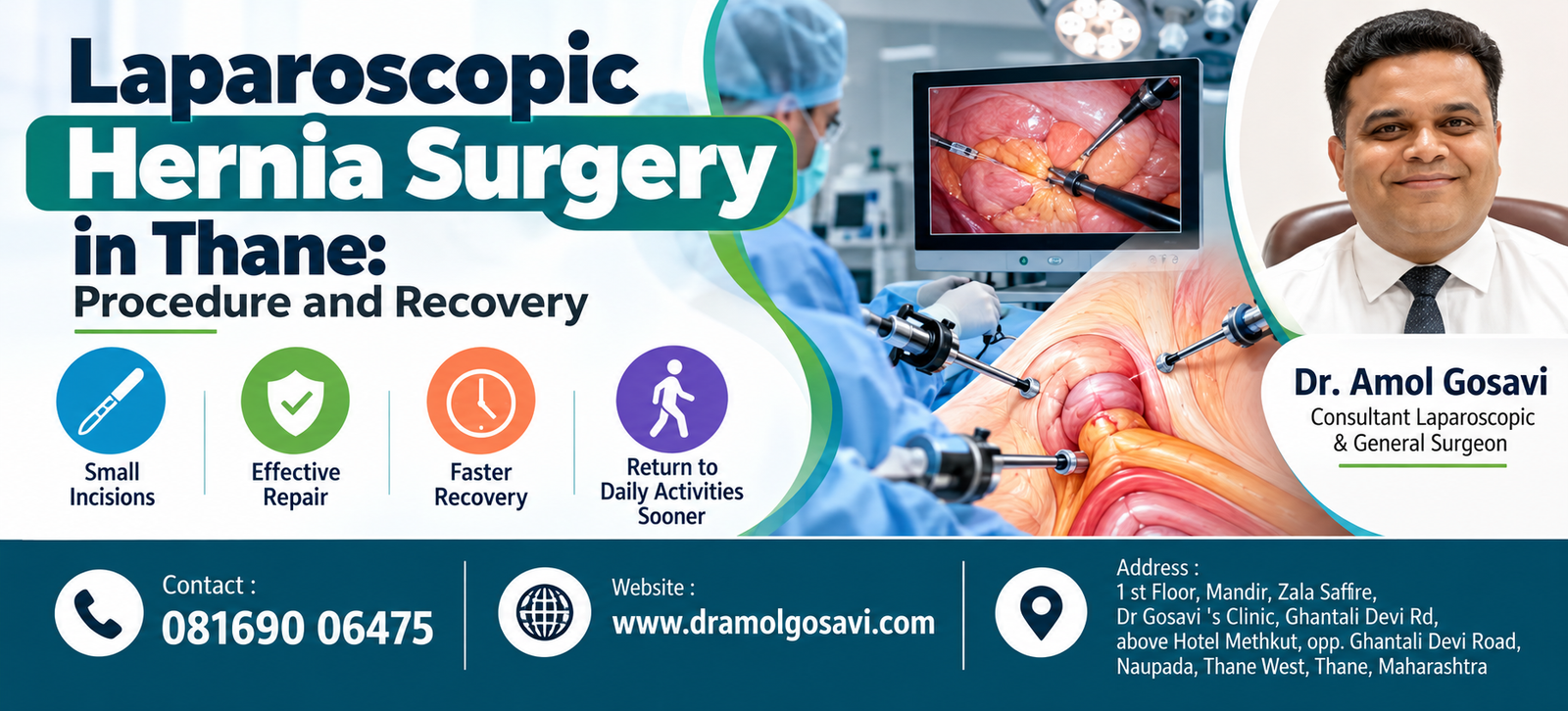
Laparoscopic Hernia Surgery in Thane : Procedure and Recovery- Dr. Amol Gosavi
Introduction
A hernia occurs when an internal organ or tissue pushes through a weak area in the surrounding muscle or connective tissue. It may appear as a visible bulge and can sometimes cause discomfort, heaviness, or pain, particularly while lifting objects, coughing, bending, or performing strenuous activities. While some hernias may initially cause few symptoms, they generally do not heal on their own.
For suitable patients, Laparoscopic Hernia Surgery in Thane provides a minimally invasive approach to hernia repair. Instead of making one large incision, laparoscopic surgery is generally performed through a few small incisions using a camera and specialized surgical instruments. Patients looking for surgical consultation and advanced treatment options can also learn more about advanced surgical and proctology care by Dr. Amol Gosavi.
The appropriate treatment for a hernia depends on its type, size, location, symptoms, previous surgeries, and the patient’s overall health. A surgical evaluation helps determine whether laparoscopic or open hernia repair is more appropriate.
What Is a Hernia?
A hernia occurs when an internal organ or fatty tissue pushes through a weak area in the surrounding muscle or connective tissue. It commonly appears as a swelling or bulge in the abdomen or groin. Some hernias may cause discomfort, heaviness, or pain during coughing, lifting, bending, or physical activity. A medical examination helps determine the type and severity of the hernia.
Common Types of Hernia
Different types of hernias can occur depending on the location of the weakness.
Inguinal Hernia
An inguinal hernia occurs in the groin region and is one of the most common types of abdominal wall hernia.
Umbilical Hernia
This type of hernia develops around the belly button or navel. It can occur in both children and adults.
Incisional Hernia
An incisional hernia can develop at or near the site of a previous abdominal surgical incision where the abdominal wall has become weak.
Femoral Hernia
A femoral hernia occurs in the upper thigh or groin area and requires appropriate medical evaluation because of its potential for complications.
The recommended treatment can differ according to the type and characteristics of the hernia.
What Is Laparoscopic Hernia Surgery?
Laparoscopic hernia repair is a minimally invasive surgical procedure used to repair certain types of hernias.
During the procedure, the surgeon usually makes several small incisions in the abdomen. A laparoscope—a thin instrument equipped with a camera—is inserted through one of these incisions. The camera provides an enlarged view of the internal surgical area on a monitor.
Specialized surgical instruments are introduced through the other small incisions. The hernia is repaired, and surgical mesh is commonly used to reinforce the weakened abdominal wall when clinically appropriate.
The exact surgical technique varies according to the type and location of the hernia and the individual patient’s condition.
When May Hernia Surgery Be Recommended?
Hernia surgery may be recommended when the hernia causes persistent discomfort, increases in size, or begins to interfere with daily activities. Surgery may also be considered when there is a risk of the tissue becoming trapped within the hernia. The decision depends on the hernia’s type, size, location, symptoms, and the patient’s overall health. A surgeon can determine the most appropriate treatment after evaluation.
How Is Laparoscopic Hernia Surgery Performed?
The exact procedure depends on the individual case, but laparoscopic hernia repair generally involves several steps.
1. Anaesthesia
Laparoscopic hernia surgery is generally performed under general anaesthesia. The anaesthesia team monitors the patient throughout the procedure.
2. Small Incisions
The surgeon makes small incisions in the abdomen rather than the larger incision generally required for conventional open surgery.
3. Laparoscope Insertion
A laparoscope is inserted through one of the incisions. Its camera allows the surgeon to view the hernia and surrounding tissues on a monitor.
4. Hernia Repair
Specialized instruments are used to return the protruding tissue to its appropriate position and repair the weakened area.
5. Mesh Placement
When appropriate, surgical mesh may be placed over the weakened area to reinforce the abdominal wall. Whether mesh is used and the type of mesh selected depend on the clinical situation.
6. Closing the Incisions
After the repair is completed, the instruments are removed and the small incisions are closed.
Potential Benefits of Laparoscopic Hernia Surgery
Laparoscopic hernia surgery uses small incisions and specialized instruments to repair the weakened area. For suitable patients, potential benefits may include smaller scars, less postoperative discomfort, and an earlier return to some routine activities. It may also be useful in certain bilateral or recurrent hernias. Individual results and recovery can vary depending on the patient and type of hernia.
Laparoscopic vs Open Hernia Surgery
Laparoscopic hernia surgery is performed through several small incisions with the help of a camera and specialized instruments. Open hernia surgery involves making an incision directly over or near the hernia to perform the repair. Both are established surgical approaches, and neither is suitable for every patient. The choice depends on the type of hernia, previous surgeries, overall health, and the surgeon’s assessment.
Preparing for Laparoscopic Hernia Surgery
Before surgery, the doctor may recommend blood tests, imaging, ECG, or other investigations depending on the patient’s health and age. Patients should inform their doctor about all medicines and supplements they are taking. Specific instructions regarding fasting, medications, hospital admission, and anaesthesia are usually provided before the procedure. These instructions should be followed carefully to prepare safely for surgery.
Recovery After Laparoscopic Hernia Surgery
Recovery after Laparoscopic Hernia Surgery in Thane varies between individuals. The type of hernia, complexity of surgery, age, general health, occupation, and other medical conditions can all influence recovery.
Some patients may be discharged on the same day, while others may need observation or a longer hospital stay depending on their clinical condition.
Mild soreness, tightness, or discomfort around the surgical area can occur during the initial recovery period. The treating surgeon may prescribe appropriate medicines and provide wound-care instructions.
What to Expect During the First Few Days
Mild discomfort, soreness, or tightness around the operated area can occur during the first few days after surgery. Patients may be encouraged to begin gentle walking and gradually increase light activities according to their surgeon’s advice. Proper wound care, prescribed medicines, adequate hydration, and rest are important during this period. Heavy lifting and strenuous activities should be avoided until medically advised.
Diet After Hernia Surgery
The appropriate diet after surgery depends on the individual and the surgeon’s instructions.
Patients may initially be advised to start with easily tolerated foods and gradually return to their normal diet.
Adequate fluids and fibre may also be useful because constipation and straining during bowel movements can increase abdominal pressure.
Foods that may support a balanced recovery diet include vegetables, fruits, whole grains, and suitable protein sources. Individual dietary restrictions or medical conditions should also be considered.
When Can You Return to Normal Activities?
The time required to return to normal activities varies depending on the type of hernia, surgical procedure, overall health, and nature of the patient’s work. Some patients may return to light routine activities relatively soon, while strenuous work and heavy lifting may require a longer recovery period. Activity should be increased gradually rather than suddenly. The surgeon should advise when it is appropriate to resume work, exercise, and heavy physical activity.
Warning Signs After Hernia Surgery
Some discomfort can occur after surgery, but certain symptoms require medical attention.
Contact the treating doctor promptly if there is:
- Increasing or severe pain
- Persistent vomiting
- Fever
- Increasing redness or swelling around the incision
- Discharge from the surgical wound
- Significant abdominal swelling
- Difficulty passing urine
- Breathing difficulty
- Any unexpected or rapidly worsening symptom
Following postoperative instructions and attending scheduled follow-up appointments allows the surgeon to assess healing and address concerns early.
Can a Hernia Come Back After Surgery?
Hernia recurrence is possible after any type of hernia repair, although many repairs remain successful over the long term.
Recurrence risk can be influenced by several factors, including the type and size of the hernia, tissue quality, smoking, obesity, chronic coughing, repeated heavy strain, and other medical conditions.
Following the surgeon’s recovery and activity recommendations is therefore important.
Why Timely Hernia Evaluation Matters
A hernia may initially appear to be only a small swelling, but symptoms can change over time. Delaying medical evaluation may allow the hernia to become larger or more troublesome.
In some cases, a portion of intestine can become trapped in the hernia. If its blood supply becomes compromised, urgent treatment may be necessary.
Therefore, a persistent groin or abdominal swelling—particularly one associated with discomfort—should be evaluated rather than self-diagnosed.
Laparoscopic Hernia Surgery in Thane – Dr. Amol Gosavi
Patients considering Laparoscopic Hernia Surgery in Thane can consult Dr. Amol Gosavi for evaluation and discussion of suitable treatment options.
The consultation generally involves understanding the patient’s symptoms, examining the hernia, reviewing relevant medical history, and determining whether additional investigations are required.
If surgery is indicated, the appropriate approach—laparoscopic or open—can be selected according to the type of hernia and individual clinical factors.
Consult for Laparoscopic Hernia Surgery in Thane
If you have noticed a groin or abdominal bulge, persistent discomfort, or symptoms suggestive of a hernia, a surgical consultation can help establish the diagnosis and appropriate treatment plan.
For consultation regarding Laparoscopic Hernia Surgery in Thane, contact:
Dr. Amol Gosavi
📞 081690 06475
🌐 www.dramolgosavi.com
📍 Dr. Gosavi’s Clinic, 1st Floor, Zala Saffire, Ghantali Devi Road, above Hotel Methkut, opposite Ghantali Devi Mandir, Naupada, Thane West, Thane, Maharashtra
Laparoscopic Hernia Surgery in Thane Laparoscopic Hernia Surgery in Thane Laparoscopic Hernia Surgery in Thane Laparoscopic Hernia Surgery in Thane Laparoscopic Hernia Surgery in Thane Laparoscopic Hernia Surgery in Thane Laparoscopic Hernia Surgery in Thane Laparoscopic Hernia Surgery in Thane Laparoscopic Hernia Surgery in Thane Laparoscopic Hernia Surgery in Thane
