
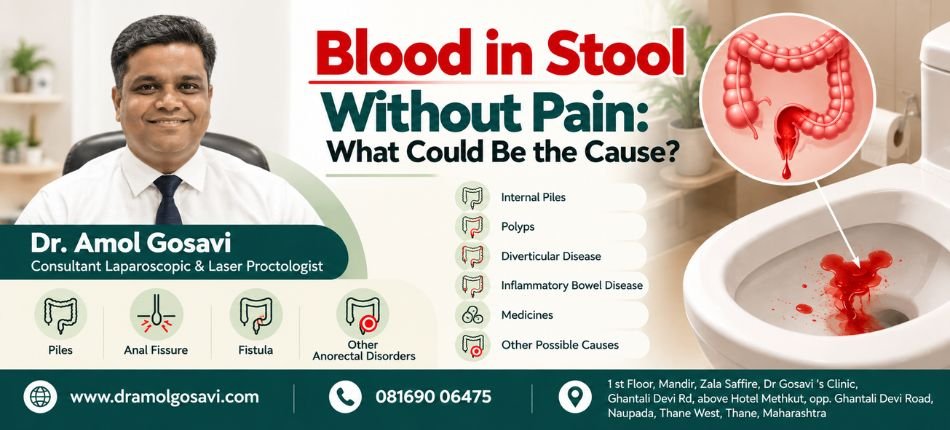
Blood in Stool Without Pain: What Could Be the Cause? – Dr. Amol Gosavi
Noticing blood in stool without pain can be worrying, especially when there is no discomfort, burning, or other obvious symptom. While internal piles are a common cause of painless rectal bleeding, other conditions such as polyps, diverticular disease, inflammatory bowel disease, or other gastrointestinal problems may also be responsible.
If you experience repeated rectal bleeding or other anorectal symptoms, consulting an Advanced Laser Proctologist in Thane can help identify the underlying cause through proper evaluation and determine suitable treatment when required.
In this article, we explain the possible causes of blood in stool without pain, warning signs you should not ignore, and when you should consult a doctor.
What Does Blood in Stool Without Pain Mean?
Blood in the stool means that bleeding is occurring somewhere in the gastrointestinal tract. It may appear as bright red blood on toilet paper, streaks on the stool, blood mixed with the stool, or dark/black stools.
When bleeding occurs without pain, people sometimes ignore it because they otherwise feel normal. However, the absence of pain does not necessarily mean the condition is harmless. Gastrointestinal bleeding is a symptom rather than a disease itself, and identifying its source is important.
What Does the Colour of Blood Tell You?
The appearance of the blood may help indicate where the bleeding is coming from.
Bright red blood on toilet paper, on the surface of the stool, or in the toilet bowl often comes from the anus, rectum, or lower bowel. Internal hemorrhoids are one common possibility.
Dark red or maroon blood may be mixed with the stool and can sometimes indicate bleeding further inside the digestive tract.
Black, sticky or tar-like stool can be a sign of bleeding from the upper gastrointestinal tract, although some medicines, supplements, and foods can also darken stools. Black or dark-red stool warrants prompt medical assessment.
7 Possible Causes of Blood in Stool Without Pain
1. Internal Piles (Hemorrhoids)
One of the common causes of painless bright red rectal bleeding is internal hemorrhoids, commonly known as piles.
Hemorrhoids are swollen veins in or around the anus and lower rectum. Internal hemorrhoids that have not prolapsed are often painless and may cause bright red blood after a bowel movement—on the stool, toilet paper, or in the toilet bowl.
Constipation, straining during bowel movements, sitting on the toilet for long periods, a low-fibre diet, pregnancy, and frequent heavy lifting can contribute to hemorrhoids.
However, not every episode of painless bleeding is piles, so recurrent bleeding should be evaluated.
2. Colon or Rectal Polyps
Polyps are growths that develop on the inner lining of the colon or rectum. Some polyps may bleed without causing noticeable pain or other symptoms.
Although many polyps are benign, certain types can develop into colorectal cancer over time. Blood in the stool can therefore require further investigation, particularly when bleeding is persistent or accompanied by changes in bowel habits.
Depending on the person’s symptoms, age, medical history, and risk factors, a doctor may recommend further examination of the bowel.
3. Diverticular Bleeding
Diverticula are small pouches that can develop in weak areas of the colon wall. If a blood vessel within one of these pouches bursts, bleeding can occur.
Diverticular disease is one recognized cause of lower gastrointestinal bleeding.
The amount and appearance of bleeding can vary, which is why significant or repeated bleeding requires medical assessment rather than self-diagnosis.
4. Angiodysplasia
Angiodysplasia refers to abnormal or enlarged blood vessels within the gastrointestinal tract. These vessels can become fragile and bleed.
It can result in gastrointestinal bleeding that may occur without obvious pain. Angiodysplasia is among the conditions doctors may consider when investigating unexplained bleeding, particularly in older adults.
Diagnosis may require endoscopic or other investigations to locate the source.
5. Inflammatory Bowel Disease
Inflammatory bowel diseases such as ulcerative colitis and Crohn’s disease can cause inflammation and ulceration within the digestive tract, resulting in bleeding.
Patients may also experience diarrhoea, mucus in the stool, abdominal cramps, urgency, or changes in bowel habits, although symptoms vary from person to person.
Persistent blood or mucus in the stool should therefore be medically evaluated.
6. Medicines That Increase Bleeding Risk
Certain medicines can increase the likelihood or severity of gastrointestinal bleeding.
These include anticoagulants or “blood thinners” and, in some circumstances, aspirin and non-steroidal anti-inflammatory drugs (NSAIDs). NIDDK notes that NSAIDs may increase GI bleeding risk and blood thinners can increase the chance or severity of GI bleeding.
Do not stop a prescribed blood thinner or other medicine on your own because you notice blood in your stool. Contact the prescribing doctor for appropriate advice.
7. Colorectal Cancer
Although there are many non-cancerous reasons for rectal bleeding, blood in the stool can sometimes be associated with colorectal cancer.
Other possible warning signs can include a persistent change in bowel habits, unexplained weight loss, unusual tiredness, abdominal symptoms, or changes in the appearance of stools. Importantly, these symptoms do not automatically mean cancer, but they should be investigated.
Early evaluation is particularly important when bleeding keeps returning or occurs alongside other unexplained symptoms.
Is Blood in Stool Without Pain Always Piles?
No.
Painless bright red bleeding is commonly associated with internal hemorrhoids, but assuming that every episode of rectal bleeding is piles can delay the diagnosis of another condition.
NIDDK specifically notes that rectal bleeding may also occur with conditions including Crohn’s disease, ulcerative colitis, and colon or rectal cancer.
If bleeding is new, persistent, recurrent, increasing, or unexplained, a medical evaluation is the safer approach.
Piles vs Other Causes: What Should You Look For?
Internal piles may cause bright red blood after passing stool, sometimes without pain. However, symptoms such as blood mixed throughout the stool, persistent bowel-habit changes, mucus, unexplained weight loss, abdominal symptoms, or unusual tiredness can require investigation for other causes.
Symptoms alone cannot always distinguish piles from other bowel conditions. A proper examination is therefore more reliable than trying to diagnose the condition based only on the colour or amount of blood.
Can Constipation Cause Blood in Stool?
Constipation itself can contribute to conditions that cause rectal bleeding.
Hard stools and repeated straining can contribute to hemorrhoids and anal fissures. Hemorrhoids may cause painless bleeding, whereas anal fissures more commonly cause pain during or after bowel movements.
Increasing fibre may be recommended for people with hemorrhoids in appropriate cases, but ongoing bleeding still needs evaluation rather than relying only on dietary changes.
When Should You See a Doctor?
You should consult a doctor if blood in stool without pain occurs repeatedly, continues for several days, or has no obvious explanation. Medical evaluation is especially important if the bleeding is accompanied by changes in bowel habits, unexplained weight loss, weakness, or unusual tiredness. Even painless bleeding should not automatically be assumed to be piles. Early evaluation can help identify the actual cause and determine the appropriate treatment.
How Is the Cause of Blood in Stool Diagnosed?
A doctor will usually begin by asking about the colour and amount of blood, how frequently it occurs, bowel habits, medications, medical history, and family history.
Depending on the symptoms, evaluation may include a physical examination and digital rectal examination. Doctors may also use blood tests to check for anemia, stool tests, anoscopy or proctoscopy, colonoscopy, other forms of endoscopy, or imaging when clinically appropriate.
The tests required will depend on the individual patient’s symptoms and suspected source of bleeding.
How Is Painless Rectal Bleeding Treated?
There is no single treatment for blood in the stool, because treatment depends on what is causing the bleeding.
For hemorrhoids, treatment may include changes in diet and toilet habits, medication, or procedures depending on severity. Other conditions may require different medicines, endoscopic treatment, or surgery. Doctors can sometimes identify and treat gastrointestinal bleeding during an endoscopic procedure.
This is why treating bleeding as “piles” without confirming the diagnosis is not recommended.
Can You Prevent Blood in Stool?
Not every cause is preventable, but healthy bowel habits may reduce the risk of some common anorectal problems.
Maintaining adequate fibre and fluid intake, avoiding unnecessary straining, staying physically active, and avoiding prolonged sitting on the toilet may help reduce constipation and hemorrhoid-related problems.
If medicines such as NSAIDs, aspirin, or anticoagulants are involved, discuss them with your doctor rather than changing or stopping treatment independently.
Why Early Evaluation Matters
Seeing blood after a bowel movement can be easy to dismiss when there is no pain. In many cases, the underlying problem may be manageable, but the same symptom can occur with several different gastrointestinal conditions.
A timely examination helps identify where the bleeding is coming from and allows treatment to be selected according to the actual cause rather than assumptions.
Consult Dr. Amol Gosavi for Rectal Bleeding and Proctology Concerns
If you notice blood in stool without pain, repeated rectal bleeding, or other changes in your bowel habits, consider consulting a qualified medical professional for an appropriate examination.
Dr. Amol Gosavi provides evaluation and treatment for proctology-related conditions such as piles, fissures and other anorectal concerns in Naupada, Thane West. The appropriate treatment depends on the diagnosis and severity of the condition.
Conclusion
Blood in stool without pain should not automatically be considered piles. Internal hemorrhoids are one possible and common cause of painless bright-red rectal bleeding, but polyps, diverticular bleeding, abnormal blood vessels, inflammatory bowel disease, medicines, and colorectal cancer are among other possibilities.
Pay attention to the colour and frequency of bleeding and any accompanying bowel changes. If bleeding is persistent, recurrent, or unexplained, arrange a medical evaluation so that the underlying cause can be identified and treated appropriately.
Blood in Stool Without Pain Blood in Stool Without Pain Blood in Stool Without Pain Blood in Stool Without Pain Blood in Stool Without Pain Blood in Stool Without Pain Blood in Stool Without Pain Blood in Stool Without Pain Blood in Stool Without Pain Blood in Stool Without Pain Blood in Stool Without Pain Blood in Stool Without Pain Blood in Stool Without Pain
