
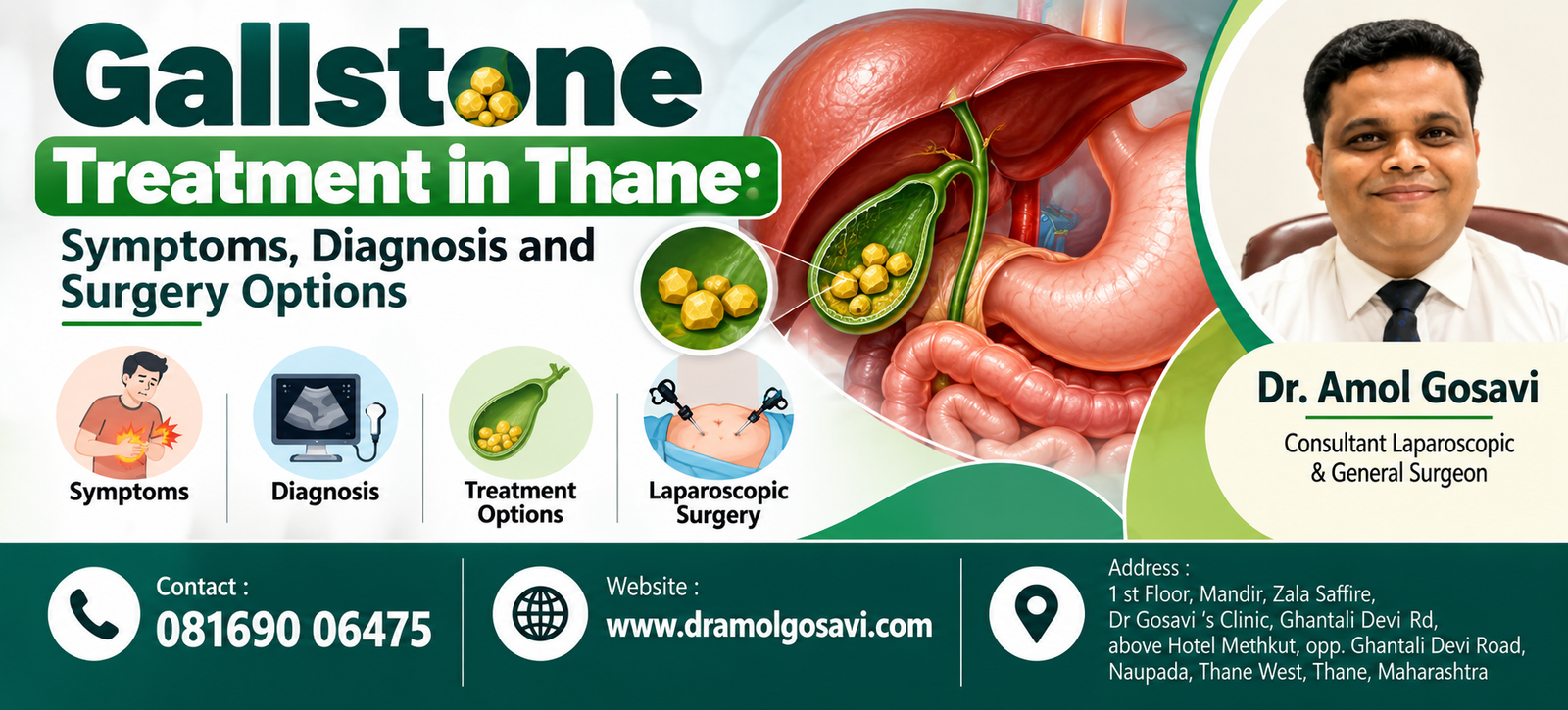
Gallstone Treatment in Thane : Symptoms, Diagnosis and Surgery Options – Dr. Amol Gosavi
Gallstones are hardened deposits that develop inside the gallbladder, a small organ located below the liver that stores bile used in digestion. Many people with gallstones may not experience symptoms, while others can develop recurring abdominal discomfort, nausea, or complications when a stone interferes with the normal flow of bile.
If you experience repeated upper abdominal discomfort, particularly after meals, it is important to get the condition properly evaluated. Gallstone Treatment in Thane depends on the symptoms, location of the stones, associated complications, and the patient’s overall health. Patients can consult an experienced Laparoscopic Surgeon in Thane for evaluation and guidance regarding suitable surgical options.
Treatment may range from observation in selected cases to surgical removal of the gallbladder when clinically indicated. Understanding the symptoms, diagnosis, and available surgery options can help patients make informed decisions about their treatment.
What Are Gallstones?
Gallstones are solid deposits that form inside the gallbladder. They can vary considerably in size, and a person may have a single stone or multiple stones.
Gallstones are broadly classified into cholesterol stones and pigment stones. Their formation may be influenced by changes in the composition of bile, incomplete emptying of the gallbladder, and certain underlying health factors.
Having gallstones does not necessarily mean that a person will experience symptoms. Stones discovered incidentally without symptoms may be managed differently from symptomatic gallstones.
Common Symptoms of Gallstones
Gallstones may not cause symptoms until they interfere with the normal flow of bile. Common symptoms include discomfort or pain in the upper-right or upper-middle abdomen, sometimes after a heavy or fatty meal. The discomfort may spread to the back or right shoulder and may be accompanied by nausea or vomiting. Recurrent or severe symptoms should be evaluated by a doctor to determine the underlying cause.
When Should You Consult a Doctor?
Medical evaluation is advisable when abdominal discomfort becomes recurrent, severe, or begins interfering with normal activities. Persistent nausea or vomiting should also be evaluated.
More urgent medical attention may be necessary if abdominal pain is accompanied by fever, chills, yellowing of the skin or eyes (jaundice), persistent vomiting, or severe worsening pain.
These symptoms can sometimes indicate complications such as inflammation of the gallbladder, infection, or obstruction of the bile ducts and require prompt assessment.
Why Do Gallstones Develop?
Gallstones can develop when substances present in bile become imbalanced and gradually form hardened deposits inside the gallbladder. Factors such as obesity, rapid weight loss, pregnancy, increasing age, family history, and certain medical conditions may increase the likelihood of gallstone formation. Incomplete emptying of the gallbladder may also contribute. Having these risk factors does not necessarily mean that a person will develop gallstones.
How Are Gallstones Diagnosed?
Diagnosis generally begins with a discussion of symptoms and a physical examination. The doctor may ask about the location and duration of discomfort, whether symptoms occur after meals, previous episodes, and other medical conditions.
Abdominal Ultrasound
An abdominal ultrasound is commonly used to identify gallstones. It can help assess the gallbladder and detect stones, gallbladder wall changes, and certain signs of inflammation.
Blood Tests
Blood tests may be recommended to evaluate liver function and look for evidence of inflammation, infection, or bile duct obstruction.
Additional Imaging
In selected situations, additional investigations such as MRCP, CT scans, or other imaging may be required, particularly when there is concern about stones in the bile duct or another complication.
The investigations required depend on the patient’s symptoms and clinical findings.
Do All Gallstones Require Treatment?
No. Gallstones that are discovered incidentally and are not causing symptoms do not always require immediate surgery.
The management approach depends on the patient’s symptoms, risk factors, gallbladder condition, and whether complications are present.
However, recurrent symptomatic gallstones often require further evaluation because episodes can return. A surgeon can assess whether continued observation or surgical treatment is appropriate.
Gallstone Treatment in Thane
The appropriate Gallstone Treatment in Thane is determined after evaluating symptoms, diagnostic findings, and the patient’s overall health.
Treatment options can include observation in selected patients, supportive treatment during an acute episode, and surgery when gallstones are causing recurrent symptoms or complications.
Medicines may sometimes be used for symptom management, but patients should not assume that medication can permanently eliminate all gallstones. Treatment should be individualized after proper evaluation.
When May Gallbladder Surgery Be Recommended?
Surgical removal of the gallbladder may be considered when gallstones repeatedly cause symptoms or lead to complications.
Surgery may be recommended in situations involving recurrent gallstone attacks, inflammation of the gallbladder, gallstone-related complications, or other clinical findings where the expected benefits of surgery outweigh the risks.
The decision is made after considering the patient’s medical history, imaging findings, symptoms, and overall health.
What Is Laparoscopic Gallbladder Surgery?
Laparoscopic cholecystectomy is a minimally invasive procedure used to remove the gallbladder.
During the operation, several small incisions are made in the abdomen. A laparoscope containing a camera is introduced through one incision, allowing the surgeon to view the surgical area on a monitor. Specialized instruments are then used through the other incisions to carefully separate and remove the gallbladder.
The incisions are closed after the procedure is completed.
Why Is the Gallbladder Removed Instead of Only the Stones?
When gallstones repeatedly form inside the gallbladder and cause symptoms, simply removing individual stones generally does not address the underlying tendency for stones to develop.
For patients who require surgery, treatment commonly involves removing the gallbladder itself rather than removing only the stones.
Most people can live without a gallbladder because bile produced by the liver continues to enter the digestive system. Patients should discuss expected digestive changes and postoperative dietary guidance with their surgeon.
Potential Benefits of Laparoscopic Gallbladder Surgery
For suitable patients, laparoscopic surgery offers a minimally invasive approach compared with conventional open surgery.
Potential benefits may include smaller incisions, reduced visible scarring, potentially less postoperative discomfort, a shorter hospital stay in uncomplicated cases, and an earlier return to some routine activities.
However, individual outcomes vary, and open surgery may occasionally be necessary depending on the patient’s condition and findings during surgery.
Laparoscopic vs Open Gallbladder Surgery
Laparoscopic cholecystectomy is performed through several small incisions using a camera and specialized surgical instruments. It is commonly used for gallbladder removal when clinically appropriate.
Open cholecystectomy involves a larger abdominal incision to access and remove the gallbladder. It may be required in selected complex situations or when laparoscopic surgery cannot be safely completed.
The surgeon determines the appropriate approach based on the patient’s condition, previous surgeries, anatomy, inflammation, and other clinical factors.
Preparing for Gallbladder Surgery
Before surgery, patients may undergo blood tests and other investigations depending on their age, medical history, and clinical condition.
The surgeon and anaesthesia team should be informed about all medicines, supplements, allergies, and existing health conditions.
Patients generally receive specific instructions regarding fasting before surgery, regular medications, hospital admission, and anaesthesia. Medicines should not be stopped or changed unless advised by the treating medical team.
Recovery After Laparoscopic Gallbladder Surgery
Recovery varies between patients. Some people undergoing an uncomplicated laparoscopic procedure may be discharged relatively quickly, while others may require additional observation.
During the initial recovery period, mild soreness or discomfort around the incision sites can occur. Patients should take prescribed medicines and follow instructions regarding wound care, bathing, diet, and physical activity.
Gentle walking may be encouraged when medically appropriate, while strenuous exercise and heavy lifting should be avoided until the surgeon advises that they can be resumed.
Diet After Gallbladder Surgery
Patients may be advised to gradually return to their normal diet after surgery based on individual tolerance.
During the early recovery period, smaller and lighter meals may be easier for some patients to tolerate. Very heavy or high-fat meals may cause digestive discomfort in certain individuals.
Adequate hydration and a balanced diet can support recovery. Patients experiencing persistent digestive symptoms should discuss them with their doctor rather than following restrictive diets without medical guidance.
When Can You Return to Work and Normal Activities?
The time required to return to work varies according to the patient’s recovery and the physical demands of their occupation.
People with desk-based or light work may be able to resume activities sooner than those whose jobs involve heavy lifting or strenuous physical work.
Driving, exercise, gym activities, and lifting should be resumed according to the surgeon’s instructions. Patients should avoid comparing their recovery directly with someone else’s, as individual circumstances differ.
Possible Complications of Untreated Symptomatic Gallstones
Symptomatic gallstones can sometimes block the normal flow of bile and lead to complications. These may include inflammation or infection of the gallbladder, blockage of the bile duct, jaundice, or gallstone-related pancreatitis. Symptoms such as severe persistent abdominal pain, fever, repeated vomiting, or yellowing of the skin or eyes require prompt medical evaluation. Timely diagnosis helps determine the appropriate treatment and reduce the risk of further complications.
Warning Signs That Need Prompt Medical Attention
Seek prompt medical assessment for severe or persistent abdominal pain, particularly when accompanied by:
- Fever or chills
- Persistent vomiting
- Yellowing of the eyes or skin
- Increasing abdominal tenderness
- Dark urine or unusually pale stools
- Severe weakness or worsening general condition
These symptoms can have several possible causes and require proper medical evaluation.
Gallstone Treatment in Thane – Dr. Amol Gosavi
Patients looking for Gallstone Treatment in Thane can consult Dr. Amol Gosavi for evaluation of gallbladder-related symptoms and discussion of appropriate treatment options.
The consultation may include assessment of symptoms, physical examination, review of ultrasound or other investigation reports, and evaluation of the patient’s medical history.
When surgery is clinically indicated, the surgical approach and expected recovery can be discussed based on the individual diagnosis.
Consult for Gallstone Treatment in Thane
Recurring upper abdominal discomfort, nausea after meals, or symptoms suggestive of gallstones should be properly evaluated. Early diagnosis helps determine whether observation, medical management, or surgery is appropriate.
For consultation regarding Gallstone Treatment in Thane, contact:
Dr. Amol Gosavi
📞 081690 06475
🌐 www.dramolgosavi.com
📍 Dr. Gosavi’s Clinic, 1st Floor, Zala Saffire, Ghantali Devi Road, above Hotel Methkut, opposite Ghantali Devi Mandir, Naupada, Thane West, Thane, Maharashtra
Gallstone Treatment in Thane Gallstone Treatment in Thane Gallstone Treatment in Thane Gallstone Treatment in Thane Gallstone Treatment in Thane Gallstone Treatment in Thane Gallstone Treatment in Thane Gallstone Treatment in Thane Gallstone Treatment in Thane Gallstone Treatment in Thane Gallstone Treatment in Thane Gallstone Treatment in Thane Gallstone Treatment in Thane
