
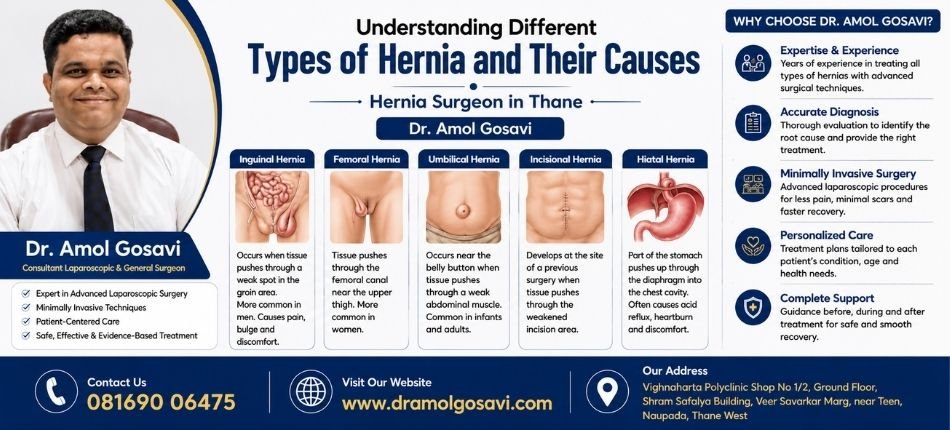
Understanding Different Types of Hernia and Their Causes | Hernia Surgeon in Thane – Dr. Amol Gosavi
Introduction
A hernia is a common medical condition that occurs when an internal organ or tissue pushes through a weak area in the surrounding muscle or connective tissue. Hernias can develop in different parts of the body and may cause discomfort, pain, or a visible bulge. While some hernias remain small and symptom-free, others can enlarge over time and require surgical treatment.
Understanding the different types of hernias and their causes can help individuals recognize symptoms early and seek timely medical care. If you are experiencing symptoms of a hernia, consulting an experienced Hernia Surgeon in Thane can help ensure accurate diagnosis and effective treatment.
What is a Hernia?
A hernia develops when pressure inside the body forces tissue or an organ through a weakened section of muscle or fascia. The abdominal wall is one of the most common locations where hernias occur because it experiences significant pressure during daily activities such as lifting, coughing, and straining.
Different Types of Hernia
Common Causes of Hernia
Weak Muscles and Connective Tissue
Some individuals are born with naturally weak abdominal muscles, making them more susceptible to developing hernias later in life.
Heavy Lifting
Repeated lifting of heavy objects increases pressure within the abdomen and can contribute to the development of hernias.
Chronic Coughing
Persistent coughing caused by smoking, respiratory conditions, or allergies places repeated strain on the abdominal wall.
Obesity
Excess body weight creates additional pressure on muscles and tissues, increasing the likelihood of hernia formation.
Pregnancy
Pregnancy stretches abdominal muscles and increases abdominal pressure, making women more vulnerable to certain types of hernias.
Constipation and Straining
Frequent straining during bowel movements can weaken the abdominal wall over time and contribute to hernia development.
When Should You Seek Medical Attention?
It is important to seek medical evaluation if you experience:
- A visible bulge in the abdomen or groin
- Persistent pain or discomfort
- Increasing swelling
- Nausea or vomiting
- Sudden severe pain
Early diagnosis helps prevent complications and allows for appropriate treatment planning.
Why Choose Dr. Amol Gosavi?
Dr. Amol Gosavi is dedicated to providing comprehensive care for patients suffering from various types of hernias. With a patient-focused approach, he emphasizes accurate diagnosis, personalized treatment planning, and detailed guidance throughout the recovery process. Dr. Gosavi carefully evaluates each patient’s condition and recommends the most suitable treatment option based on the type and severity of the hernia. His commitment to quality care, patient education, and long-term health outcomes makes him a trusted choice for individuals seeking expert hernia treatment and surgical consultation.
Conclusion
Hernias can develop in different parts of the body and may result from muscle weakness, heavy lifting, obesity, pregnancy, or chronic straining. Understanding the various types of hernias and their causes can help individuals seek timely treatment and avoid complications. If you are experiencing symptoms of a hernia, consult an experienced Hernia Surgeon in Thane for expert guidance and care.
Hernia Surgeon in Thane Hernia Surgeon in Thane Hernia Surgeon in Thane Hernia Surgeon in Thane Hernia Surgeon in Thane Hernia Surgeon in Thane Hernia Surgeon in Thane Hernia Surgeon in Thane
