
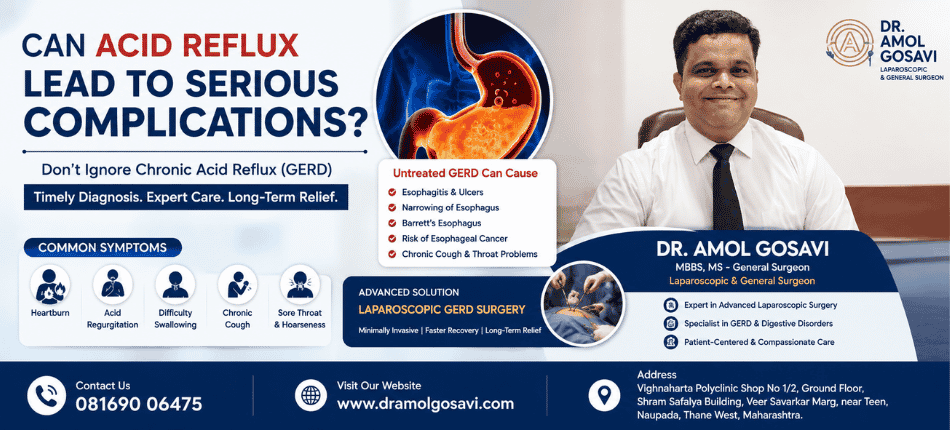
Can Acid Reflux Lead to Serious Complications? |Laparoscopic Surgeon in Mumbai – Dr. Amol Gosavi
Acid reflux is one of the most common digestive disorders affecting millions of people worldwide. Many individuals experience occasional heartburn after eating spicy foods or large meals, but when acid reflux becomes frequent, it may indicate Gastroesophageal Reflux Disease (GERD). Although many people consider acid reflux a minor inconvenience, ignoring persistent symptoms can lead to serious health complications that may require advanced medical or even surgical treatment.
Timely diagnosis and proper treatment are essential to prevent long-term damage to the esophagus. Understanding the warning signs and potential complications of chronic acid reflux helps patients seek appropriate care before the condition becomes severe.
Learn whether acid reflux can lead to serious complications and when to consult a Laparoscopic Surgeon in Mumbai for advanced GERD and hiatal hernia treatment.
What Is Acid Reflux?
Acid reflux occurs when stomach acid flows backward into the esophagus due to weakness or improper functioning of the lower esophageal sphincter (LES), the valve that normally prevents stomach contents from moving upward. This backflow irritates the lining of the esophagus, causing symptoms such as heartburn, sour taste in the mouth, chest discomfort, and regurgitation. When these symptoms occur frequently or persist over time, the condition is known as Gastroesophageal Reflux Disease (GERD) and requires medical evaluation.
Common Causes of Acid Reflux
Several factors can increase the risk of developing acid reflux.
These include:
- Obesity
- Hiatal hernia
- Overeating
- Eating late at night
- Spicy or fatty foods
- Smoking
- Excessive alcohol consumption
- Pregnancy
- Certain medications
- Chronic stress
- Lack of physical activity
Identifying and managing these causes can significantly reduce reflux symptoms.
Common Symptoms of GERD
The symptoms of GERD vary from person to person but commonly include persistent heartburn, acid regurgitation, chest discomfort, difficulty swallowing, chronic cough, sore throat, hoarseness, a sensation of food getting stuck in the throat, and bad breath. Some patients may also experience nausea, bloating, or frequent burping. Symptoms that occur several times a week or interfere with daily activities should not be ignored, as they may indicate chronic GERD.
Can Acid Reflux Lead to Serious Complications?
Yes. Untreated or chronic acid reflux can cause repeated damage to the lining of the esophagus, increasing the risk of several serious complications. Continuous exposure to stomach acid may result in inflammation (esophagitis), ulcers, bleeding, narrowing of the esophagus (strictures), and difficulty swallowing. In some patients, long-standing GERD can lead to Barrett’s Esophagus, a condition in which the normal lining of the esophagus changes and carries an increased risk of developing esophageal cancer. Chronic reflux may also contribute to respiratory problems such as chronic cough, asthma flare-ups, and recurrent throat irritation. Early diagnosis and treatment are important to reduce these risks.
Warning Signs That Require Immediate Medical Attention
While occasional acid reflux is common, certain symptoms may indicate a serious complication and should never be ignored. Seek immediate medical attention if you experience difficulty or pain while swallowing, persistent chest pain, vomiting blood, black or tarry stools, unexplained weight loss, or severe abdominal pain. Ongoing hoarseness, chronic cough, or frequent choking while eating may also suggest advanced GERD or damage to the esophagus. Early medical evaluation can help diagnose complications promptly and prevent more serious health problems.
How Is Acid Reflux Diagnosed?
Diagnosis begins with a detailed medical history and physical examination. Depending on the severity and duration of symptoms, doctors may recommend upper gastrointestinal endoscopy to examine the esophagus and stomach, pH monitoring to measure acid exposure, esophageal manometry to assess muscle function, or imaging studies if complications such as hiatal hernia are suspected. These investigations help determine the severity of GERD and guide appropriate treatment.
Treatment Options for Acid Reflux
Most patients respond well to conservative treatment.
Common treatment options include:
- Lifestyle modifications
- Weight management
- Dietary changes
- Acid-suppressing medications
- Avoiding smoking and alcohol
- Sleeping with the head elevated
- Treating associated hiatal hernia
- Regular follow-up
For patients whose symptoms persist despite medication or who develop complications, surgical treatment may be recommended.
When Is Surgery Needed for Acid Reflux?
Surgery may be considered when GERD symptoms persist despite optimal medical treatment, medications are required long-term, or complications such as severe esophagitis, Barrett’s esophagus, recurrent aspiration, or a significant hiatal hernia develop. The most common surgical procedure is laparoscopic fundoplication, a minimally invasive operation that strengthens the lower esophageal sphincter and helps prevent acid from flowing back into the esophagus. Surgery is carefully recommended only after thorough evaluation and when it is likely to provide long-term symptom relief.
Benefits of Laparoscopic Surgery for GERD
Laparoscopic surgery offers several advantages for suitable patients. It involves smaller incisions, less postoperative pain, minimal blood loss, faster recovery, shorter hospital stay, reduced scarring, and a quicker return to normal activities. Many patients also experience significant improvement in reflux symptoms and reduced dependence on long-term acid-suppressing medications. The minimally invasive approach makes laparoscopic surgery an effective option for selected patients with chronic or complicated GERD.
Tips to Prevent Acid Reflux
Simple lifestyle changes can greatly reduce the frequency of acid reflux episodes. Eat smaller meals, avoid lying down immediately after eating, maintain a healthy body weight, limit spicy and fatty foods, reduce caffeine and alcohol intake, stop smoking, exercise regularly, and elevate the head of your bed while sleeping. Managing stress and following medical advice consistently can also help prevent recurrent symptoms and reduce the risk of complications.
Why Choose Dr. Amol Gosavi?
Dr. Amol Gosavi is an experienced General and Laparoscopic Surgeon specializing in the diagnosis and surgical management of gastrointestinal conditions, including complicated GERD and hiatal hernia. He carefully evaluates patients with persistent acid reflux to determine whether advanced treatment or minimally invasive laparoscopic surgery is appropriate. Using modern surgical techniques and a patient-centered approach, Dr. Gosavi aims to provide effective symptom relief, faster recovery, and improved quality of life. Patients receive comprehensive care, from diagnosis and counseling to postoperative follow-up, ensuring safe and personalized treatment.
Conclusion
Although occasional acid reflux is common, persistent or untreated GERD should never be ignored. Chronic acid exposure can damage the esophagus and lead to serious complications that may eventually require surgical intervention. Early diagnosis, healthy lifestyle changes, appropriate medical treatment, and timely surgical evaluation when necessary can prevent long-term problems. If you experience ongoing acid reflux or severe GERD symptoms, consulting an experienced Laparoscopic Surgeon in Mumbai can help you receive the right treatment and protect your long-term digestive health.
Laparoscopic Surgeon in Mumbai Laparoscopic Surgeon in Mumbai Laparoscopic Surgeon in Mumbai Laparoscopic Surgeon in MumbaiLaparoscopic Surgeon in Mumbai Laparoscopic Surgeon in Mumbai Laparoscopic Surgeon in Mumbai Laparoscopic Surgeon in Mumbai Laparoscopic Surgeon in Mumbai
